At a time at which the global energy map is being redrawn, Capital Clean Energy Carriers (CCEC) is positioning itself at the forefront of the energy transition. With one of the youngest and most technologically advanced fleets in the world, the US-listed shipping company is capitalizing on the explosive rise of American LNG.
CCEC CEO Gerasimos Kalogiratos talks to To Vima about the historic transformation his company is now completing, and explains why, far from being simply a transitional fuel, LNG is set to be at the heart of global energy policy for decades to come.
The NASDAQ-listed Capital Clean Energy Carriers is a shipping giant. Tell us about the company’s current standing, and about the composition of its fleet.
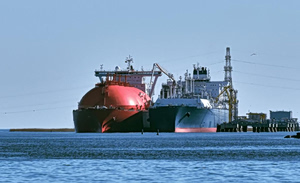
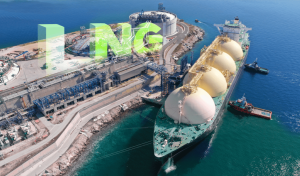
“CCEC is the company with the largest liquefied natural gas (LNG) carrier fleet among listed US carriers today. We have 32 vessels currently on the water and on order. These consist of 21 latest-generation LNG carriers, 6 mid-size dual-fuel LPG carriers, 4 pioneering LCO2/multi-gas carriers and one Neo-Panamax container vessel. We are currently implementing a 3 billion USD investment program, with vessel deliveries scheduled through till early 2029. This makes us one of the youngest and most technologically advanced fleets in the world.”
Which means you are pivoting toward energy transfer.
“We’re not just shifting our focus. We are undertaking a historic corporate transformation. We are very close to fully divesting from container vessels. We have evolved into a ‘pure-play’ gas carrier focused on the transportation of LNG, LPG, ammonia and liquid CO2 (LCO2) and other gases. Our objective is clear: we want to be a leading global player in the energy transition, serving as the leading force in the transport of energy sources that will play a decisive role in this process.”
LNG is a cornerstone of President Trump’s energy policy. How do you predict that market will evolve in the years ahead?
“Undoubtedly, the US emphasis on LNG has triggered a surge in American LNG exports. In the fourth quarter of 2025 alone, US LNG exports increased by 36%. The huge shale gas reserves in the US and the significant US investments in infrastructure (export and liquefaction), combined with geopolitical developments such as Europe’s decoupling from Russian natural gas, are shifting shale gas transport from pipeline infrastructure to maritime corridors. We also believe that the increased global supply of LNG will lead to lower prices in the years ahead, stimulating demand particularly in Asia, in countries like China and India. This will result in greater demand for maritime transport, as our ships will be covering longer average distances as they transport LNG from America to Asian countries, for example, rather than Europe. Thanks to its state-of-the-art fleet, CCEC is perfectly placed to capitalize on the increased demand for gas transportation across global markets.”
Is the upward trend in the LNG market a result of temporary market conditions, or do you discern more long-term structural characteristics?
“The increased demand for LNG is not circumstantial. It is a reality that will determine the global energy map for the next two decades. The transition to cleaner energy sources and the need for reliable and flexible power generation are two factors that will remain constant, however the geopolitical chessboard develops. The demand for power generation is also poised to climb, driven by the massive energy requirements of global data centers. Estimates worldwide suggest LNG demand will double by 2040. It is indicative that CCEC’s contracted revenues from long-term charters amount to $2.9 billion, with the potential to increase to $4.2 billion. The average duration of our secured charters is 6.9 years These are particularly long-term charters and, by extension, cash flows, demonstrating that international markets have invested in the future of this specific fuel for years to come.”
How is this new reality reflected in CCEC’s financial performance and bottom-line results?
“Our frontrunner position status in LNG transport is by design, not by chance. It is the result of a strategy we set out several years ago. Having been quick to grasp the critical role LNG will be playing in the global economy, we invested in the creation of a state-of-the-art fleet, in cutting-edge equipment and technologies, and developed unparalleled international expertise. Most important of all is our excellent operational track record in crew safety and respect for the environment, as well as our customer-centric philosophy which has been recognized by energy giants including BP, Total Energies, Engie, Jera, ConocoPhillips and, Cheniere. Today, the results of this strategy could not be more obvious.
The company’s market capitalization has more than tripled in just a few years, reaching $1.2 billion, up from $318 million at the end of 2021, when we took our first steps in LNG.
CCEC’s growth, has also been rapid in terms of economic performance over the same period. Revenue for the first three quarters of 2025 from continuing operations was $306 million, up from $185 million for the full year in 2021. Similarly, earnings before interest, taxes, depreciation and amortization (EBITDA) were $265 million for the first nine months of 2025, compared to $126 million for the whole of 2021. The company’s assets have also recorded a very large increase, from $1.9 billion at the end of 2021 to $4.1 billion at the end of the third quarter of 2025. Two additional factors defining our current position are our strong capital base, with company equity reaching $1.5 billion, and our significant liquidity, with cash reserves standing at approximately $332 million.”
What are the company’s goals, given its excellent performance to date?
“We aim not just to keep pace with industry shifts, but to dictate their direction. As clichéd as that may sound, in our case, it truly describes what we do—and what we intend to keep on doing. We keep our gaze firmly fixed on the future. Which is why our strategy extends beyond LNG: we are focusing on the alternative fuels and energy sources of tomorrow. By investing in LCO2 and Ammonia/LPG carriers today, we are preparing for the energy transition as these sources take center stage.
This corporate philosophy underpins our commitment to creating long-term value for our shareholders. It is a defining achievement that since our NASDAQ listing, we have maintained a record of 74 consecutive dividend payments. We have, in effect, distributed a dividend every single quarter since our IPO, returning a total of $1.1 billion in cash to our shareholders. This is another record, as no other shipping company listed on the exchange has achieved anything like this over this period. It is my firm belief that, backed by the confidence of our investors, we will sustain the innovative and profitable trajectory we have established.”