When the VP of Public Relations at Cooke, Joel Richardson, stepped out of the conference hall at the Ambio Aquaculture Forum in Athens, he had already spent the morning listening to Greek politicians, producers, consultants, and scientists debate the future of the country’s fish‑farming sector.
Talking to To Vima International Edition on the sidelines of the conference, the core of his message was crisp: Greece’s aquaculture industry has the potential to enter a new phase through Cooke’s acquisitions, but the regulatory system needs to keep up.
“We see an opportunity here,” Richardson said. “There’s always room for continuous improvement in fish farming, and Greece has enormous potential. But the sector needs predictability if it wants investment, jobs, and exports.”
His comments come at a pivotal moment. Cooke Inc., the Canadian aquaculture group with operations across North America, South America, Europe, and Australia, has advanced its consolidation of several major Greek aquaculture companies including Avramar.
Meanwhile, Greece has begun preparing Marine Spatial Planning Frameworks (MSPFs) for key regions of the Aegean and Ionian Seas. Although the process will help shape the long-term strategic organization of marine uses, it is separate from the ongoing establishment of POAYs, which continue to be governed by Greece’s existing Special Spatial Framework for Aquaculture.
Although legally independent, the two developments are unfolding in parallel, and together they will shape the future regulatory environment facing the sector.
Spearheading Consolidation
Cooke announced on 19 March 2024 that it had “executed a memorandum of understanding under which Cooke will acquire the existing debt facilities of Avramar Aquaculture S.A., Andromeda S.A., Perseus S.A. and Avramar Commercial and Logistics S.A” from the lenders. Upon closing, Cooke said it would “acquire operational control of Avramar Greece.”
The consolidation of these four entities represents a significant share of Greece’s sea bass and sea bream production, and according to Greece’s General Commercial Registry (GEMI), Avramar has already elected a new Board of Directors that includes two Cooke executives—Mark Ryan and Matt Roach.
This governance shift follows Cooke’s publicly announced plan to acquire the lenders’ debt facilities, a mechanism that gives Cooke creditor leverage to influence restructuring and integration. The approach is consistent with Cooke’s expansion strategy in other jurisdictions, where debt acquisition has been used to stabilize distressed assets and incorporate them into its global network.
For Greece, this marks the largest structural shift in the sector in years, and Cooke is already signaling what it intends to do next.
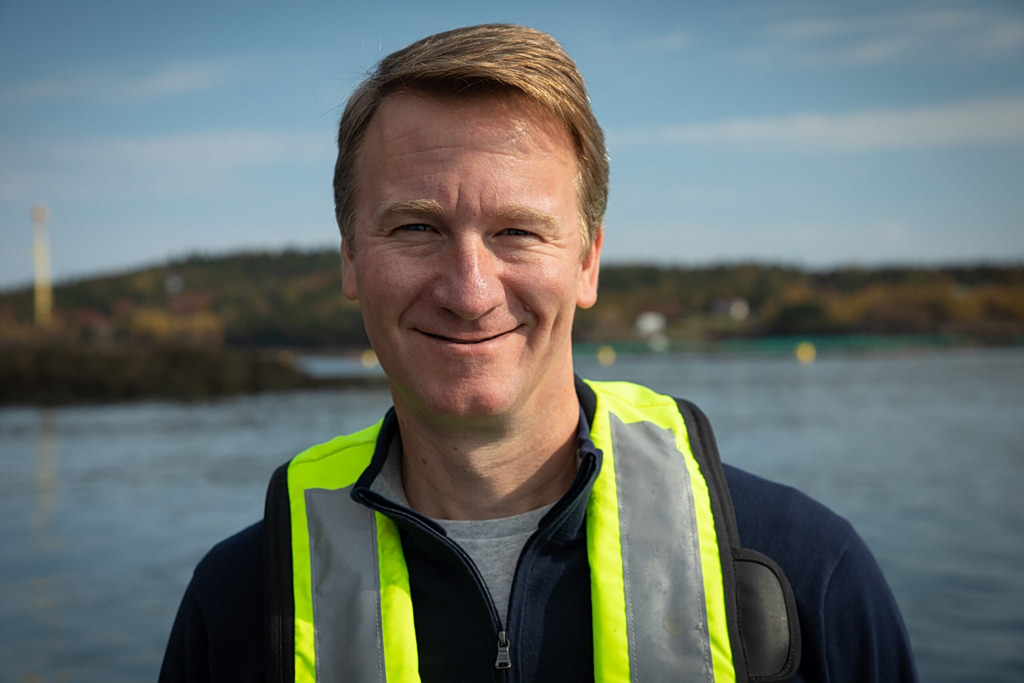
Joel Richardson, VP of Public Relations at Cooke
Cooke’s Plan for Modernization
Richardson’s assessment of Greek aquaculture is blunt. “Some of the farms don’t have the feed technology to really monitor the volumes of feed,” he said. “One of the biggest challenges with sea farms that are not monitoring feed is you’re wasting money.”
He pointed to smaller cages, closer inshore facilities, and outdated feeding systems as obstacles to both profitability and environmental performance. Overfeeding, he noted, is not only inefficient but harmful:
“The benthic environment on the ocean floor can be harmed as a result of overfeeding.”
Richardson adds, “Cooke plans to investment in remote feeding, underwater cameras, AI‑enabled monitoring, new feed systems, and technologies that improve fish‑health monitoring and early disease detection.”
The company has done this before. After acquiring Culmarex in Spain in 2011, Cooke says it implemented similar upgrades that, according to Richardson, “enabled us to improve production, decrease mortality, have better fish health monitoring for disease, earlier detection.”
And he says that it is important to keep in mind that “there’s no place in the world that is perfect at fish farming.” Fish farming “is no different than any other food production system. There’s always going to be room for continuous improvement.” The continous integration of modern technologies is key to ensuring the sustainability of the industry, highlights Richardson.
A Social and Economic Argument
Beyond technology, Richardson emphasizes the social dimension of aquaculture.
“Aquaculture is full‑time, year‑round employment,” he explains. “It’s not seasonal. And it’s a tremendous opportunity for women who want to work in science and technology.”
He noted that aquaculture globally has the youngest agricultural workforce and the highest gender balance of any food‑production sector. For Greece, he argued, this could be a strategic advantage—if the regulatory environment supports growth.
Richardson also pointed to declining Greek seafood exports. “Countries really need to look at how they can grow their domestic production for export markets,” he said. “There’s not enough of a market locally to consume it.”
In his view, Greece’s competitiveness will depend on whether it can expand production, improve technology, and secure predictable spatial planning.
Marine Spatial Planning
While Cooke moves ahead with consolidation, Greece has taken a step toward clarifying the spatial rules that will govern aquaculture’s future. On 14 May 2026, the Ministry awarded the tender for the Preparation of Studies for Marine Spatial Planning Frameworks (MSPFs) for Marine Spatial Units (MSUs) 2, 3, and 4.
The consortium assigned the project includes Samaras & Associates S.A. (lead), Roikos Consulting Engineers S.A. and AMBIO S.A.
A member of the consortium told To Vima International Edition that the Marine Spatial Planning studies do not affect the approval of pending POAYs. The Marine Spatial Planning Frameworks are regional strategic planning instruments that must align with—and cannot revise—the existing Special Spatial Framework for Aquaculture, under which POAYs will continue to be established until a new framework is adopted.
Slow Convergence
Although the Cooke is advancing with its aquistion on the corporate front, Richardson stresses that Cooke is not pushing Greece to match its pace. “We’re very patient,” he said, noting that the company understands Greece must update its regulatory framework before any major operational changes can take place.
He added that Cooke is ready to work within that process and alongside the sector: “We’re more than willing to work with the academic community, with research institutions, with other producers, and with government.”
On the other side is the Greek state, where movement is slower and part of broader reform efforts in the aquaculture sector that government officials described to To Vima International Edition as “necessary and overdue.” Government officials have indicated that, separate from Marine Spatial Planning and the POAY process, new legislative provisions and institutional tools for environmental monitoring of aquaculture will be introduced this autumn as part of broader reforms to licensing, enforcement and public consultation.
While the various reforms and frameworks are independent of one another, for Cooke, the link between the various timelines is clear. “If Greece wants to realize increased investment, increased jobs, more small and medium-sized companies in the supply chain, then they need to address the POAY areas and the Marine spatial planning,” Richardson said.
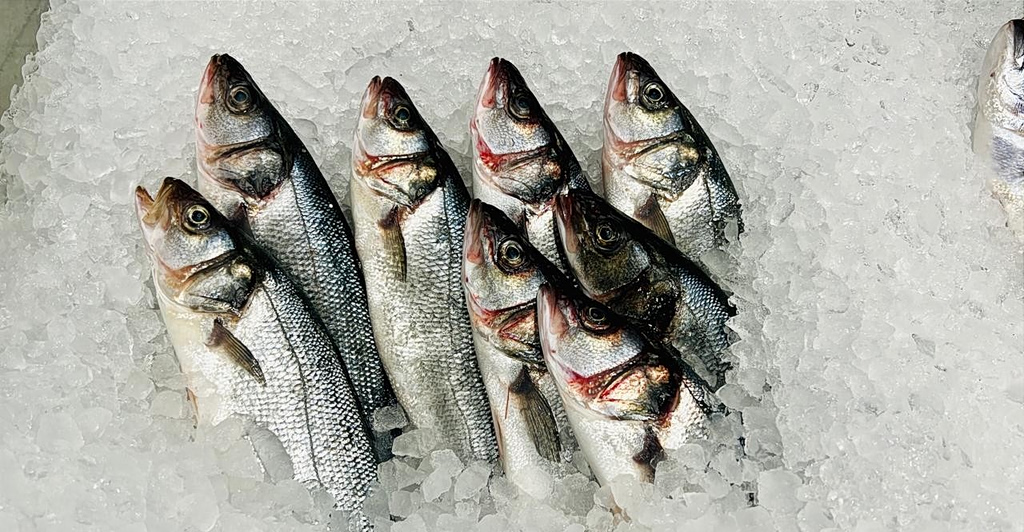
Farmed fish as seen at a Greek supermarket. Credit: Cheryl Novak