The cost of the traditional Easter table in Greece has surged sharply this year, with lamb prices rising by up to 30%, as households face the highest holiday food expenses in more than a decade.
Inflationary pressure, livestock shortages and increased export demand are all contributing to higher prices, forcing many consumers to adjust their plans and reduce spending ahead of the holiday.
Inflation pushes food costs higher
Greece continues to grapple with persistent inflation, which is particularly affecting essential household goods. In the category of food and non-alcoholic beverages, prices are rising at an annual rate of around 5.3%.
While some staples such as olive oil and sugar have seen slight price easing, significant increases in meat and fresh produce continue to drive overall costs higher. Energy prices are also a key factor, raising production costs across the supply chain.
Lamb and goat prices see steep increase
The most significant impact is being felt in the cost of lamb and goat, which traditionally form the centerpiece of the Easter meal.
Compared with last year, prices have increased by approximately 27% to 30%, with more than a 20% rise recorded this season alone.
Several factors are driving the spike. Recent animal disease outbreaks have severely reduced livestock numbers, with hundreds of thousands of animals lost in the past 18 months. This has significantly limited supply ahead of peak demand.
At the same time, strong export demand from European markets, including Italy and Spain, has intensified competition for available livestock, further reducing supply in domestic butcher shops.
Rising feed and energy costs—up between 10% and 15%—are also squeezing producers, adding further pressure to retail prices.
Consumers shift to smaller portions
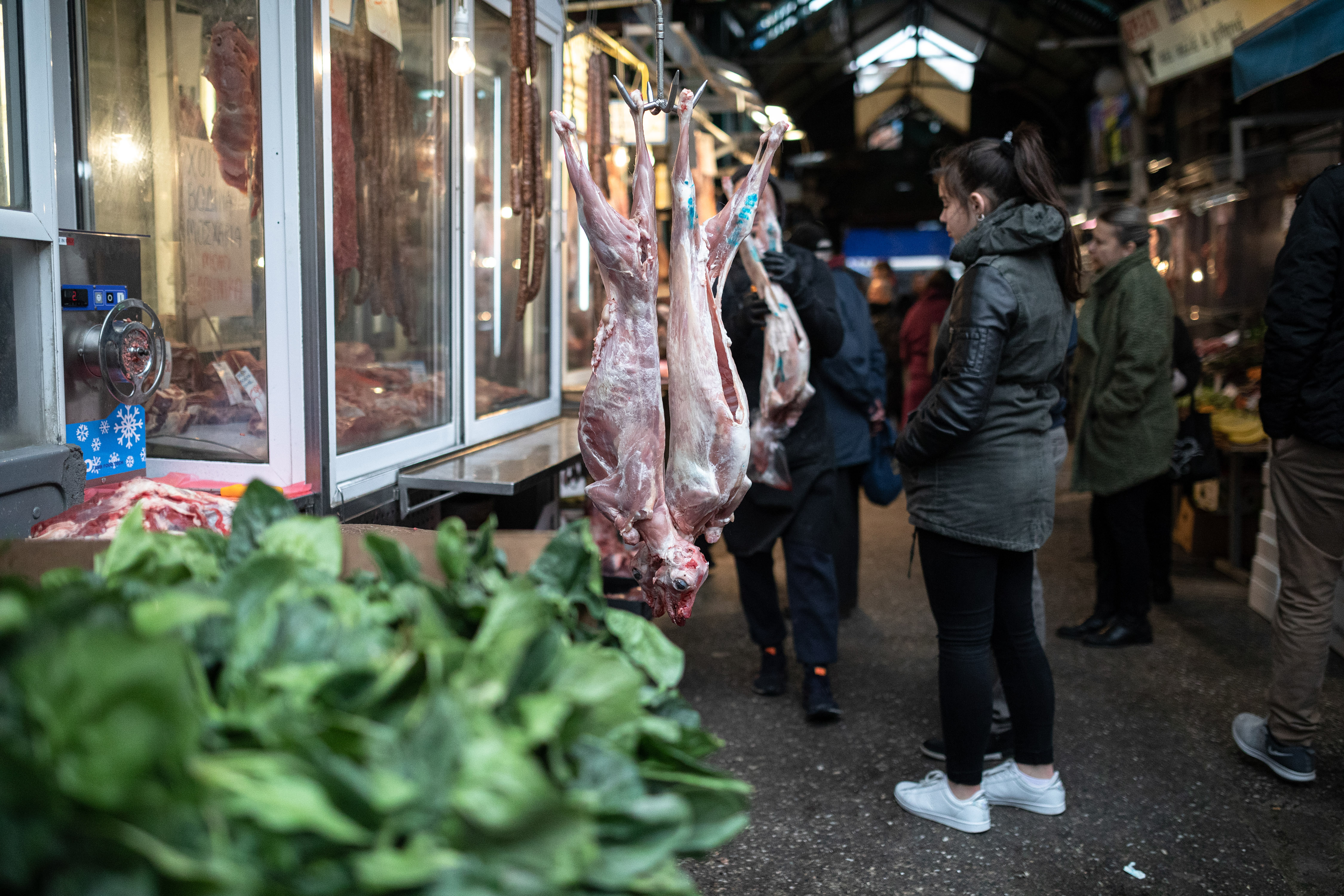
Market activity suggests consumers are changing their buying habits in response to higher prices. Instead of purchasing whole lambs, many households are opting for smaller cuts.
Retailers report increased demand for discounted “Easter baskets” and promotional bundles as families look for ways to reduce overall costs.
In central food markets, early shoppers are purchasing cautiously, reflecting tighter household budgets.
Traditional Easter table becomes more expensive
According to market estimates, the overall cost of this year’s Easter table is expected to rise by around 7.8% to 9% compared with last year.
Price increases extend beyond meat, affecting vegetables, eggs, and traditional Easter pastries. Drought conditions earlier in the season have reduced vegetable production, pushing prices higher, while rising dairy and flour costs are increasing the price of baked goods.
Even energy costs for cooking are estimated to be around 5% higher, adding further to household expenses.
Changing household traditions
As costs rise, households are increasingly limiting guest lists and scaling back traditional gatherings. The once large communal Easter meal is becoming smaller and more selective as families try to manage expenses.
Economists note that reduced disposable income is shifting spending priorities toward essential goods, leaving less room for festive purchases.