Eurozone finance ministers ruled out activating the European Union’s fiscal escape clause, signaling a more constrained phase in managing the energy shock as governments face rising costs with limited room for maneuver.
The message from the Eurogroup was clear: there will be no activation of the EU’s fiscal escape clause, as the conditions for a severe economic downturn have not been met, thus limiting the scope for broad fiscal support.
European Commission Executive Vice President Valdis Dombrovskis underlined that the mechanism is designed for deep recessions, not the current slowdown. The economy, in other words, is holding up but is under increasing pressure.
The decision means governments must operate within existing fiscal constraints, without the kind of coordinated European “umbrella” deployed during the pandemic.
Toolbox approach replaces broad easing
Instead of broad fiscal flexibility, policymakers are turning to a more limited set of options, namely a “toolbox” of measures that can be deployed at national level.
These include energy tax reductions, targeted subsidies, support for industry and possible interventions in pricing mechanisms. However, there is no agreement on common measures, and their use will depend on each country’s fiscal space, reinforcing a fragmented response across the bloc.
The emphasis is on targeted and temporary support, rather than across-the-board interventions, in order to contain fiscal costs and avoid distortions in the single market.
Growth risks and inflation pressures
At the same time, the economic outlook is becoming more uncertain.
Officials warn that the energy shock could weigh on growth while keeping inflation elevated, raising the risk of stagflation. In a baseline scenario, growth in 2026 could be up to 0.4% lower, with inflation about 1% higher. In a more adverse scenario, the impact on growth could reach 0.6% and extend into 2027.
Rising energy prices are already making transport, food and services more expensive, adding to inflationary pressures across the economy.
Greece faces tighter constraints
For Greece, the Eurogroup’s stance is particularly consequential.
The country enters this phase with stronger fundamentals than in past crises, including growth rates above the eurozone average and restored fiscal stability. But the absence of EU-level flexibility means Athens must keep any support measures strictly within its budget.
That significantly limits the scope for broad interventions. Policy is expected to focus on targeted support, prioritizing vulnerable households and businesses with high energy costs.
At the same time, Greece faces additional pressures, including strong dependence on fuel imports and relatively weak household purchasing power, making the policy balance more difficult.
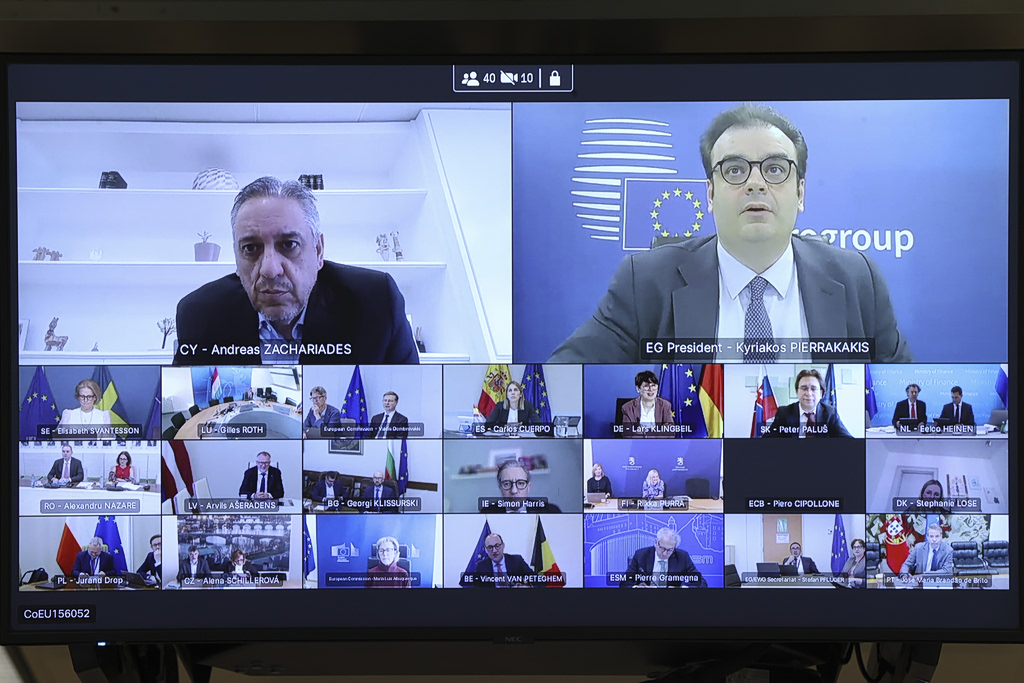
Eurogroup President Kyriakos Pierrakakis said the effects of the war are already visible in the real economy, affecting both business operating costs and household energy bills. He stressed the need for a common European approach, though such coordination has yet to emerge.
source: ot.gr