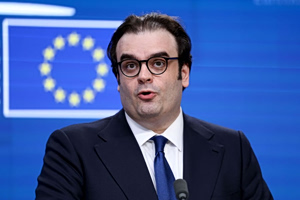
Greece’s finance minister and Eurogroup president will attend the IMF–World Bank Annual Meetings in Bangkok from October 15 to 17, joining discussions on global economic risks, financial stability and Europe’s competitiveness
Brussels considers Greek and Italian bids for energy aid under the escape clause, but warns against new fiscal flexibility as bond markets tighten.
Athens is seeking support for households and businesses hit by higher energy costs, while working with Italy and Cyprus to build a broader European case for limited fiscal flexibility
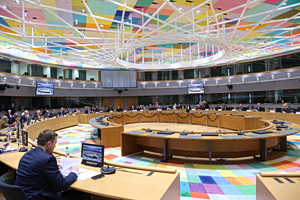
Finance ministers will discuss the impact of energy markets on the eurozone economy, the effectiveness of public spending and progress toward deeper capital-market integration at Thursday’s meeting in Luxembourg.
Eurozone finance ministers meet in Dublin to tackle the energy crisis, as Greece weighs new subsidies and Germany pushes for fuel VAT cuts.
The Eurogroup president will meet German Chancellor Friedrich Merz and Finance Minister Lars Klingbeil in Berlin. Growth, competitiveness, fiscal coordination and deeper European financial integration are the main issues on the agenda
The Eurogroup president says the EU cannot afford to keep acting as 27 separate countries as geopolitical and technological changes accelerate, calling for greater political will and faster implementation of reforms.
AI, digital finance and Europe's technological sovereignty dominate the Eurogroup agenda in Brussels, alongside fiscal policy, competitiveness and investment.
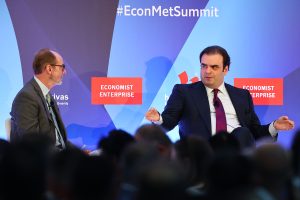
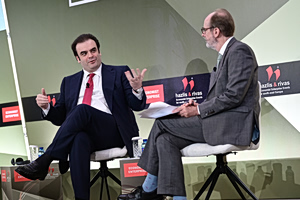
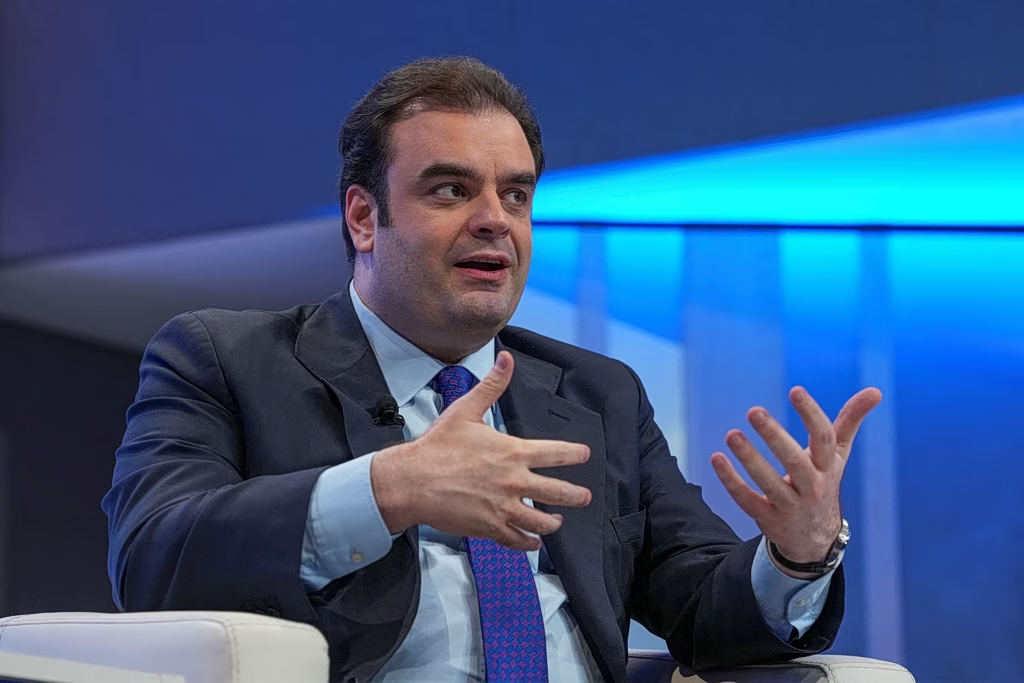
At the Economist's government roundtable in Athens, the Greek finance minister and Eurogroup chief pushed for a common EU technology doctrine, joint 5G and 6G spectrum auctions, and faster action on energy and a savings union to keep startups and capital in Europe
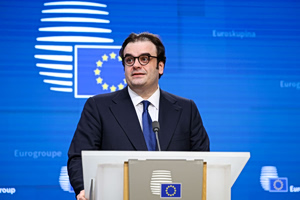
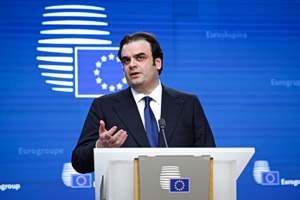
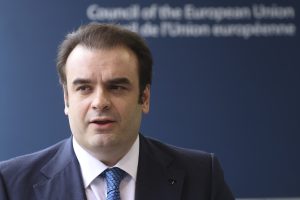
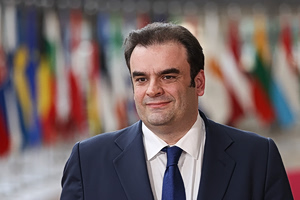
Eurogroup President Kyriakos Pierrakakis calls for AI, technology and digital finance to become central pillars of the Eurozone's economic agenda.
Pierrakakis will meet European Parliament President Roberta Metsola in Brussels before addressing an EU budget conference and a major economic forum in France
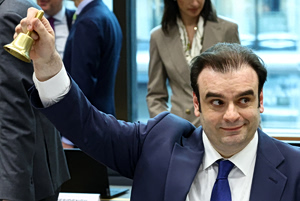
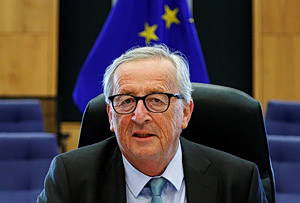
Former European Commission President Jean-Claude Juncker returned to a Eurogroup meeting, expressing his satisfaction that a Greek finance minister now leads the eurozone’s key economic forum.
European finance ministers will discuss energy investments, economic stability, green transition and EU strategic priorities as Greece’s Economy Minister takes part in key meetings.
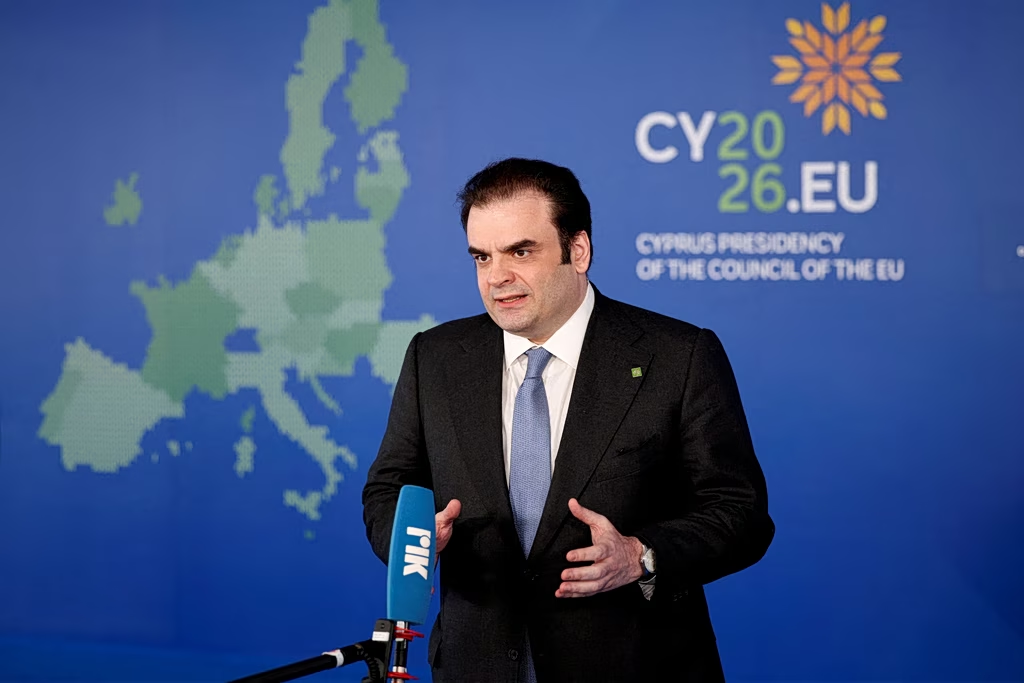
Speaking at a Eurogroup meeting in Nicosia, the Greek Finance Minister highlighted Europe’s economic resilience amid inflationary pressures, while stressing coordination on energy shocks, housing policy challenges, and the planned Digital Euro.
In Greece, official data show nearly 794,000 homes standing empty, despite tax incentives introduced to encourage owners to return properties to the long-term rental market.
Kyriakos Pierrakakis called for major investment in power grids, innovation and energy integration, arguing that Europe must strengthen its productive and technological capacity to remain competitive
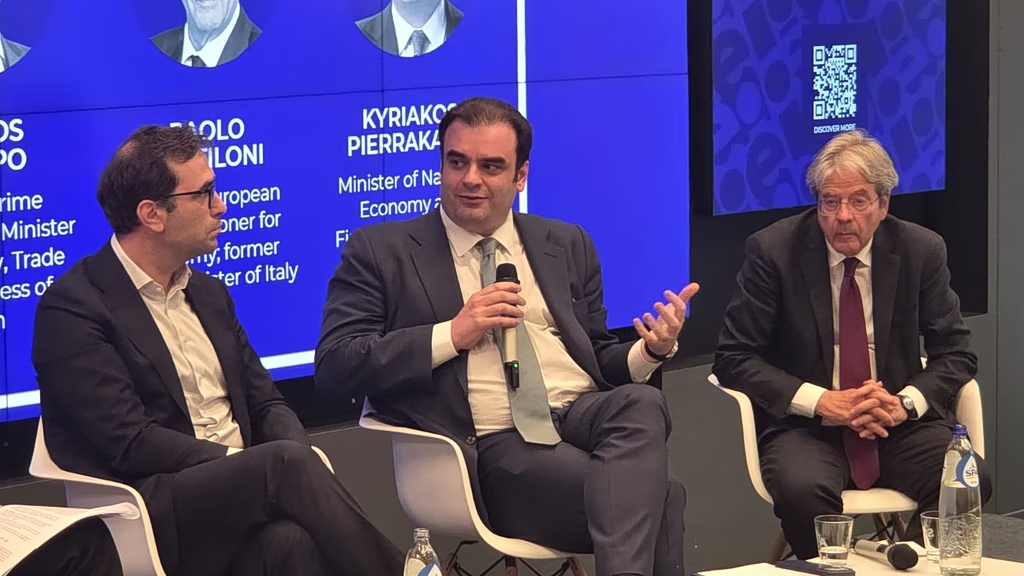
Speaking in a European competitiveness panel, Greece’s finance minister urged deeper integration across economics, defense and technology, warning that fragmented national approaches could cost Europe key opportunities in a rapidly changing global landscape
With oil above $125 a barrel and eurozone inflation back at 3%, European finance ministers warned Monday that poorly designed subsidies risk channeling most of their benefit to the wealthy, repeating what the IMF calls the central mistake of 2022.
Finance ministers from across the euro area gather in Brussels for Eurogroup and Ecofin talks focused on economic stability, banking resilience, and growth priorities, as discussions extend to EU competitiveness and global geopolitical pressures.
Greece’s finance minister becomes the first Greek to join a G7 session, highlighting economic resilience, energy security and the global impact of artificial intelligence.