 Μake us preferred on Google
 Riyadh is opening new horizons for Greek–Saudi cooperation as it turns toward clean technologies and green development. The “land of oil” is now investing decisively in diversifying its economy and seeking strategic partners for this new journey.
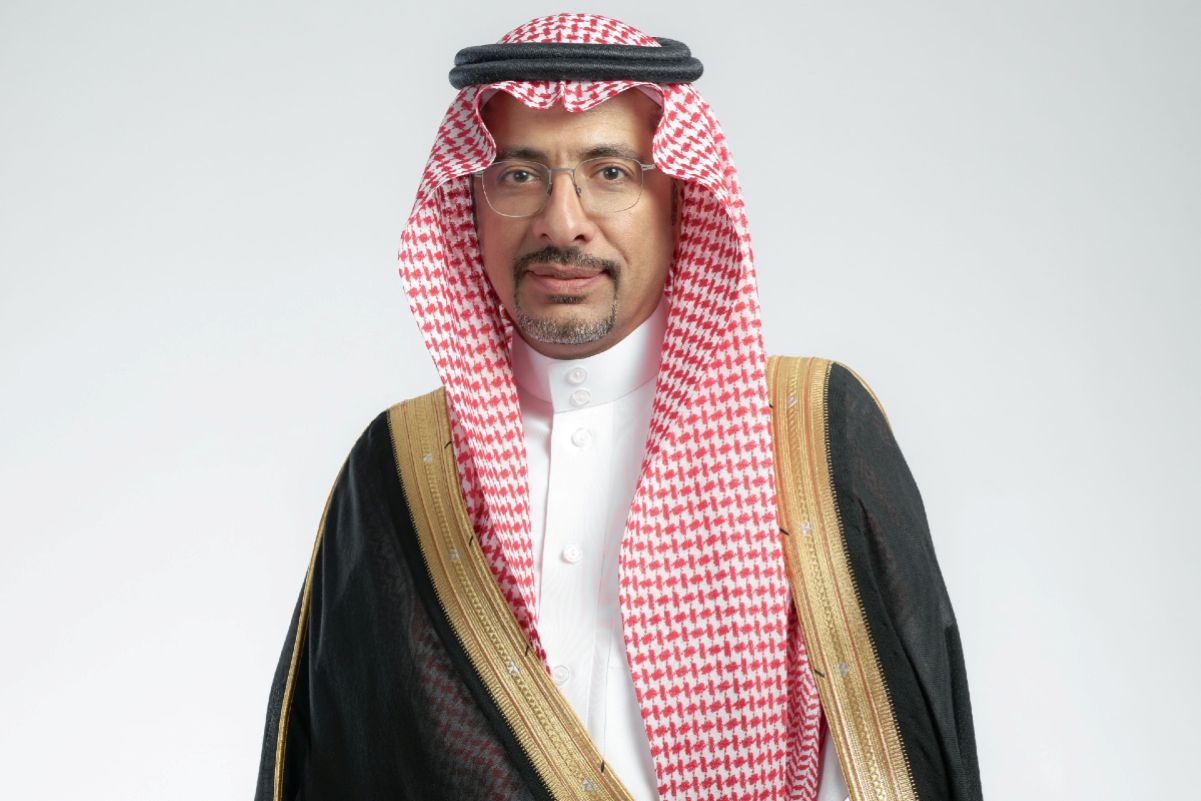
In an interview with TO BHMA, Bandar bin Ibrahim Al-Khorayef, Minister of Industry and Mineral Resources of Saudi Arabia, highlights the Kingdom’s interest in collaborating with Greek companies—particularly in the fields of critical and rare earth minerals, renewable energy, food production, shipbuilding, pharmaceuticals, and water management.
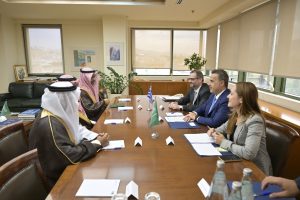
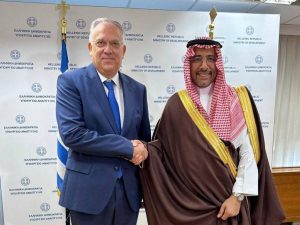
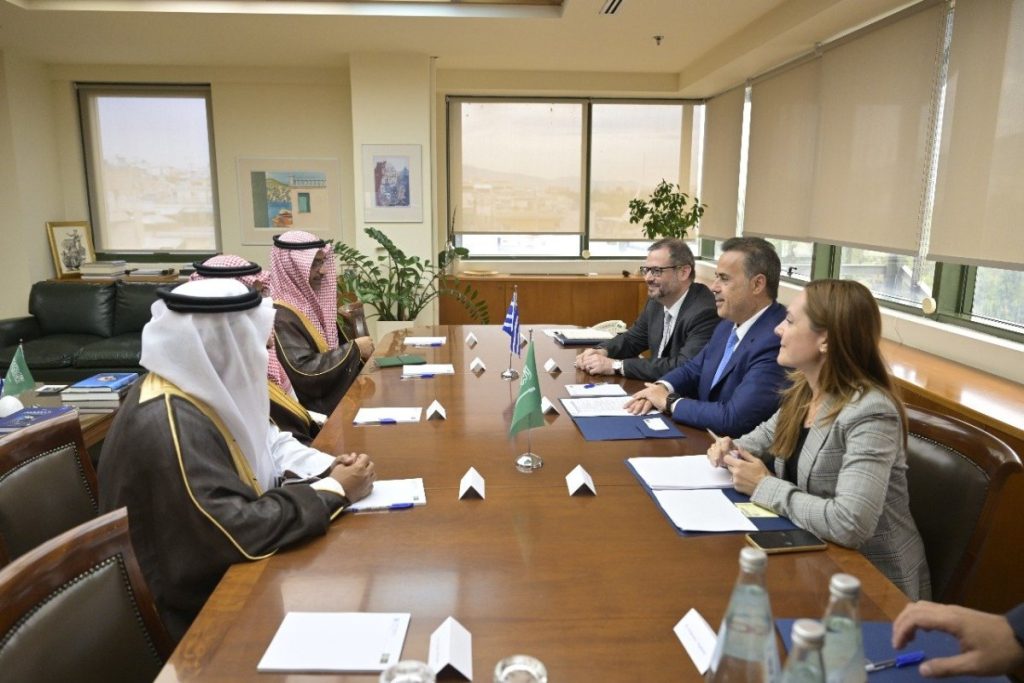
He also sees strong potential for joint ventures in desalination, recycling, and water reuse projects in Greece. The minister led a high-level delegation to Athens last week, meeting with Greek government officials and business leaders to strengthen bilateral economic ties.
Saudi Arabia has announced investments of 100 billion euros in the extraction of critical minerals and rare earth elements. Do you see prospects for investments in Greece or partnerships with Greek companies?
Al-Khorayef: “Mining is a central pillar of our Vision 2030. In the past, Saudi Arabia focused mainly on oil and gas, but that changed with the new mineral wealth strategy we adopted. Through extensive geological studies and surveys, we discovered—and announced last year—that our reserves are 90% larger than previously known.
When we started, we estimated our mineral wealth at 1.3 trillion dollars. Now we believe it reaches 2.5 trillion euros. Our resources focus on phosphate, bauxite, gold, silver, zinc, copper, and other minerals in smaller quantities. We estimate that rare earth elements make up about 15–20% of our reserves.”
How do you assess the potential for cooperation in this sector?
Al-Khorayef: “We spoke with the Greek Ministers of Energy and Economy. Greek companies’ experience in mining is invaluable. We can benefit from it in Saudi Arabia—in know-how, services, operational support, and mine design. It’s a sector with real opportunities for collaboration.”
Are you also interested in investing in Greece in the field of rare and critical minerals?
Al-Khorayef: “Opportunities are clearly greater in Saudi Arabia. I understand that in recent years, Greece has had less mining activity. We discussed rare earths and their processing with the Energy Minister.
We’ve established Manara Minerals Investment Company, a joint venture between the mining company Ma’aden and the Public Investment Fund—our government’s investment arm responsible for foreign investments. In the future, they may explore opportunities when attractive projects arise in Greece.”
Are there any steps being taken in the meantime?
Al-Khorayef: “We invited the minister and Greek companies to participate in the 5th Future Minerals Forum, which will take place in Riyadh this January. We agreed to facilitate contacts before the forum so that discussions can already be underway when participants arrive.”
In 2022, several memoranda of understanding were signed between Greek and Saudi companies. Has there been any progress?
Al-Khorayef: “My visit to Greece aims to ensure that the strong relationship between our leaders and our shared interest in developing ties translates into concrete projects and actions.
We agreed that everything signed in the past must be activated. We also discussed reactivating the Business Council, which will monitor the memoranda and explore how our governments can better support the private sector.”
Which sectors do you believe hold the greatest potential for cooperation between Saudi Arabia and Greece in the near future?
Al-Khorayef: “Food, renewable energy, shipbuilding, and the pharmaceutical industry all show great promise. Especially in food production, consumer tastes in our two countries are quite similar, making it easier to introduce Greek products to the Saudi market.”
Have you focused on specific products?
Al-Khorayef: “We have a dedicated food team that has already identified certain areas and companies of interest, such as Papadopoulos, Olympus, Dodoni, FAGE, and Kri Kri.”
Cooperation has already begun in the energy sector.
Al-Khorayef: “Indeed. Major energy projects are advancing, such as the large electricity interconnection—the undersea cable linking Athens and Riyadh through the IPTO–National Grid partnership. It’s a massive project that will benefit not only both countries but all of Europe. Such projects often have a broad impact across industries and logistics.”
Will this cable project be connected to Saudi Arabia’s shift toward green energy?
Al-Khorayef: “Absolutely. The network will transmit the green energy we produce. Our plan is for renewables to make up 50% of our energy mix by 2030. In the next five years, green power capacity will reach 130 GW. The new cable will carry this energy. We’re also committed to achieving net-zero emissions by 2060.”
You also mentioned cooperation in shipbuilding.
Al-Khorayef: “Shipping is a strategic sector for us. We have established the King Salman Shipyard Complex, which handles all types of vessels—tankers, commercial ships, leisure, and military vessels. It’s a joint venture between Aramco and Hyundai. There are many opportunities for collaboration with countries like Greece, which has deep experience in this industry.”
How could such cooperation develop?
Al-Khorayef: “At this stage, it’s too early to say. We’re building the foundations so that the private sector can identify opportunities and decide how to collaborate—through joint ventures, technical or engineering support, or service provision.”
Discussions also took place regarding investments in water management?
Al-Khorayef: “Yes, I met with the Greek Ministers of Energy and Finance to discuss our expertise in water treatment and reuse. We have the state-owned company ACWA Power, which builds, owns, and operates energy and water projects specializing in renewables, desalination, and recycling.
We’re at the beginning of discussions. We agreed to connect Greek ministries with ACWA Power and relevant Saudi agencies experienced in water management, so that by the January forum, new ideas can be developed. There’s great potential in this area.”
Saudi Arabia is also investing in new technologies such as hydrogen production and carbon capture, storage, and utilization. In Greece, a CO₂ storage project is underway, and several industries are preparing related initiatives. Could there be synergies?
Al-Khorayef: “The short answer is yes—but Saudi Arabia is already far ahead. We started long ago with pilot projects and now have a large-scale carbon capture plant operated by Aramco. Our focus now is on how to utilize the carbon we capture in such quantities.
As for hydrogen, Saudi Arabia is the world’s largest producer. For instance, the NEOM Green Hydrogen Company is constructing, operating, and commercializing one of the world’s largest green hydrogen production facilities, as part of the NEOM project—a futuristic city on the Red Sea coast.
The project is 80% complete, with an annual production target of 1.2 million tons. The Greek Minister of Economy also mentioned Greek construction companies’ interest in participating in Saudi projects such as NEOM, Oxagon, and housing developments.”
So, is a pipeline for hydrogen transport also planned?
Al-Khorayef: “For now, the plan involves transportation by ship, as most of the output is destined for North America, where a purchase agreement already exists.”
Regarding the “India–Middle East–Europe Economic Corridor,” which will link India to Europe through the UAE, Saudi Arabia, Jordan, Israel, and Greece—has the war in Israel affected its prospects?
Al-Khorayef: “Certainly. Peace can only be achieved if there is hope—and projects like this bring hope to people. Saudi Arabia believes stability in the region is crucial, which is why we’re working toward peace and stability.
We want investors in Saudi Arabia to serve not only the local market but also the wider region. Iraq is returning with greater demand, as are Syria, Yemen, and Lebanon. These countries, along with the Gulf Cooperation Council members (Saudi Arabia, United Arab Emirates, Oman, Kuwait, Bahrain), will form a vast market.
Add to that Saudi Arabia’s role as a bridge to Africa, and an entirely new perspective emerges. Today, trade between Greece and Saudi Arabia is still small compared to its potential. We must change that.”