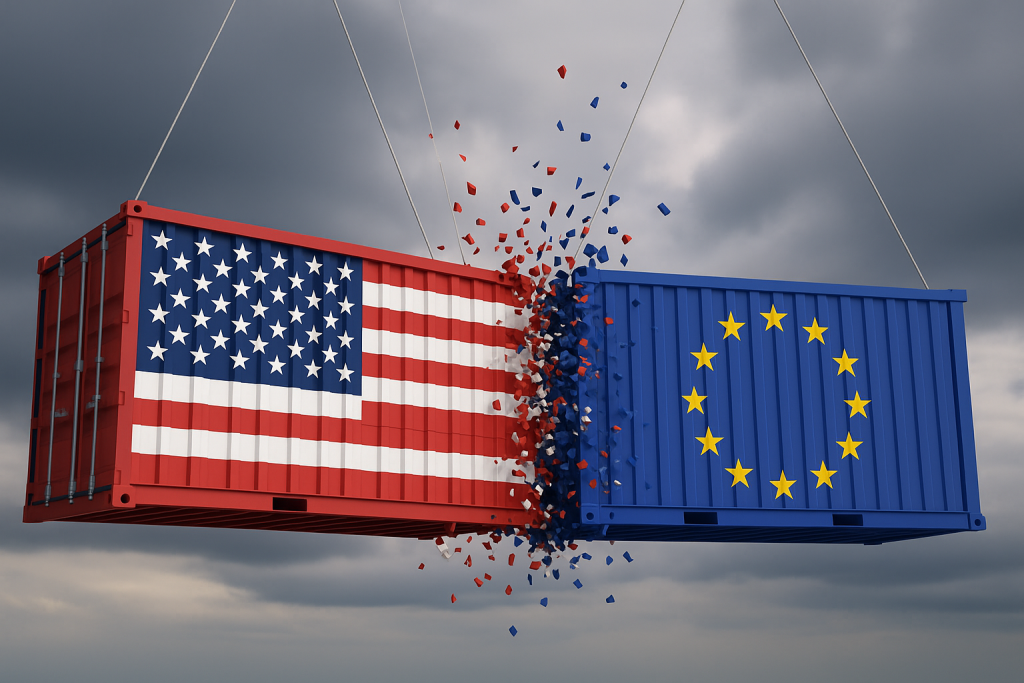

New data from the Greek Exporters Association (SEVE) show that U.S. tariffs have created a sharply uneven landscape for Greek exports, with some products making surprising gains and others suffering steep declines. The findings, based on year-over-year comparisons and on the period before and after tariff implementation (April–September 2024 vs. April–September 2025), highlight both emerging opportunities and mounting pressures for Greek exporters.
Newcomers Enter the U.S. Market
Several product categories appeared in the U.S. market for the first time during the tariff period, signaling a diversification of Greece’s export base despite the challenging environment.
Steel pipes surged from virtually zero exports in 2023 to €21.8 million in 2024, then jumped further to €49.2 million between April and September 2025. Electric conductors followed a similar path, rising from only €6,464 in 2023 to €38.4 million in 2024, although their exports dropped sharply -by 88.1%- during the tariff window.
Other categories making notable debuts included trailers and semi-trailers, as well as diesel fuel, all recording meaningful export volumes during the tariff period.
Traditional Products Take a Hit
Some of Greece’s most recognizable exports faced setbacks under the new tariff regime. Feta, a flagship Greek product, grew from €53.4 million in 2023 to €61.9 million in 2024 but then fell to €30.4 million during April–September 2025, a sharp decline compared to the same period the previous year.
Hair-care cosmetics also reversed their upward trend, dropping 9.4% in the tariff period. Fresh kiwi exports decreased by 22.4% in the same timeframe.
Resilient Sectors Defy Tariff Pressure
Not all categories struggled. Aluminum sheets, plates, and foil recorded robust growth, reaching €77.4 million between April and September 2025, a 29.8% increase compared with the previous year’s period.
Canned peaches grew 9.4%, while pharmaceutical products containing alkaloids jumped an impressive 71.2%. Jet-fuel exports increased by nearly 9%, and turbojets saw their exports nearly double.
Sectors Facing Persistent Declines
Certain categories suffered sustained losses both before and after the tariff changes. Prepared food products fell by 13.5%, aircraft parts by 13.4%, and Portland cement by a significant 38.8%. Olive exports, another staple Greek product, recorded a modest decline of 3.6%.
SEVE Calls for Targeted Measures and Stronger Coordination
SEVE emphasized that the impact of the tariffs is far from uniform and called for targeted interventions to protect sectors that are losing ground. The association underscored the importance of strengthening the competitiveness of Greek industries while also capitalizing on new market openings.
SEVE noted that its close coordination with the Greek government, relevant ministries, the U.S. Embassy, and European institutions is ongoing. The organization highlighted the lessons of 2019, when coordinated diplomatic efforts helped Greece avoid tariffs on key agri-food products.
“A Positive Sign, but Vigilance Is Needed”
SEVE President Simeon Diamantidis said that the partial lifting of U.S. tariffs is encouraging, calling it a “clear indication that further reductions may follow.” However, he stressed the need for continued alertness, as several sectors have been significantly affected in recent months.
Diamantidis said SEVE will continue to advocate for reduced tariff barriers and support Greek exporters in leveraging new global opportunities.