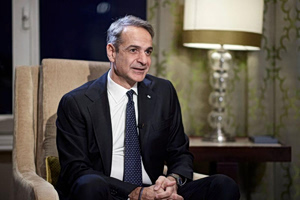
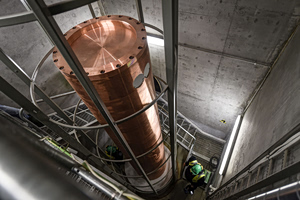
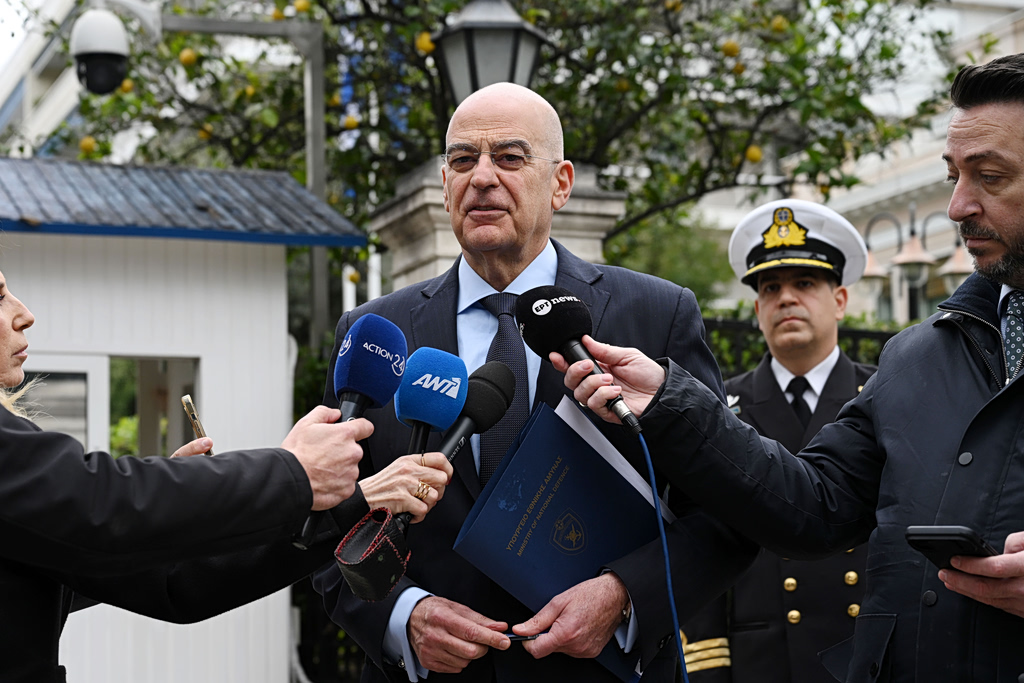
Energy Minister Stavros Papastavrou and the Greek delegation return today, Monday, to the place where it all began. For our country, Houston, Texas, can rightly be called ground zero—the place where, ten months ago, energy began to emerge as a new pivotal chapter in Greek-American relations.
When Greece appeared at the CERAWeek conference a year ago, at what participants themselves call the “Energy Davos,” it was seeking opportunities amid the uncertainty of the first months of Donald Trump’s administration. It was then, in May 2024, that Stavros Papastavrou met privately with Chevron and ExxonMobil. He then traveled to Washington, where he met with Interior Secretary Doug Bergam. Since then, much has happened.
The Plan Will Now Run in Practice
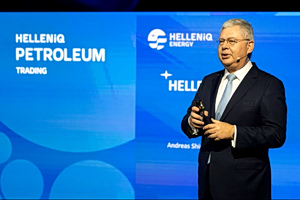
Last September, Chevron entered the Greek energy tender. A few days ago, Parliament ratified the agreements with the Chevron-Helleniq Energy consortium for the concession of exploration and exploitation rights for hydrocarbons south of Crete and the Peloponnese. A fifteen-year national plan that had remained on paper became law.
Today, with these new conditions, the Greek delegation returns to the same field to essentially play the “second half.” On the first visit, the goal had been to finalize the agreements. This year, the focus is on the next steps concerning numbers and dates. With ExxonMobil, discussions will concern the exploratory drilling; with Chevron, geophysical studies, seismic surveys, and timelines. And above all, when a first clear picture will be available regarding whether the reserves can indeed be exploited.
In other words, if the foundations were laid on the first trip, now the question is how this plan will run in practice and on what schedule. For this reason, the Greek side arrives with an expanded delegation, including Deputy Minister Nikos Tsafos and the head of the Hellenic Hydrocarbons and Energy Resources Management Company (HEREMA), Aristofanis Stefatos, as discussions now shift from the political to the technical field.
How We Reached Houston 2.0
In the early months of the Trump administration, uncertainty prevailed—not only regarding priorities but also regarding how Washington would approach its allies. The new U.S. government appeared with a more transactional approach, less institutional and more results-oriented. In Athens, this created an inevitable question: what does Greece have to offer Donald Trump?
The Greek side did not wait for developments to unfold. It read the new landscape and identified in time the U.S. president’s interest in the idea of “energy sovereignty.” As a result, it acted quickly. It brought Chevron and ExxonMobil to the table while simultaneously promoting projects with immediate value for the U.S. side.
The Vertical Corridor project is the most characteristic example, as it positions Greece as a gateway for U.S. LNG to Eastern Europe. This approach aligned with the logic of the Trump administration. The agreements under the Transatlantic Energy Cooperation Partnership (P-TEC) in Athens were positively evaluated at the White House—not due to size but because they represented one of the first commitments for long-term supply of U.S. LNG in the region.
The Lesson from the Gulf
The new crisis in the Persian Gulf does not change the agenda of the Houston meetings. But it does change the context in which they take place, as in an environment of successive crises, the emphasis shifts to timing—how quickly a clear picture of the reserves can emerge and decisions can be made. For Greece, this means accelerating exploration and obtaining a clear answer on whether production is possible.
At the same time, the crisis does not close the discussion on Russian energy. On the contrary, it brings it back into a context where the European stance appears less cohesive. Despite the commitment to decoupling, there are reports of countries—particularly in Northern Europe—that seem to view positively the potential return to Russian gas. Despite tangible political support from the U.S., this uncertainty regarding the future of Russian energy directly affects the Vertical Corridor, leading some countries to adopt a wait-and-see approach.
The Second Leg of the Visit
Beyond meetings with companies, Houston also includes a second part of the visit concerning the U.S.-East Med Energy Center. Discussions have progressed enough that it is no longer just a general idea. The most likely scenario is for it to be hosted at Rice University in Texas, where Stavros Papastavrou will give a lecture next week at the Baker Institute.
The matter has already passed through Congress. On the initiative of Representative Chuck Fleischman, funding of approximately $2 million was allocated for the first steps through the energy and water resources bill, which was included in a broader budget package and approved by a wide majority in both houses. The U.S. Department of Energy has already contacted Rice University, as funds are to begin disbursement by September.
In practice, the goal is for the center to operate as a coordination hub for projects that have so far progressed independently—such as LNG, interconnections, and energy corridors—giving them a common strategic direction while establishing a more stable U.S. presence in the region.
The upcoming period is of particular interest for Greek energy diplomacy. Against the backdrop of the 3+1 meeting (Greece, Cyprus, Israel, and the U.S.) for the first time at the energy ministers’ level in the U.S., the question for Greece at CERAWeek is no longer whether it has a place on the energy map. The question is whether time will allow this plan to mature before an increasingly unpredictable landscape changes again.