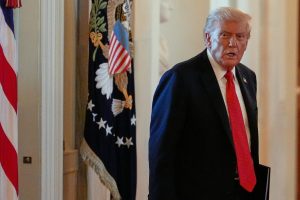
Donald Trump, accompanied by NATO Secretary General, presented journalists at the White House with architectural plans to demolish the Eastern Wing and build a grand ballroom for 1,000 guests—a space reminiscent of his Florida estate, controversial in taste.
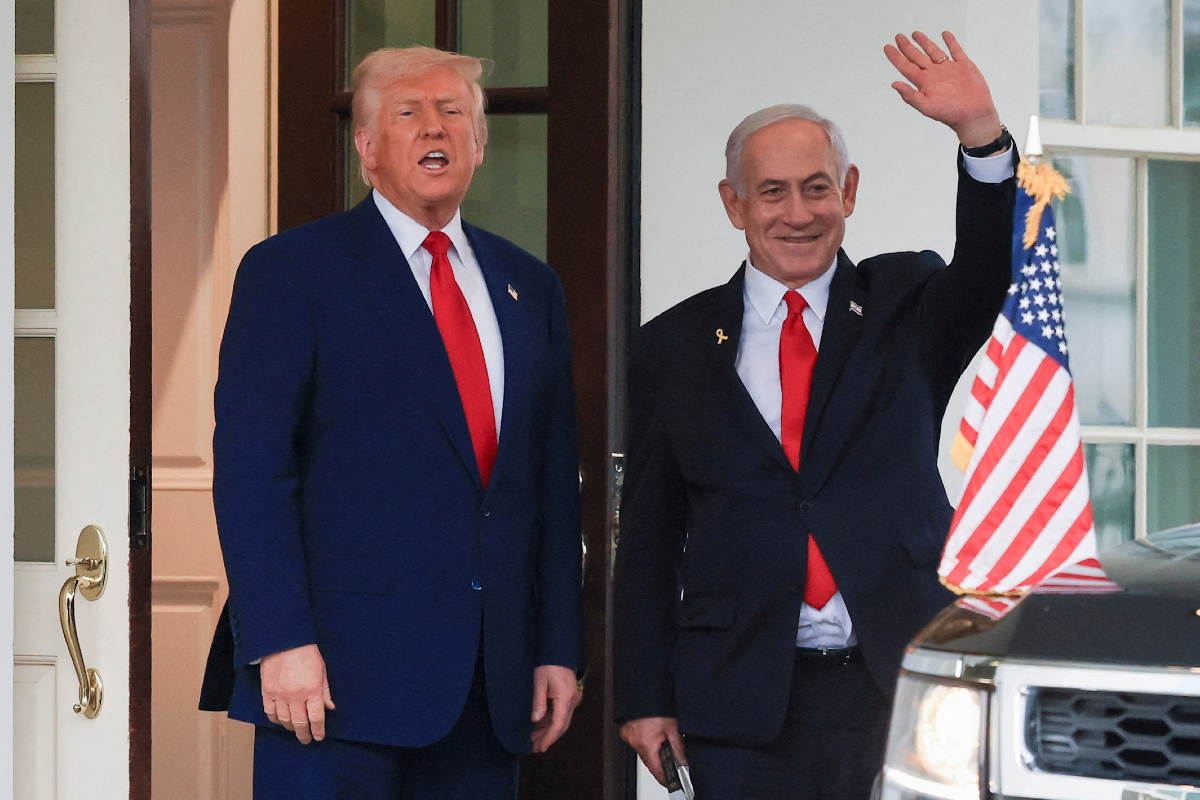
These unusual announcements coincided with striking reversals in U.S. foreign policy regarding conflicts in Ukraine and Gaza, surprising not only Vladimir Putin but also Israeli Prime Minister Benjamin Netanyahu. At the same time, European leaders welcomed Trump’s announcement of a joint sanctions plan targeting Russia. A few days later, following the announcement that he would meet Putin in Budapest, Trump postponed the visit, recognizing that the Russian president was not taking him seriously.
Moscow quickly responded with large-scale military exercises, including simulated intercontinental missile launches with nuclear warheads capable of striking the U.S. by land, sea, or air. Earlier, Russian Foreign Minister reiterated demands for Ukraine to cede the entire Donbas region, including areas not yet occupied by Russian forces.
These developments highlight the consequences of Trump’s repeated policy reversals, demonstrating that he has not established a coherent strategy toward Russia. Observers note that he routinely ignores State Department recommendations, acting according to his impulses each morning—a deeply concerning pattern for the leader of the West’s strongest military and economic power.
Within this context, hardline Netanyahu has openly criticized Washington during a U.S. vice-presidential visit, declaring, “We are not a U.S. protectorate,” emphasizing Israel’s sovereign decision-making in security matters. Disagreements continue over the composition of the International Stabilization Force, limiting Israeli military options and delaying the second phase of a 20-point peace plan.
Meanwhile, Israel’s parliament approved annexation of parts of the West Bank, provoking further U.S. reaction. With tensions unresolved in both Ukraine and Gaza, an urgent need remains for effective coordination between the U.S. and EU. The recent announcement of new sanctions against Russia could represent a first meaningful step in that direction.