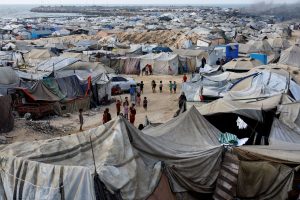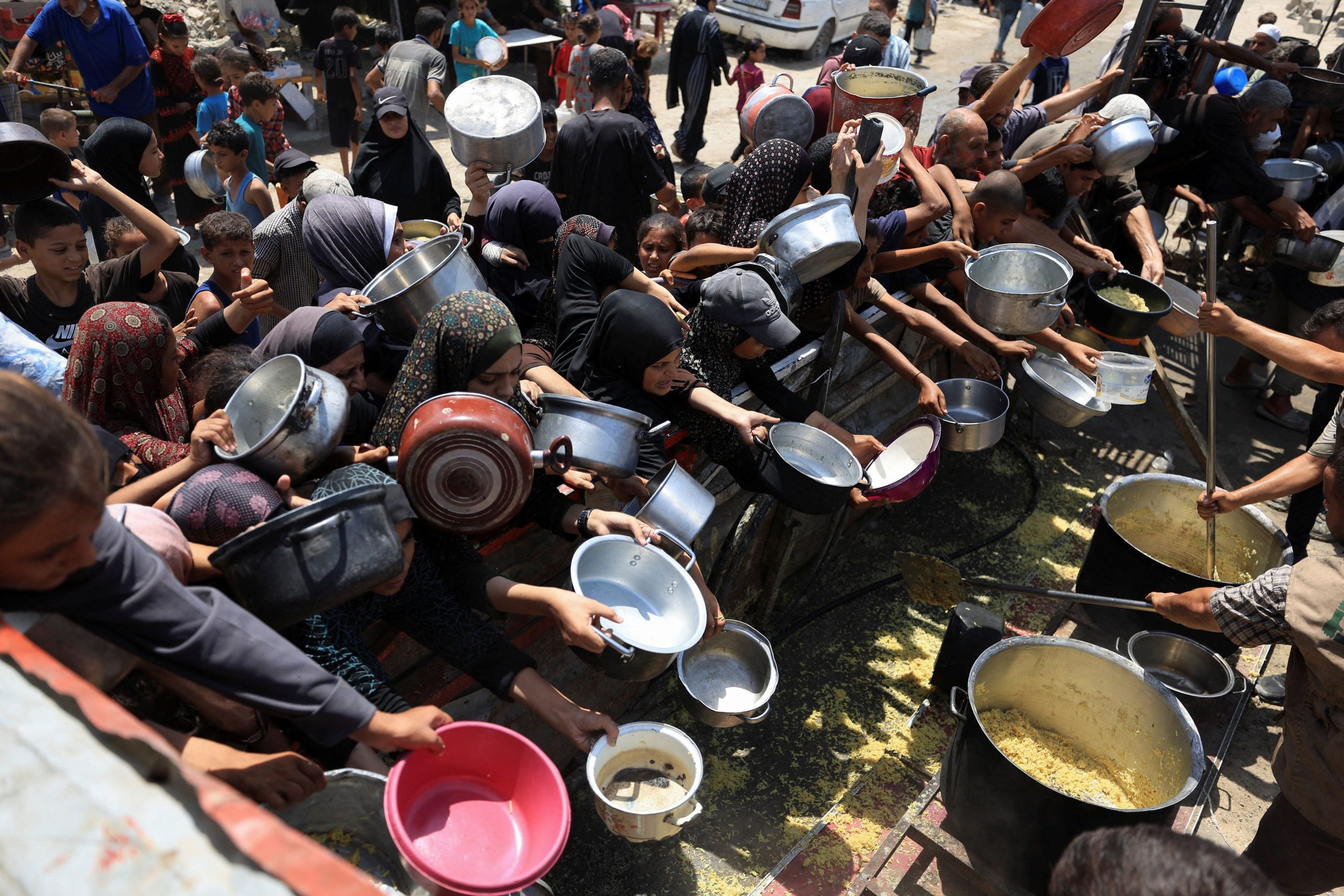
A plethora of images and videos from the humanitarian catastrophe in Gaza reaches us daily. The shocking situation is transmitted live, a characteristic of contemporary conflicts. As a result, we are all aware of the reality in the field. This narrow strip of land has turned into a dystopia, where food is weaponized. Mercenaries open fire on crowds huddled around humanitarian aid distribution points, an unacceptable act that violates international humanitarian law.
Governments do not act sentimentally. In foreign policy, the doctrine of realism dominates: the ethical norms in inter-state relations differ from interpersonal ethics. States pursue national interest. However, even when interpreting the stance of the Greek government through the lens of realism, potential unwanted consequences arise.
Greece has cultivated a strong geostrategic relationship with Israel during the latest decades. The EastMed pipeline is wishful thinking, but if realized, it could significantly enhance the regional standing of Greece and counterbalance Türkiye.
Greece has condemned the October 7th attacks. But, Israel is now at war not only against Hamas, but also the whole Palestinian population in clear violation of international law. Unconditional support for Israel coupled with silence on illegal settlements and the infringement of international law, casts doubt on the consistency of Greek foreign policy.
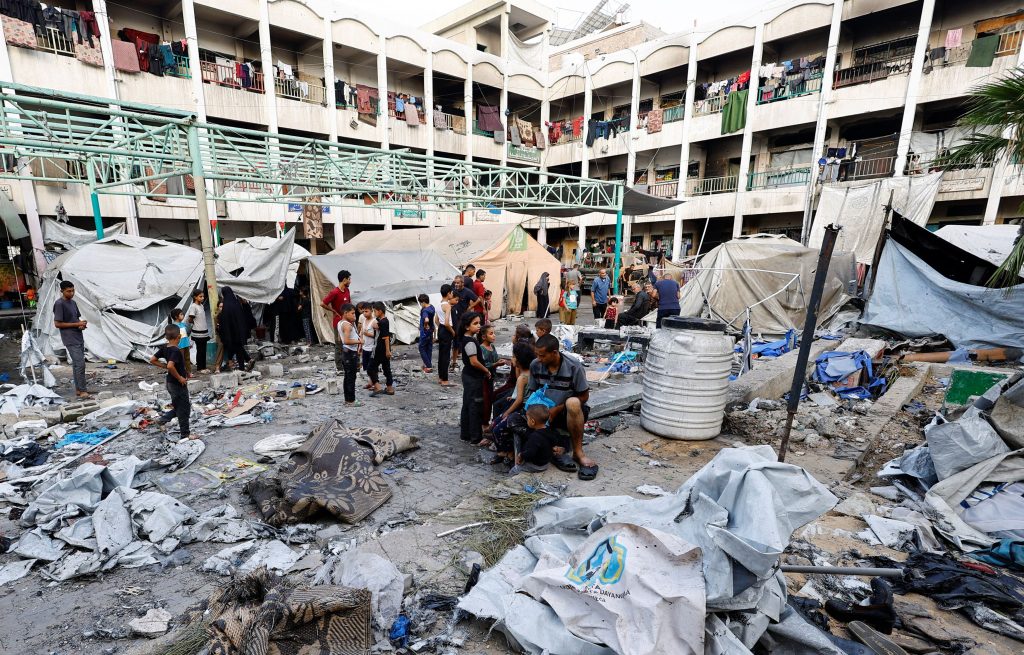
Palestinians inspect the site of a Friday Israeli strike on a school that was sheltering displaced people, in Gaza City, August 16, 2025. REUTERS/Mahmoud Issa
Amid global outrage, Emanuel Macron and Keir Starmer have publicly committed to recognizing a Palestinian State, joining Spain, Norway and Ireland. Greece has supported a two-state solution, but has yet to proceed with formal recognition. Further pressure is applied on the Greek government, since a stark contrast is highlighted. Greek leadership seems to overlook the damage to the country’s image, as well as the national stance on the Cyprus conflict.
The Cyprus conflict and the Palestinian issue are not identical. The reasoning behind this parallel is to highlight the importance of consistency in international law interpretation. The State of Palestine lacks full recognition, but international legal protections are fully applicable.
Consistency in the interpretation of international law is crucial and builds credibility for a state. Customary international law is one of the primary sources of international law, according to the Statute of the International Court of Justice. International obligations are being shaped through established, repetitive practice and bind all states – no exceptions made. Inconsistencies lead to ambiguity, revealing that international law is interpreted at the state’s discretion. These inconsistencies have been invoked, and rightly so, as an argument on multiple occasions in legal disputes between states.
For Greece, a dangerous precedent is emerging with implications for our decades-long stance for the Cyprus conflict. The position of the Greek state is clear and always in accordance with International Law. The 1974 Turkish invasion is condemned and the illegal Turkish occupation in the northern part of the island is not accepted or recognized. The violent displacement of Cypriots, as well as the illegal Turkish settlements seem parallel with the systematic displacement of Palestinians since 1948 (Nakba). Even today, mass evictions and displacement are carried out by the IDF in Western Jerusalem and the West Bank respectively.
Brute force blatantly overrides law, walls are erected and green lines are drawn by the powerful. The international community watches from afar, “maintaining a balance”. They do not aim for peace or a meaningful solution, rather for freezing the conflict in a grey and ambiguous state for decades. Sensitive issues like Cyprus or Palestine are swept under the rug. The unjust status quo is perpetuated for the sake of regional powers on which greater ones depend.
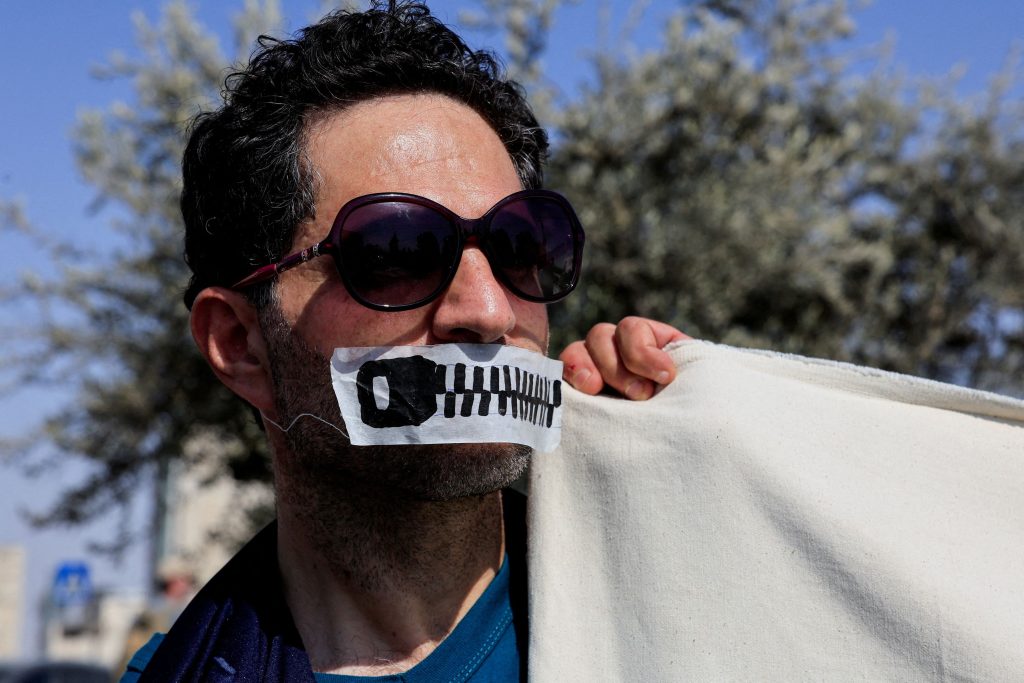
A man uses tape with a drawning of a zipper to cover his mouth, as Palestinian and Israeli activists take part in a protest against starvation in Gaza and in solidarity with journalists working there, near Beit Jala, in the Israeli-occupied West Bank, August 15, 2025. REUTERS/Mussa Qawasma TPX IMAGES OF THE DAY
The parallel between Cyprus and Palestine is a matter of ethics and also one of international law. In Greek foreign policy, the abandonment of consistency may weaken Greece’s ability to defend Cyprus diplomatically against Türkiye’s revisionism.
Meanwhile, let’s not forget the potential of Greece as a mediator in the region. Greece and Israel have strong geostrategic ties, and simultaneously, there are historical relations with the Palestinian Nation, though currently at risk. Greek – Palestinian relations date back decades. The Palestinian cause was particularly supported under the leadership of Andreas Papandreou and formal diplomatic relations were established, a bold move that stood in contrast with other European leaders at the time.
It is high time for Greece to stop passive observation and show initiative. Admittedly, the security architecture of Greece relies on powerful allies throughout its existence. It is understandable that a degree of foreign policy autonomy has been ceded to powerful allies, a common practice in alliances throughout history (from the Delian League to NATO). However, foreign policy should not be driven solely by external pressures, especially when they contradict national interest.
Türkiye has cemented its status as a regional player and a middle power, through their involvement in Syria and Libya, and hosting of Russo – Ukrainian talks. It is important for Greece to assume its responsibilities and defend its principles: respect for international law and sovereignty, as well as opposition to the law of brute force. Credibility on the international stage is built through consistency and political courage. Opportunistic alliances are short – lived. In chasing short-term gains, long-term interests risk being sidelined.
Today, Israel’s extreme military elite and Netanyahu’s political insecurities are being satisfied, at the expense of Greek foreign policy coherence. Greece spends its limited diplomatic capital recklessly.
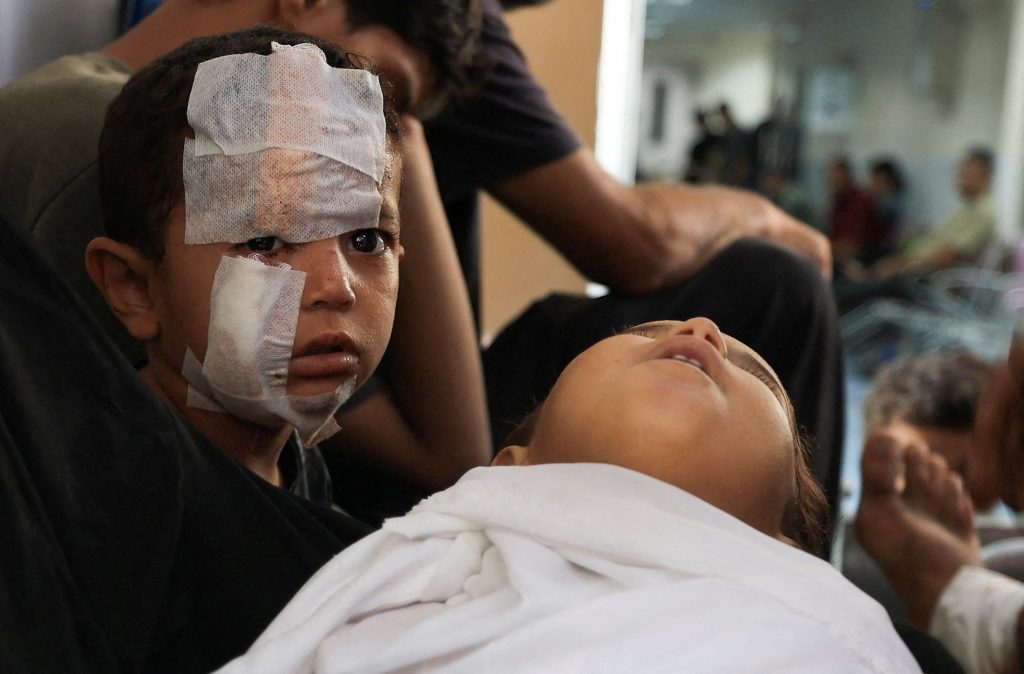
SENSITIVE MATERIAL. THIS IMAGE MAY OFFEND OR DISTURB A child looks on next to the body of Kanan Bakr, a Palestinian boy killed in an early morning Israeli strike on a tent, according to medics, in Gaza City, August 15, 2025. REUTERS/Dawoud Abu Alkas TPX IMAGES OF THE DAY
The country faces a dilemma: will it continue to interpret international law at discretion, risking harm to Greek diplomacy? Or will it rise to the occasion and add the dimension of morality in the equation? The strategic value of any pipeline does not justify abandoning ethical consistency.
When it is finally too late, and when the truth about what is happening in Palestine becomes common knowledge, Greece may well rush to express solidarity, echoing the neutral countries of the Second World War that hurriedly declared war on Nazi Germany in the final moments, simply to be on the right side of history.
Myrto Kachrimani is an undergraduate student of International Relations and European Studies at the University of Piraeus and a member of EU Youth Hub. Her interests entail contemporary politics, as well as international humanitarian law.
opinion piece was selected to be published within the framework of To BHMA International Edition’s NextGen Corner, a platform for upcoming voices to share their views on the defining issues of our time.
Note: The term Palestine refers to the territories recognized as the State of Palestine by 147 UN members, specifically the West Bank (including East Jerusalem) and the Gaza Strip.