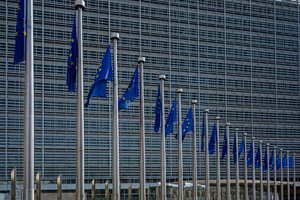
The peoples of Europe, by establishing an ever-closer union among themselves, decided to share a peaceful future founded on common values. The Union […] is based on the indivisible and universal values of human dignity, freedom, equality, and solidarity […] creating an area of freedom, security, and justice.”
This is how the preamble of the Charter of Fundamental Rights of the European Union begins. The second Article of the Charter, immediately after human dignity, is “The Right to Life: 1. Everyone has the right to life.”
As children at school, things like the Declaration of Human Rights or the EU Charter seemed boring to us. This is easily misunderstood, and one might think that we found them boring because, as spoiled and inexperienced kids, we considered them self-evident and ignored the sacrifices of our ancestors, and so on. But that would be a mistaken assumption.
The reason we found them boring was that they sounded to us similar to Geography lessons, when we learned about the water cycle or the continental shelf. We felt that some things simply exist and function as they do because that’s how they are. We couldn’t have been spoiled simply for assuming the existence of a rock, a mountain range, or a desert, for example. Our thinking was certainly simplistic, and we were certainly privileged children, but we were not reckless, nor was there any damage to the culture being cultivated within us, when the “peaceful future founded on common values” felt as familiar and self-evident as the rock we climbed every day during recess in elementary school.
A few days ago, at the Athens Security Forum 2025, Defense Minister N. Dendias made a statement that was piercing, if not chilling:
“For Europe to have serious defense capabilities, there are many prerequisites; building a serious defense industry is one of them. But it is not the only one. It is neither a sufficient nor a necessary condition. The first prerequisite is a change in the culture of European societies. That is, a return to a spirit of self-sacrifice, to a culture in which a European is aware that he may need to sacrifice himself to defend the rights he enjoys. Today, Europe cannot bear to see coffins with flags on them, not even the European flag. The United States is accustomed to this sight. Therefore, we must have an honest and serious discussion […] about how far we are willing to go.”
Is it, perhaps, one of the paradoxes of such a democratic union that to defend the values and rights you enjoy, you must always be ready to set them aside — to even step on the very first paragraph of their preamble with your boots? And if so, is this a paradox we could ignore in order to move toward the necessary “cultural change”? And if so, in front of how many things would we have to close our eyes before it becomes normal to openly refer to coffins as a necessary existential condition in public discourse?
European leaders increasingly invoke the imminent great war with a prophetic air. Almost voraciously. Through apocalyptic caves and construction sites of Noah’s Arks worth 800 billion euros. Forget what you learned in Geography, forget childhood games, forget the History book with photos of Churchill, Roosevelt, Stalin, and Picasso’s Guernica beside it. The thick fog of this war has already spread so quickly that we barely know what we are seeing: drones flying over German airports, over Denmark and Poland. We are sure the Russians are flying them; the Russians say we are imagining it. In any case, we must forget everything and accept a harsh truth: that our era is no longer postwar, but prewar. And because most of us have no place in defense council rooms — and even though war rhetoric often makes rhetoricians resemble town criers in front of defense industry shops — we must get inside the armored vehicle and not ask too many questions.
Yet, young Europeans do not want to fight. According to research by IE University, while 49% believe their country will be directly involved in a war within the next ten years, only one-third say they would choose to fight in such a case. The reasons are economic, political, and — most importantly — ideological. Vincenzo Bove, Professor of Political Science at the University of Warwick, notes that young Europeans are overwhelmingly opposed to wars and to increased military spending:
“Ideologically, they are very far from a sample of soldiers of the same country regarding how they view society, their ambitions, and what they want to do. And this distance grows over time.”
Today, Ukrainian soldiers are encouraged to fight more effectively through a video game-inspired system, where each drone strike earns points that can be “exchanged” for better weapons. The gap in wartime between self-sacrifice and dehumanization, between defending values and abandoning them, becomes evident.
Thus, even if prospective soldiers could close their eyes to the paradox, it would be much harder to forget what they have already learned about war, starting from the horrific images and absurdity they have witnessed over the past three years in Ukraine and Gaza.
Of course, they may already have heard enough in History class and on their grandparents’ couches to make it impossible for the unspeakable tragedy of war to be casually dressed in a traditional costume, with smiles on their faces or a taste for adventure, as if it were summer of 1914.
For they have grown up on a continent that, even with blood-stained hands, celebrates life, individuality, freedom, and “never again” at every opportunity. Within their families, there are wounds barely healed: orphans who never knew their fathers, parents who lost thousands of sons in seconds, twenty-year-old wives who welcomed their husbands in coffins with flags atop them.
So they know that coffins draped in flags are still coffins. And that honorable death is still death.
If their countries, the places they loved and where they were loved, were directly threatened, all of this could be overturned. Yet this is a completely different culture, potentially at odds with readiness for self-sacrifice against vague threats, defending undefined interests. It is a culture of peace.
Perhaps, then, we cannot easily ignore the paradox. Perhaps it seems more logical to defend our values and rights by dying unarmed.