Europe keeps asking what Turkey wants. China asked what Turkey costs.
Beijing did more than repress the Uyghurs. It bought the silence of the state that claimed kinship with them. In Ankara, Islam, brotherhood and destiny became theatre. In Beijing, they became an invoice.
The Uyghurs are not Chinese Muslims with local colour. They are a Turkic people of Kashgar, Hotan, Aksu, Turpan and the Tarim Basin; Xinjiang in Beijing’s vocabulary, East Turkestan in exile’s memory. They did not arrive in China. China arrived where they lived.
Beijing treats that memory as a fault line. It calls its system counter-terrorism, de-extremification, training and development. Behind that vocabulary stand arbitrary detention, alleged torture, religious restrictions, family separation, forced-labour indicators, diaspora intimidation and possible crimes against humanity. Camps became corridors. Detention became development. Coercion became connectivity.
The Uyghur demand is not museum folklore. It is language, religion, family, memory, movement, dignity and political existence.
This was Ankara’s mythic cause. Ankara put it on the invoice.
The Uyghurs are the test pan-Turkism cannot pass: Turkic, Muslim, bound to the Turkic world, persecuted by a non-Turkic great power. If that world is more than Ankara’s instrument, Kashgar should matter as much as Baku, and more honestly than occupied Kyrenia.
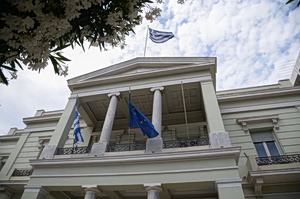
Ankara once spoke plainly. In 2009, after violence in Xinjiang, Recep Tayyip Erdogan said genocide was being committed there. In 2019, the Turkish Foreign Ministry declared that more than one million Uyghur Turks had suffered arbitrary detention, torture and political brainwashing, and called the reintroduction of internment camps and systematic assimilation a great shame for humanity.
Then the invoice arrived.
In 2017, Turkish Foreign Minister Mevlut Cavusoglu said in Beijing that Turkey regarded China’s security as its own and would eliminate anti-China reporting in Turkish media. China did not need to censor Turkey. Ankara handed Beijing the censor’s pen.
By 2024, Hakan Fidan was in Beijing, Urumqi and Kashgar, visiting mosques, invoking cultural rights, and reaffirming China’s sovereignty and territorial integrity. Anadolu presented Urumqi and Kashgar as ancient Turkic Islamic cities contributing to China’s cultural richness, while Fidan supported the one-China policy. Chinese-language reporting went further: Turkey, it said, does not support anti-China activity through ethnic issues and will not allow activities on Turkish soil that endanger China’s security or territorial integrity.
That was not outreach. It was submission in diplomatic grammar.
Betrayal is too soft. Betrayal still assumes a moral order. Ankara made the Uyghurs administrative.
The brother became a sensitivity. The sensitivity became a security file. The security file became a migration file. The migration file became a bargaining file. By 2025, Turkey was restricting the residency of Uyghurs seeking safety, including through G87 security codes; return to China meant exposure to detention, interrogation, torture and ill-treatment. In 2024, Turkey detained six people suspected of spying on Uyghurs for Chinese intelligence, in a country hosting roughly 50,000 Uyghurs, the largest diaspora outside Central Asia. The Uyghurs fled China. China followed them to Istanbul.
Turkey is no sanctuary for the Uyghurs. It is a waiting room between refuge and pressure.
The Organisation of Turkic States institutionalises the fraud. It does not organise a civilisation. It organises Ankara’s convenience. Its members are Turkey, Azerbaijan, Kazakhstan, Kyrgyzstan and Uzbekistan. Its observers include Hungary, Turkmenistan and the Turkish Republic of Northern Cyprus, recognised only by Ankara. The secessionist entity became an observer in 2022, despite the EU recognising only the Republic of Cyprus and treating any step towards recognition as damage to settlement efforts.
There is room in the Turkic world for occupied northern Cyprus. There is none for Kashgar.
Kyrenia is Turkish when Ankara needs Cyprus. Kashgar is Chinese when Ankara needs Beijing. That is not civilisation. It is statecraft.
Pan-Turanism is not a covenant. It is a tool. It expands when Ankara benefits and contracts when Ankara pays. Erdogan’s Turkic world is wide enough for an occupation in the Mediterranean and too small for a persecuted Turkic Muslim people under China. It is not a map of peoples. It is a price list.
Beijing scaled the lesson. In November 2025, a Chinese UN mission statement said that 85 countries opposed the politicisation of human rights and treated Xinjiang, Hong Kong and Tibet as China’s internal affairs. The list included Kazakhstan, Kyrgyzstan, Turkmenistan and Uzbekistan, alongside Saudi Arabia, Iran, Iraq, Egypt, Pakistan, the United Arab Emirates, Morocco, Lebanon, Libya, Sudan, Tunisia, Yemen and the State of Palestine.
Beijing did not just silence the Muslim world; it purchased its alibi. It did not just break the Turkic world; it turned brotherhood into paperwork.
The Uyghurs expose three systems at once: Chinese repression, Ankara’s priced solidarity and the selective conscience of the Muslim world. When the persecuted Muslim serves Ankara, he becomes a banner. When he obstructs Turkish access to Chinese capital, markets, technology and diplomatic alignment, he becomes an internal matter of China. Erdogan’s political Islam does not defend Muslims. It defends Muslims when the correct enemy stands before them.
Chinese and Turkish denial share a grammar. Beijing calls detention “vocational training”, coercion “poverty alleviation”, assimilation “stability”, and surveillance “security”. Ankara calls 1915 a historical controversy, frames the Armenian catastrophe through mutual suffering and wartime context, and rejects Pontic Greek claims as baseless or politicised. Beijing turns camps into training centres. Ankara turns genocide into historical controversy. Both know language is the weapon used after violence to erase the victim again.
The Armenian, Assyrian and Pontic Greek genocides are not allegations waiting for Ankara’s permission. They are the archive Turkey cannot open. Any Turkish accusation that China is destroying language, religion, memory and identity under the pretext of security would return as a mirror: 1915, Pontus, Assyrians, Kurds, Cyprus, and the state reflex by which Turkey converts responsibility into fog.
The Uyghurs are the Armenians of China in the political-moral sense: a people whose suffering is administered, renamed and denied by a state that knows exactly what admission would cost. The sentence is intolerable in Beijing and Ankara because it does not merely accuse. It connects.
Erdogan did not invent Ankara’s bargaining reflex. He modernised it. He placed Ottoman administrative bargaining inside a presidential machine with intelligence services, courts, media pressure, religious diplomacy, defence industry and transactional geopolitics. Neo-Ottomanism is not an empire of mission. It is an empire of invoices. The deal eats the flag.
Europe should stop pleading.
China proved the method: reprice Ankara, and Ankara changes language.
Beijing bought Kashgar with capital, access and fear. Europe holds stronger levers: trade, finance, visas, ports, insurance, defence entry, sanctions and legitimacy. None should remain Cyprus-neutral.
Cyprus is the switch. Compliance is the entry fee. No compliance, no access. No upgrade, no EIB, no SAFE, no customs comfort.
Enforcement must follow: red-lane Turkish supply chains carrying forced-labour or sanctions risk; list, restrict and price out occupation enablers.
Turkey changed its language on the Uyghurs when Beijing changed the bill. It will change its language on Cyprus when Brussels turns access into cost.
Europe cannot end the occupation in one day. It can end Ankara’s free ride in one day.
Shay Gal works with governments and international institutions on strategy, risk and security decisions in high-stakes environments.