 Μake us preferred on Google
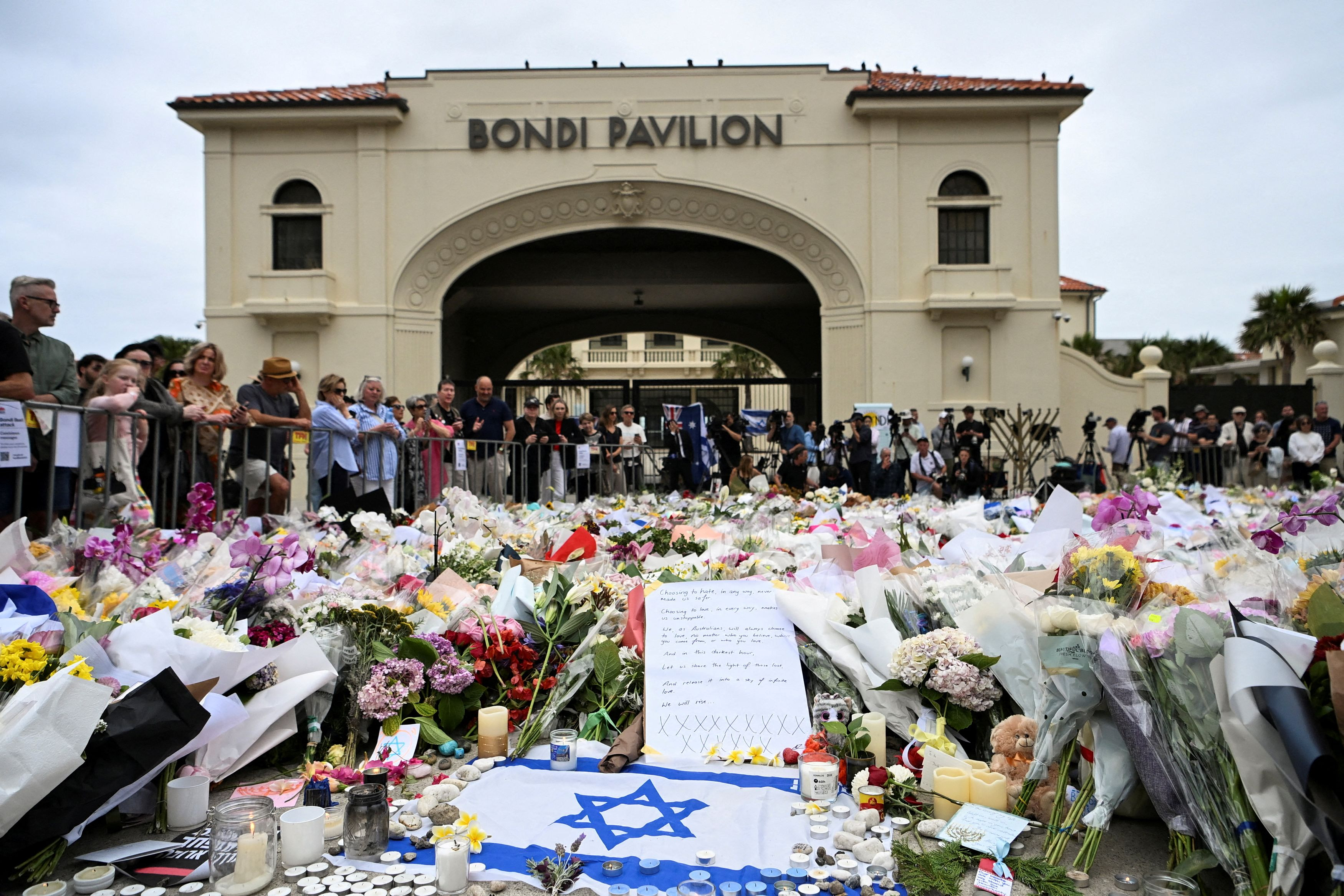
 The Bondi Beach massacre in December 2025 marked a turning point in Australia’s national consciousness. What should have been a public celebration became an act of violence that challenged long-standing assumptions about safety, social cohesion, and institutional competence. The subsequent public debate revealed the fragility of Australia’s self-image as a stable, tolerant society.
As grief transitioned to questions of responsibility, families of victims, community leaders, and legal experts demanded a systemic response. Under this pressure, Prime Minister Anthony Albanese announced a Commonwealth Royal Commission to investigate the attack and the broader conditions that allowed it to occur (Prime Minister of Australia, 2026).
Royal Commissions: Mechanism and Significance
A Royal Commission represents the highest form of public inquiry in Australia. Established by formal letters patent and typically led by a senior judge, it has the authority to subpoena witnesses, compel documents, and conduct public hearings. While its findings are not legally binding, they carry immense political and moral weight and often lead to legislative, administrative, and institutional reforms (Royal Commission, Australia).
The announcement of a Royal Commission after Bondi underscores a societal willingness to examine failures at the highest level. Historically, Royal Commissions have reshaped policing, child protection, banking regulation, and disaster response, demonstrating the role of independent inquiry in sustaining public trust.
Comparative Perspective: Tempi and Wallan
For Greek readers, the Tempi railway disaster in February 2023 remains a painful reference point. Fifty-seven people died in Greece’s worst modern rail tragedy, exposing neglected infrastructure, safety oversight failures, and fragmented governance. Families and citizens continue to demand accountability and an authoritative investigation.
In contrast, Australia has demonstrated more systematic institutional responses to rail crises. After a passenger train derailment near Wallan, Victoria, in February 2020, authorities conducted a comprehensive investigation examining signalling failures, safety systems, and institutional responsibility (Office of the National Rail Safety Regulator, 2020). The Bondi Royal Commission embodies this principle of independent, authoritative inquiry, highlighting the contrast with Greece’s Tempi disaster, where citizens continue to demand a similarly high-level, binding process.
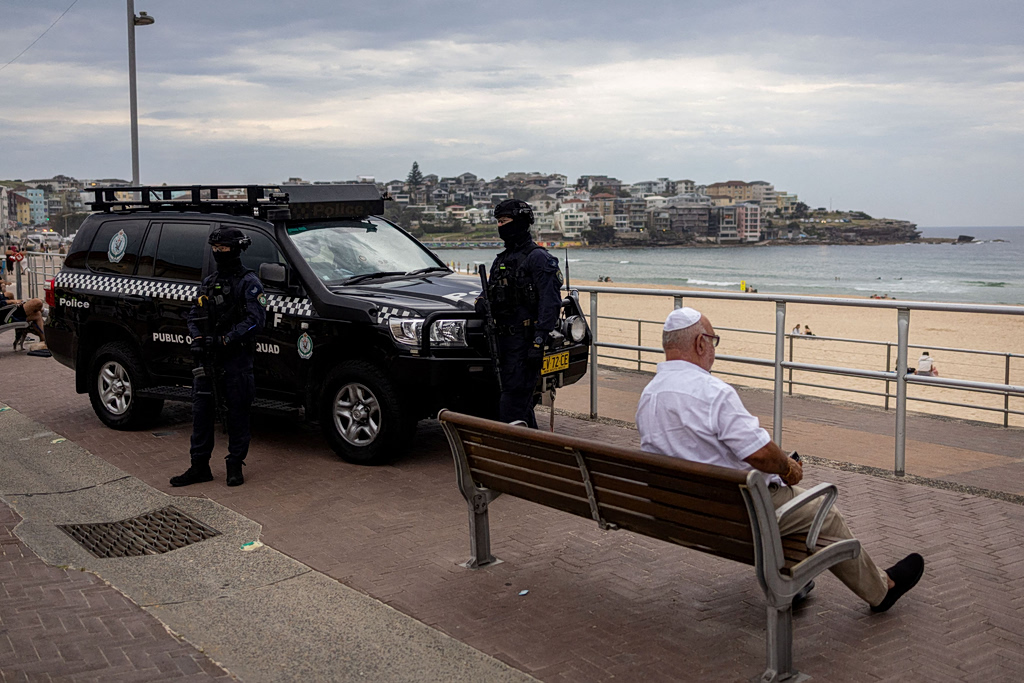
Riot police stand by while a Jewish man sits on a bench at Bondi Beach, where thousands attend the ‘Light Over Darkness’ vigil for victims and survivors of a deadly mass shooting during a Jewish Hanukkah celebration at Bondi Beach on December 14, in Sydney, Australia, December 21, 2025. REUTERS/Eloisa Lopez
Multiculturalism, Cosmopolitanism, and Local Cohesion
Australia has long described itself as a successful multicultural society. Migrants—including Greeks arriving after war, dictatorship, and the last financial crisis—were incorporated through shared civic frameworks rather than assimilationist demands. Multiculturalism functioned as practical social settlement, not merely policy.
Today, Australia is moving from multiculturalism as policy to cosmopolitanism as lived reality. This is visible in suburbs such as St Kilda (where I live) next to the vibrant Port Phillip Bay, where Jewish life, migrant communities, and creative networks intersect. The difference is ordinary, not symbolic. Cafés, synagogues, and public spaces serve as daily testaments to pluralism. Yet the Bondi attack has introduced uncertainty: the ease of coexistence now requires active maintenance, rather than assumption.
Lessons for Accountability and Society
Tragedies like Bondi and Tempi are stress tests for institutions and democratic norms. They expose whether societies can distinguish between moral reassurance and real accountability. Australia’s Royal Commission mechanism allows for systemic examination rather than narrow assignment of blame. In Greece, public frustration over Tempi illustrates the consequences when authoritative, independent inquiry is absent.
Accountability is not vengeance; it is the foundation of trust. Societies capable of transparent investigation, public scrutiny, and genuine reform are better equipped to maintain cohesion in the face of uncertainty.
Conclusion: Fractures, Inquiry, and Resilience
Bondi, Wallan, and Tempi collectively illustrate a fundamental principle: societal resilience is measured not by the absence of tragedy, but by the rigor, independence, and credibility of the response. Australia’s Royal Commission offers a model for addressing systemic failure, while Greece’s ongoing challenges with Tempi highlight the risks of fragmented investigation.
Plural societies, whether multicultural or cosmopolitan, cannot rely on historical pride or assumptions of harmony. Fractures are inevitable, but their consequences depend on how institutions and citizens confront them. Transparent inquiry, institutional accountability, and public engagement remain the most durable safeguards for social cohesion, shared responsibility, and justice.