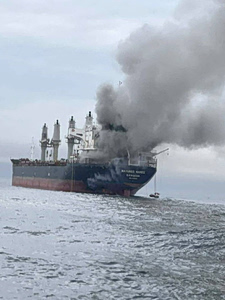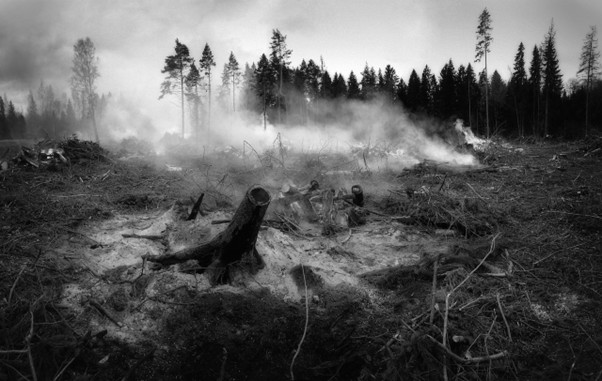
I remember the first time I actually cried over the planet. I was 14, sitting in front of my TV, watching the live coverage of the wildfire in Mati, a region near Athens, and the days after, scrolling through the images of the aftermath. Lives were lost, animals burned alive, and forests turned to ash. The smoke stretched across a large part of Central Greece, turning the sky red, blanketing not just the region but also the fragile hope I had for the future. The impact of the fire was huge, since it was the deadliest in Greece. I still remember travelling to Athens a few weeks later and seeing the nature on the left and right side of the road burnt and destroyed, along with the images and the witness statements of those who lost almost everything. I couldn’t explain it at the time, but something cracked open inside me, a quiet panic, a sense of loss for something that I felt deeply connected to.
That was the beginning of my climate anxiety. And I know I’m not alone.
According to a landmark 2021 Lancet study (The Lancet, 2021), 59% of young people globally said they were “very or extremely worried” about climate change. Nearly half admitted that this anxiety affected their daily lives, their sleep, and their ability to focus. This isn’t just fear of a far-off future catastrophe; it’s grief for a present already unraveling. It’s a constant undercurrent of dread that follows every heatwave, flood, wildfire, or empty promise made at international climate summits.
We were born into the crisis. For many of us, there has never been a “normal”. From an early age, we learn about melting glaciers, rising seas, species extinction, and runaway greenhouse gases, but the reality on the ground is harsher and often more immediate. The floods that devastated the town near my grandparents’ home. The drought that wrecks the harvests on the other side of the world. The wildfires are spreading across forests that once felt endless. The anxiety isn’t abstract; it’s the noise in our heads every time the news flashes another climate disaster.
And yet, somehow, in all this, we are expected to be the ones who fix it.
We’re told to buy metal straws, to recycle diligently, to eat less meat, to bike instead of driving. We’re taught how to live “sustainably”, but rarely how to process grief or frustration on a scale that feels overwhelming. We’re bombarded with climate infographics and carbon calculators, but not with climate therapy. When we speak out, through school strikes, protests, petitions, or policy work, we’re sometimes dismissed as idealistic, naive, or impatient. As if being born into a burning house and trying to put out the fire is a sign of immaturity rather than a survival instinct.
Climate anxiety is not a weakness. It’s a form of awareness.
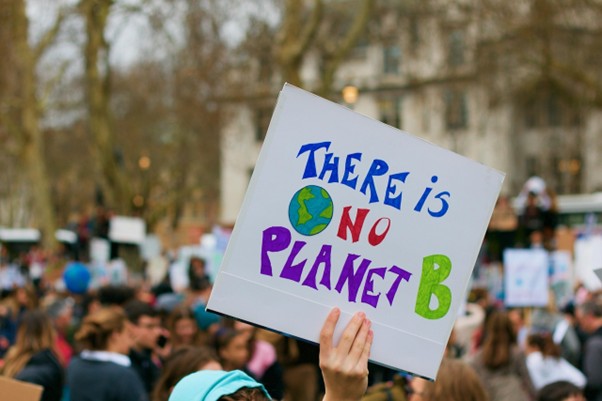
Credit: Pixabay
To be eco-anxious is to recognize a system in crisis, a system we are inevitably part of. It is painful, yes, but also reflects empathy, care, and a refusal to turn away. Awareness, when it is not paralyzing, becomes the spark for agency.
I’ve seen my peers take that emotional energy and pour it into grassroots movements, policy campaigns, and green innovation. I’ve watched climate ambassadors and youth diplomats walk into European institutions and demand change, not with fear, but with facts, urgency, and fierce determination. I’ve met people who founded sustainable fashion lines, launched climate education networks, and organized community reforestation projects, not because they were optimistic about the future, but because they were angry and refused to stay frozen in despair (Fridays For Future, 2018).
Personally, I began writing about climate change, using words to give shape to my swirling thoughts and fears. I organized events at my university, connecting students to local environmental NGOs. I volunteered with groups planting trees and cleaning up polluted waterways. These actions didn’t solve everything, far from it, but they gave my anxiety a purpose. The fear became fuel.
And maybe that’s the point.
What we need is more people who believe their anxiety does not disqualify them from acting; it qualifies them. Because who better to fight for a livable world than those who will inherit its scars, who have seen its fragility first-hand?
Of course, individual action alone isn’t enough. The system must change. Governments must enforce meaningful climate policies, corporations must transform supply chains, and global institutions must hold each other accountable (IPCC, 2022). But systemic change doesn’t fall from the sky. It starts with people who care enough to speak up, organize, resist, and innovate, people who’ve stared into the abyss and still choose to show up.
That’s what climate agency looks like. Not perfection. Not individual guilt. It’s people reclaiming their voice and power, even while scared and uncertain.
The pandemic showed us how quickly the world can change when enough people decide to act collectively. It showed us that crises are manageable when leadership and solidarity meet urgency. The climate crisis is no different, except its timeframe is longer, its complexity greater, and its solutions demand not only emergency but sustained transformation.
Still, young people are rising to this challenge, demanding their right to a future. They organize school strikes that disrupt the status quo. They form alliances across borders and cultures. They innovate in science, technology, and culture to forge new paths. They pressure policymakers, campaigners, and businesses to live up to their promises. And perhaps most importantly, they care deeply and persistently.
So, to anyone feeling crushed under the weight of the world’s burning:
You’re not weak.
You’re awake.
And that, in itself, is powerful.
Your climate grief might be the start of your journey, but it doesn’t have to be the end.
*Sotiris Anastasopoulos is a student researcher at the Institute of European Integration and Policy of the UoA. He is an active member of YCDF and AEIA and currently serves as a European Climate Pact Ambassador.
This opinion piece has been selected as part of To Vima International Edition’s NextGen Corner, an opinion platform spotlighting original voices from the emerging generation on the issues shaping our time.