There is a striking continuity in the Greek political experience—one that transcends decades, governments, and geography. I recall a conversation in Melbourne (about 15 years ago) with Lindsay Tanner, former Australian Minister of Finance and a noted philhellene, during his tenure as a visiting professor at Victoria University following his post-political career. Reflecting on the integration of Greek migrants into Australian society, he asked a simple yet revealing question: why did newly arrived Greeks so often seek his assistance in securing public-sector jobs for their children?
The answer lay not in opportunism, but in historical memory. For generations shaped by instability, the Greek state represented certainty. A public-sector position was more than employment—it was protection against uncertainty, a guarantee in an otherwise unpredictable environment.
This instinct traveled with the diaspora. Over time, however, Greek migrants—and especially their children—integrated into the mainstream of Australian society and economy not through dependence on the state, but through participation in rules-based systems that rewarded initiative, education, and merit. Security was redefined: it no longer depended on proximity to political power, but on trust in institutions. The public sector ceased to be the dominant aspiration; it became one option among many. This evolution offers a quiet but meaningful contrast with developments within Greece itself.
The Turning Point at Home
I witnessed this firsthand in the late 1970s, during Greece’s post-dictatorship transition. While working as an interpreter at Metallourgiki Chalips in Almyros—near the site of ancient Halos—I saw colleagues gradually leave the company for public-sector roles. At the time, I would explain this pattern to foreign colleagues within the company. In retrospect, it reflects a broader and enduring phenomenon.
What appeared as a rational individual choice was deeply shaped by a well-documented cultural pattern: Greece is consistently ranked among nations with high uncertainty avoidance. Seeking security in a volatile post-dictatorship economy, employees gravitated toward the public sector to reduce personal and professional risk. Over time, access to stability became closely linked with political loyalty. What began as a social instinct evolved into a persistent political mechanism.
OPEKEPE and the New Currency of Favour
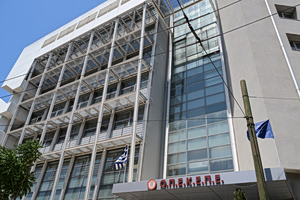
The recent OPEKEPE scandal does not mark a rupture with this past; it confirms its persistence in altered form. Reporting in To Vima, as well as international coverage, has raised serious questions about the allocation of agricultural subsidies and the role of political mediation in determining beneficiaries.
Allegations that subsidies were directed through informal political channels reinforce the perception that access, rather than criteria, determines outcomes.
Where once the currency of political favour was a public-sector position, today it may take the form of subsidies, grants, or targeted financial support. The instruments have changed; the logic has not.
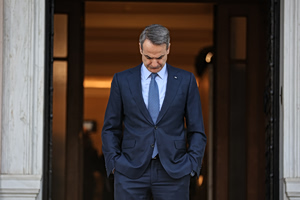
As Prime Minister Kyriakos Mitsotakis acknowledged in addressing the issue, the need for structural reform is evident. Yet reform efforts risk falling short if they do not address the deeper incentives embedded in the system.
Accountability, the Diaspora, and the Migration Paradox
Greece’s system of patronage and selective enforcement has profound institutional and societal consequences. When rules are applied unevenly, trust erodes, and accountability becomes contingent. Public reaction often reveals a troubling asymmetry: the same ethical breach provokes outrage when committed by the “other side” and tolerance when committed by one’s own, fragmenting democratic judgment and reshaping the citizen–state relationship.
Ironically, many Greeks in recent decades have migrated to countries where uncertainty avoidance is lower and institutional frameworks are stronger—Australia, Germany, and Canada, for example, reward transparency, rules-based behaviour, and merit. Emigration is often driven not by a desire to leave Greece per se, but by a search for environments where risk is openly managed rather than mitigated through dependence on state patronage.
The diaspora offers both reflection and lesson. Integration into societies with strong institutions did not erase cultural predispositions, but it reshaped behaviour through systems that limited discretionary power and rewarded accountability. Likewise, Greece itself is a nation consistently ranked among the highest for uncertainty avoidance—a cultural trait that prizes stability, predictability, and strict adherence to rules. This predisposition shapes individual behaviour and informs government policy: rigid procedures, strict hierarchies, and “tough” administrative measures reinforce a feedback loop in which both citizens and the state operate to reduce uncertainty.
Thymos and the Democratic Contract
In reflecting on Greece’s democratic prospects, it is instructive to revisit Francis Fukuyama’s concept of thymos, the spirited desire for dignity and recognition. Citizens increasingly demand fairness, transparency, and respect from institutions long dominated by patronage and selective enforcement. When these demands go unmet, frustration intensifies, trust erodes, and the democratic contract weakens.
The recurring patterns—manifested through entrenched patronage, asymmetrical accountability, and the outward migration of Greeks seeking more reliable institutional environments—are not simply administrative failures. They are expressions of a deeper disconnect between citizen expectations and state behaviour.
The enduring challenge for Greece (going currently through a phase of unprecedented thymos) is to transform this dynamic: to build governance rooted in transparency, predictability, rule-based accountability, and thymotic recognition. Only then can stability depend on functioning institutions rather than proximity to power, restoring both trust and civic pride.