 Μake us preferred on Google
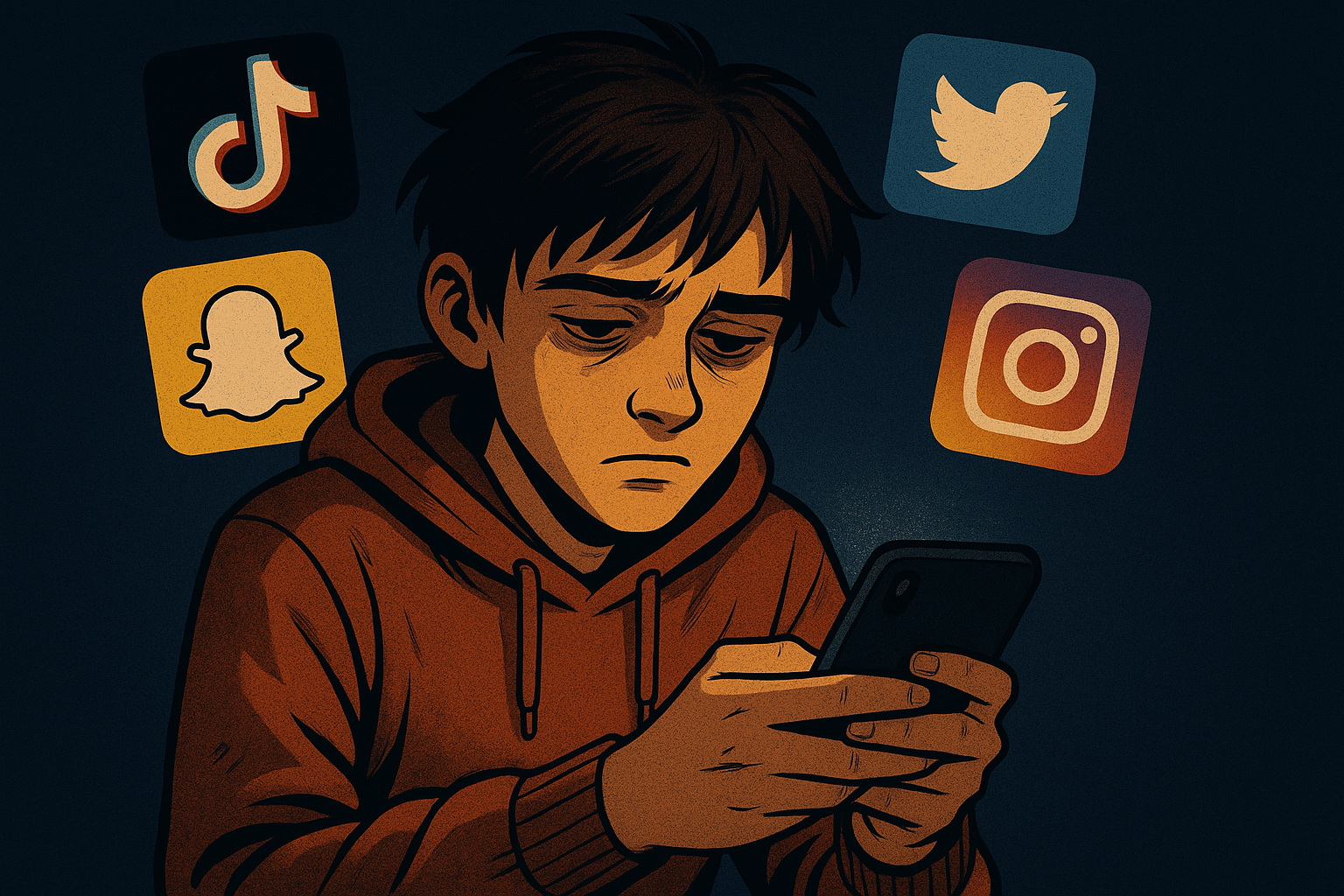
 In recent years, conversations about the responsible and safe use of social media among young people have become increasingly prominent in Greece. When platforms like Facebook first emerged, there was a sense of excitement about reconnecting with old friends and staying in touch with loved ones in real time. Gen Z (people born between 1997 and 2010) was the first generation to navigate adolescence during the rise of platforms such as Snapchat, Twitter, Instagram, TikTok, and BeReal. Today, many Gen Zers are paying the price for having spent their formative years immersed in the digital world.
What began as a space to share photos and exchange messages with friends has gradually evolved into something far more influential. These platforms now shape not only our mental well-being and consumer behavior but also our relationships, professional lives, and overall the way we live. In response to this growing impact, governments—including Greece—are urging the EU to implement age restrictions in order to establish healthy boundaries around social media use and better protect minors online.
However, even if the EU were to take action tomorrow, Gen Z and a portion of Gen A (people born between 2011 and 2024) have already been exposed to and, in many cases, harmed by the risks associated with social media platforms.
Gen Zers have been negatively impacted by their exposure to the unregulated digital landscape
When the Covid-19 pandemic hit, most members of Gen Z were students, either in school or at university. It was a time when their entire lives shifted from offline to online. And of course, it wasn’t just them—97% of Greece’s population uses the internet daily (Focus on Tech Life Survey by Focus Bari, 2023).
However, the timing of this shift played a crucial role. Gen Z was at an age when they were expected to experience the peak of their social lives: going out, having fun, meeting new people, falling in love, and building relationships that could last into adulthood.
Instead, with physical contact restricted, all those natural social needs had to be met digitally. They learned how to socialise online and how to seek happiness through posts, likes, and follows. For them, the line between online and offline life began to blur, and has continued to do so ever since.
For Gen Z, dependence on mobile devices and social media has become a defining characteristic. However, this dependence has contributed to a rise in issues such as stress, fatigue, anxiety, ‘fear of missing out’ (FOMO), and ‘phubbing’ (Manu Sharma, Deepak Kaushal, Sudhanshu Joshi, 2023).
Naturally, big tech companies capitalised on young people’s growing addiction to social media platforms, adding further complexity by developing algorithms that serve content based on user preferences, making social media use even more addictive (Meta’s platforms are allegedly designed to be addictive to children, Business & Human Rights Resource Centre, 2023).

FILE PHOTO: Facebook Chairman and CEO Mark Zuckerberg testifies at a House Financial Services Committee hearing examining the company’s plan to launch a digital currency on Capitol Hill in Washington, U.S., October 23, 2019. REUTERS/Erin Scott/File Photo
Next generations will benefit from digital regulation
Recognising that the risks of unregulated technological influence are only increasing, the European Commission has launched ambitious regulatory frameworks, most notably the Digital Services Act (DSA). This landmark legislation aims to enhance platform accountability, safeguard minors, the digitally immersed Gen A, and improve algorithmic transparency. It sets clear obligations for content moderation, advertising practices, and the mitigation of systemic online risks (Aina Turillazzi, Mariarosaria Taddeo, Luciano Floridi& Federico Casolari, 2023). In line with this, the European Commission recently on 14 July 2025 published guidelines for protecting minors online, emphasising safety by design, default privacy settings, and algorithmic accountability.
In Greece, initiatives such as the ‘Kids Wallet’ app and the ‘National Strategy for Addressing Violence Against Minors’ demonstrate proactive efforts to protect children. The country is also developing a privacy-preserving age-verification system. Although this functionality is not yet operational, it forms a key part of Greece’s commitment to safeguarding minors online through effective age verification on social media and other platforms.
While the DSA marks significant progress, its success also depends also on robust digital education. The EU’s Digital Education Action Plan stresses that education must go beyond technical skills to include critical thinking, media literacy, and online safety, teaching young people from an early age to question, challenge, and protect themselves in digital spaces.
What Gen Z can do now
While regulatory frameworks and related initiatives represent a critical step forward, they will take time to be fully implemented and produce tangible results. In the meantime, Gen Z continues to live with the immediate consequences of growing up in an unregulated digital world. So, what can this generation do now, not just to cope, but to take back agency?
To build a digitally resilient society, Gen Z must go beyond simply navigating the digital world and actively shape it. This requires a multi-faceted approach. Gen Z should critically evaluate digital content by carefully checking sources and using fact-checking tools to promote accuracy.
Beyond individual habits, active advocacy is essential: supporting digital rights initiatives, engaging with youth organisations centered on digital ethics, and participating in policy discussions help amplify their influence. Social media platforms can be strategically used to raise awareness, encourage critical dialogue, and mobilise communities. Peer education through workshops and informative campaigns further spreads digital literacy and empowerment.
Additionally, setting personal boundaries around screen time, utilising digital wellbeing tools, and promoting these habits among peers and family enhance resilience. Collectively, these actions enable Gen Z to evolve from passive digital consumers into active shapers of the digital landscape, highlighting that technology should not be an invisible force acting upon children but a subject of conversation, regulation, and moral reflection.
*About the authors:
- Vallia Stafylaraki is a Tech Communications Strategist at the Directorate-General for Communications Networks, Content and Technology of the European Commission, and Co-founder of the Gen Z(εν) Podcast on Pod.gr. She is passionate about technology and communication and she holds a master’s degree in Management of Information Systems & Digital Innovation from the London School of Economics and Political Science.
- Elita Sfakiotaki is a Legal Advisor at the Ministry of Digital Governance in Greece and Co-founder of the Gen Z(εν) Podcast on Pod.gr. She holds a Master of Laws (LLM) in Human Rights Law from the London School of Economics and Political Science and is currently pursuing a second Master of Science (M.Sc.) in Law and Information and Communication Technologies at the University of Piraeus. Her interests include human rights law, criminal law and law and technology.
This op-ed is part of To BHMA International Edition’s NextGen Corner, a platform for fresh voices on the defining issues of our time