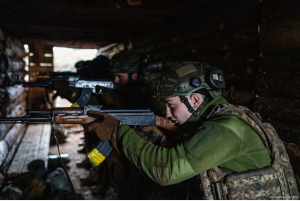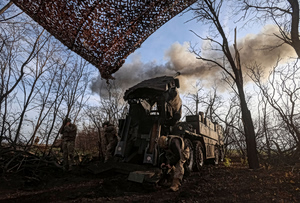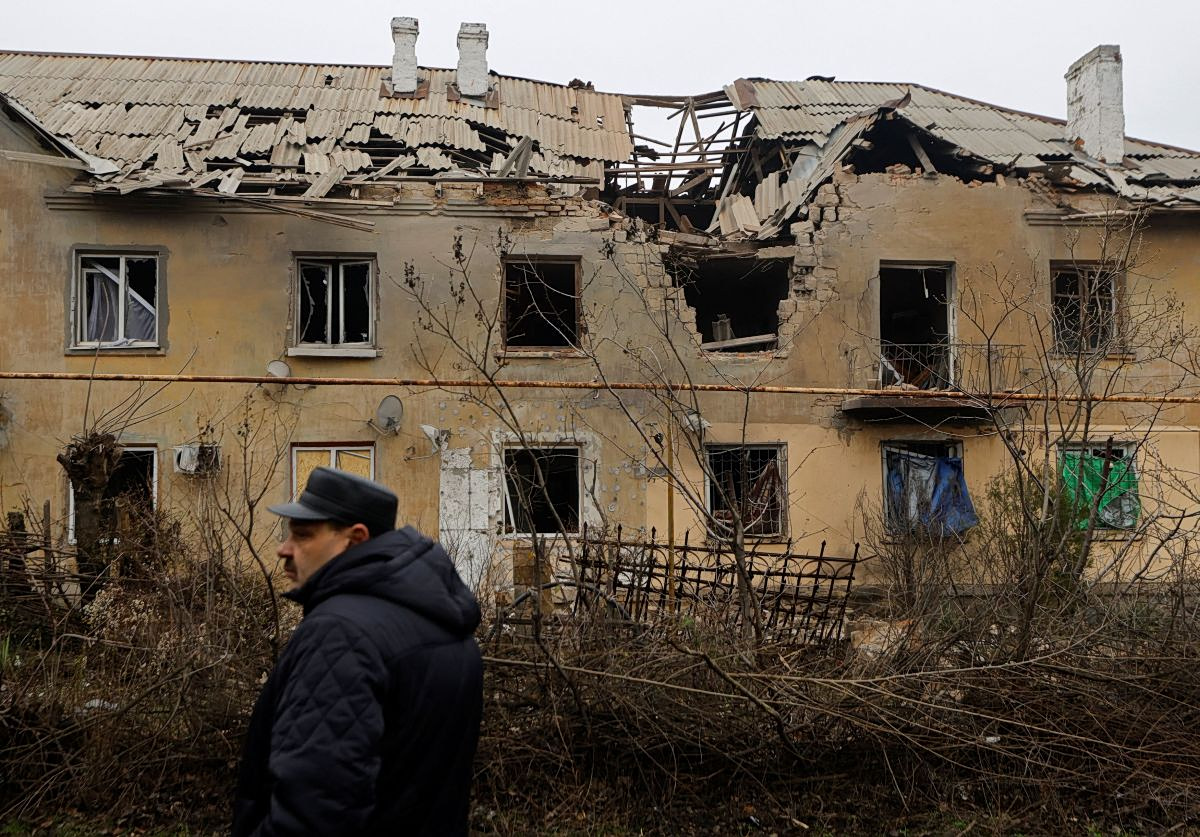
One thought he would parade through Kyiv with his occupying troops “in a few days.” In “a few days,” the other said he would bring peace. Both of them, just like lightning. Not only months, but years after those promises, the circle of blood in Ukraine remains open. The question now is not only whether and when it will close. It is also by whom and how.
The people involved determine the method. Neither Vladimir Putin is the conqueror he believed himself to be, nor Donald Trump the peacemaker he fantasized he could be. What remains? A negotiation in which many observe historical parallels. Might Ukraine be partitioned the way Poland once was? You take the territory, I take the rare earths. Might it be served on a platter, as Czechoslovakia once was, as “living space” and “sphere of influence”? Partition or appeasement. And could something like that—whatever it may be—be called “peace”?
That last question is mostly theoretical. However and whenever the circle of blood closes, Ukraine will not be what it was, on a continent that is no longer what it was. Europe is being forced by the protagonists of the return to the law of force into the role of the spectator. It is even being forced to contribute to a—currently imaginary—postwar Ukraine. In this imaginary scenario, the Europeans would be “the peacekeeping blue helmets of the agreement.”
Except that no one in Europe can say to Trump and Putin, “Presidents, here is your army.” A specialist in Europe’s defense geography explained that only the French, Danes, Finns, and Greeks possess forces that could be deployed for peacekeeping missions. All of them, however, come with asterisks. “France,” he noted, “can barely send more than a single battalion. Greece only a single special unit. Finland would never be tempted to undermine its defensive shielding against neighboring Russia. And in any case, none of these countries could tolerate seeing their soldiers return home in coffins.” And Denmark? “It is the only one that has already seen soldiers return in coffins from Iraq. But relations between Copenhagen and Washington are no longer what they were during the Gulf Wars. Trump’s voracious desire for Greenland has since come in between.”
So—here is our army. There is no other. At this stage, and after eight full decades of defensive complacency, European countries are only now drafting plans for voluntary military service with “women in khaki,” aiming toward the distant year of 2030. On the non-human-resources side, Europe’s SAFE defense program is considered “extremely complex”—meaning it needs time, in a Europe that was already accustomed to taking its time, or rather all the time in the world. In other words, the defense of the Old Continent is still in a phase of chaos.
It was not exactly the flutter of a butterfly on the other side of the Atlantic that caused the storm on ours. The chaos came from the election of an American president so unpredictable that no one foresaw he would build a special relationship with Putin’s Russia, nearly dissolving the Western alliance.
And it certainly wasn’t predicted by those who now accuse Athens of being an “expediter” in the Ukraine war and argue that it is enough to be somewhat aligned with the Americans, definitely aligned with the Russians of the “blond race,” and always demanding toward Europe in order to come out clean. In chaos, you do not come out clean. You hope—and above all you work—for the right side of history to prevail once again.