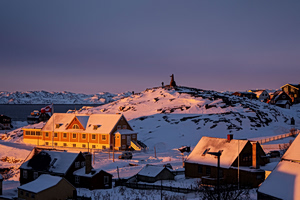
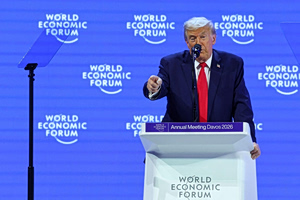
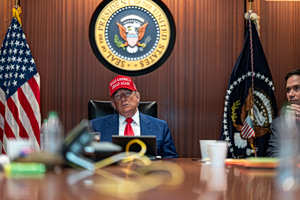
When Donald Trump suggested that the United States should “buy” Greenland, the international community responded with a mix of laughter and diplomatic disbelief (Pengelly, 2019). However, in 2026, as the Arctic ice melts to reveal a landscape of unprecedented geopolitical competition, that “absurd” proposal looks less like a real estate whim and more like a cold, calculated strategic foresight. Greenland has officially become the most contested piece of territory on the global chessboard, and for the EU, it represents the ultimate wake-up call: either we secure our strategic interests in the North, or we watch from the sidelines as others carve up our own backyard (Wolf, 2026).
As the EU unveils its new Security Strategy this year, the focus must shift. The era where we could afford to be a mere “civilian power”, relying solely on trade and normative influence, is over. In an age defined by the “polycrisis”, where mineral sovereignty, hybrid threats, and maritime security are inextricably linked, the EU must transition to a more assertive “Smart Power”. This means recognizing that our strategic perimeter no longer ends at the borders of the continent; it extends all the way to the icy reaches of Nuuk (Vinocur, 2026).
The global interest in Greenland isn’t about prestige; it’s about the “white gold” buried beneath the surface. The island holds some of the world’s largest untapped deposits of critical raw materials, the rare earth elements that are the lifeblood of our green transition and high-tech defense systems. Currently, the EU’s heavy reliance on external, often unpredictable supply chains is a glaring vulnerability (Diogo Rosa, Per Kalvig, Henrik Stendal og Jakob Kløve Keiding , 2023).
The “Trumpian” bid for Greenland was a blunt reminder that the 21st-century power will be measured by resource control. For Europe to achieve true “Strategic Autonomy”, a deeper, institutionalized partnership with Greenland is not an option-it is a survival necessity. To be theoretically and scientifically informed in 2026 is to understand that mineral sovereignty is a primary component of collective European defense.
Beyond resources, the retreating ice is opening the “Polar Silk Road”, a maritime route that could revolutionize global trade. This is not just a concern for the Arctic states, it is a fundamental shift in the global balance of power that affects every member of the Union. If the EU fails to project a clear security and investment framework in Greenland, it effectively invites non-European actors to establish a permanent presence in a region vital to our stability (Lamazhapov, Stensdal and Heggelund, 2023).
Our updated strategy must prioritize Supply Chain Intelligence and Maritime Security as core pillars. We need the agility to monitor and protect our interests across a vast geographic arc. By leveraging our massive regulatory influence alongside a proactive investment policy in Greendlandic infrastructure, we can secure our periphery without escalating conventional conflict.
The main hurdle remains the speed of our decision-making. The world of 2026 moves at the speed of algorithms and real-time hybrid threats, from AI-driven disinformation campaigns to sudden shifts in the commodity markets. As a member of a generation that has come of age in a period of permanent crisis, I believe the “NextGen” contribution to the European project is exactly this holistic, tech-native view. We don’t see energy, digital security, and defense as separate silos, we see them as a single environment that requires immediate and unified responses.
The 2026 Security Strategy should be more than a document, it should be a declaration that Europe is ready to look North. Greenland is the test case for whether the EU can transition from being a passive “market” to a formidable global actor. Trump’s bid for the island may have been dismissed as an eccentricity years ago, but it served its purpose: to show that the Arctic is the new frontier of sovereignty. It is time for the EU to wake up, look past the horizon, and secure its own strategic destiny.
*Sotiris Anastasopoulos is a student researcher at the Institute of European Integration and Policy of the UoA. He is an active member of YCDF and AEIA and currently serves as a European Climate Pact Ambassador.