The hosting of the sixth ministerial conference of the Partnership for Transatlantic Energy Cooperation (P-TEC) on November 6 and 7 in Athens, and the agreement signed on November 16 for the export of liquefied natural gas (LNG) from the United States through Greece to Ukraine, signal a new chapter in the role Greece is called to play in broader geopolitical shifts.
These developments, beyond their clear economic and political dimension, provide food for thought and a key to a more accurate reading of the new realities in the Eastern Mediterranean and in the relations between the Eurasian axis of Russia–China and the United States. Specifically, the increasingly active involvement of the U.S. in geopolitical affairs in the Mediterranean and the Middle East refutes the proclamations and Jeremiads that American interest has irreversibly shifted to the Far East due to the intensifying rivalry with China.
It is still too early to draw firm conclusions as to whether, and to what extent, the war in Ukraine holds any “blessing in disguise.” What is certain is that it was the generative cause of a surge in energy projects amid an uneven war of attrition and ahead of a long and unforgiving winter, and that it contributed to a dramatic upgrade of Greece’s geopolitical profile. Two interconnected issues arise: first, whether the country has the political will and adequate planning to capitalize on the emerging window of opportunity in the current conjuncture and to chart an autonomous and consistent foreign policy. And second, whether and when Athens will manage to overcome its myopic fixation on its immediate neighborhood, adopt a more holistic approach, and advance its national interests while taking into account the priorities of the EU and the major players on the geopolitical stage.
At this stage, China’s dominance as an economic and military superpower could lead to a partial rapprochement between the U.S. and India. Despite fluctuations in bilateral relations — caused by President Trump’s imposition of high tariffs on Indian imports and a series of other issues — it is reasonable to assume that both countries will seek points of convergence at least in certain regions of the world. Such an effort would help the U.S. curb China’s influence and help India satisfy and channel its intense, almost insatiable, pursuit of expanding into new markets.
Greece, given its favorable geographical position at the crossroads of the three continents — Europe, Asia, and Africa — which will shape the future of the planet over the coming decades, acquires major significance both with respect to the transport of U.S. natural gas and the India–Middle East–Europe Economic Corridor (IMEC). It is worth considering how these two ambitious undertakings feed into each other, how they will evolve into communicating vessels, and how they will make Greece one of the points where American and Indian interests converge.
At a time when other Mediterranean states, such as Italy and France, are actively “courting” India, the “3+1” scheme — the Greece–Cyprus–Israel trilateral plus the U.S. — in the fields of energy and infrastructure in the Eastern Mediterranean will highlight Greece’s contribution more clearly. Italy has taken the lead in the Indo-Mediterranean Initiative (IMI) with the goal of strengthening its representation in IMEC. Furthermore, Italy and India have drawn up a Joint Strategic Action Plan (JSAP) for the period 2025–2029, emphasizing sectors such as trade, technology, culture, and defense. France has also been pursuing closer cooperation with India, especially in clean energy, technology, and defense, and aims to strengthen its presence in the Indo-Pacific. The year 2026 has been declared the France–India Year of Innovation.
Beyond the Military Cooperation Program signed with India in 2024, Greece has so far not undertaken large-scale initiatives comparable to those of Italy and France. All three countries seek benefits from IMEC by offering access to ports that will function as entry gateways for India. However, Greece lags significantly behind Italy and France in terms of diplomatic representation in India, infrastructure (particularly road and rail networks, which form a central pillar of connectivity), and its commercial and military footprint. Therefore, to offset its comparative disadvantages, Greece must prioritize its participation in the “3+1” mechanism and present itself as a foundational factor in the new security architecture taking shape in the Eastern Mediterranean with the active engagement of the United States.
At the same time, significant prospects are opening up for Greece’s role as a key node in the energy network of the Vertical Gas Corridor, which will begin at Revythoussa and Alexandroupoli, pass through Bulgaria, Romania, and Moldova, and end in Ukraine.
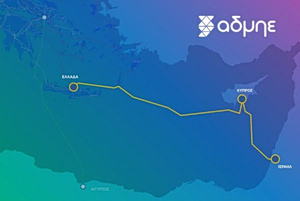
Undoubtedly, Greece’s strategic position as an energy conduit shields it both diplomatically and defensively and can enhance its bargaining power. This makes it an attractive destination for investments, a considerable portion of which will come from India. On the other hand, it is imperative for Greece to take bold measures to address its inherent shortcomings, gaps, and deficiencies. The absence of a reliable railway network — as tragically demonstrated by the Tempi accident — and the inertia, bureaucratic obstacles, and possible financial irregularities and criminal offenses that have delayed the completion of the electrical interconnection with Cyprus raise serious questions about Greece’s ability to function as a credible strategic partner. Greece thus appears as the “weak link in the chain,” especially compared with other Mediterranean countries, such as Italy, France, and Israel, which possess robust infrastructures and advanced technologies. At a time when Europe is striving to wean itself off its energy and trade dependencies on Russia and China respectively, Greece will inevitably face the need to reconcile its geostrategic alignment with the U.S. with the pressing necessity of pursuing bolder commercial openings in the Indian subcontinent.
Mr. Vasileios Syros serves as an honorary affiliated fellow at the National Maritime Foundation, India’s foremost think tank in the field of maritime policy.