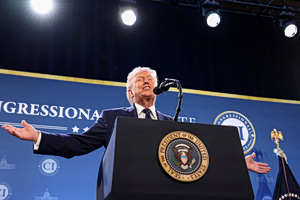
If there is one — uncomfortable — conclusion to draw from the faltering negotiations with Russia over Ukraine, it is the fragmentation of the Western front when confronted with major international crises. This fracture stems largely from unilateral decisions taken by the U.S. president, often without prior consultation with America’s NATO allies or even the relevant State Department agencies.
At the same time, the supposedly “United” Europe has once again proven sluggish and divided in moments that require swift, collective action. Instead of a unified EU stance, national interests consistently dominate. This was evident not only in the Middle East crisis, but also in the case of Ukraine — where the EU intervened only after the fact to dilute the pro-Russian elements of the initial “Trump Plan” for ending the war. That intervention produced a more balanced framework in favor of Kyiv.
Naturally, the first to capitalize on this disunity is Russia’s president, Vladimir Putin. He openly signals that he prefers dealing with Washington rather than with Europe. How else should one interpret his recent remark: “We see that the American side takes our positions into account in certain areas”?
By contrast, he warned Europeans that any attempt to use frozen Russian assets to fund aid for Ukraine would trigger retaliation — a matter now under discussion in Brussels.
Shaken by the unilateral, pro-Russian moves from Donald Trump, European governments belatedly agreed on some basic principles: that borders cannot be changed by force, that Ukraine’s armed forces cannot be subjected to major restrictions, and that decisions affecting Europe and NATO must include European participation. These points now form part of the revised Trump plan — this time carrying a European stamp.
Rising Panic in Europe
A new wave of anxiety is spreading across Europe over the possibility of a Russian attack — fears that Putin publicly dismissed, calling such speculation “ridiculous” and insisting he has no intention of striking any European country. Yet he simultaneously reiterated that he will not retreat from his territorial objectives, particularly in the Donbas region, and continues military operations there.
Even if Putin downplays escalation, French president Emmanuel Macron remains deeply concerned about Europe’s security. France has reintroduced voluntary national service after decades — a move now being discussed in Germany and Italy as well. This growing unease forms the background to the next diplomatic step: U.S. envoy Steve Whitcoff — accused of leaking details from previous talks with his Russian counterpart — will travel to Moscow this week for another round of negotiations.
All this unfolds as Putin signs a decree aimed at strengthening Russian identity in the four Ukrainian regions he seeks to annex to the Russian Federation — a clear signal of his ambition to revive elements of the former Soviet empire.