It was only a matter of time before Europe’s intentions to deepen defense cooperation with Turkey began to take shape. With geopolitical developments in the region accelerating, the country that remains both militarily and demographically strongest in its neighborhood has once again managed to capitalize on its critical strategic position.
Now, Ankara is seizing the opportunity to advance its own defense interests—and the pressing question for Greece is what this means for us. The longstanding disputes between the two countries have remained unresolved for over fifty years, with several missed opportunities for compromise.
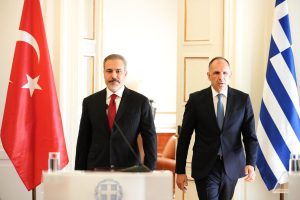
Today, however, a potential new opening is emerging in Cyprus. The newly elected Turkish Cypriot leader has publicly expressed support for a bizonal, bicommunal federation, while the Turkish Foreign Minister recently declared that “the problem in the Aegean is not one that cannot be solved.”
These are words that, of course, must be tested in practice—but they should not be ignored. A new geopolitical landscape is taking shape across the Eastern Mediterranean, and Turkey is positioning itself as a central player. What that means for Greek interests is yet to be seen.
Missed Chances and the Cost of Caution
It’s worth recalling that Greece once had a real opportunity to address one of the most sensitive issues dividing the two nations—the extension of territorial waters in the Aegean Sea.
In the early 2000s, under Prime Minister Costas Simitis, Athens had reached a preliminary agreement with Ankara on a differentiated extension of these contentious waters. Yet, the subsequent Karamanlis government failed to implement it, adhering instead to the doctrine that “the best solution is no solution.”
That hesitation had lasting consequences. Turkey reverted to its hardline position, refusing to accept any extension beyond the six-nautical-mile limit—the infamous Casus Belli, or “cause for war,” declared by the Turkish Parliament in 1995.
On the Cyprus issue, too, a historic opportunity was lost when Greek Cypriots rejected the Annan Plan in 2004. The plan, despite its flaws, would have allowed a reunified Cyprus to join the European Union. Later, at the Cran-Montana talks in 2017, Nicosia again rejected a proposal that included the gradual withdrawal of Turkish occupation troops from the island.
These setbacks now belong to the past—but they serve as a reminder of how opportunities missed in moments of hesitation can shape decades of tension.
A Different World: Turkey as a Regional Power Broker
The landscape today bears little resemblance to that of two decades ago. The region is now defined by two ongoing wars—in Ukraine and the Middle East—and by a Turkey increasingly acting as a regional power broker.
Ankara has become a de facto regional superpower, asserting influence from the Caucasus to the Eastern Mediterranean, often independently of traditional Western alliances.
At the same time, Turkey continues to distance itself from European democratic standards. It has long resisted adopting the Copenhagen criteria, the EU’s framework for democracy, human rights, and rule of law that are prerequisites for membership.
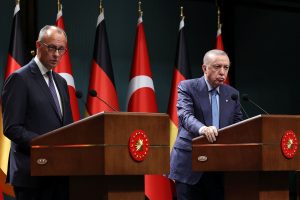
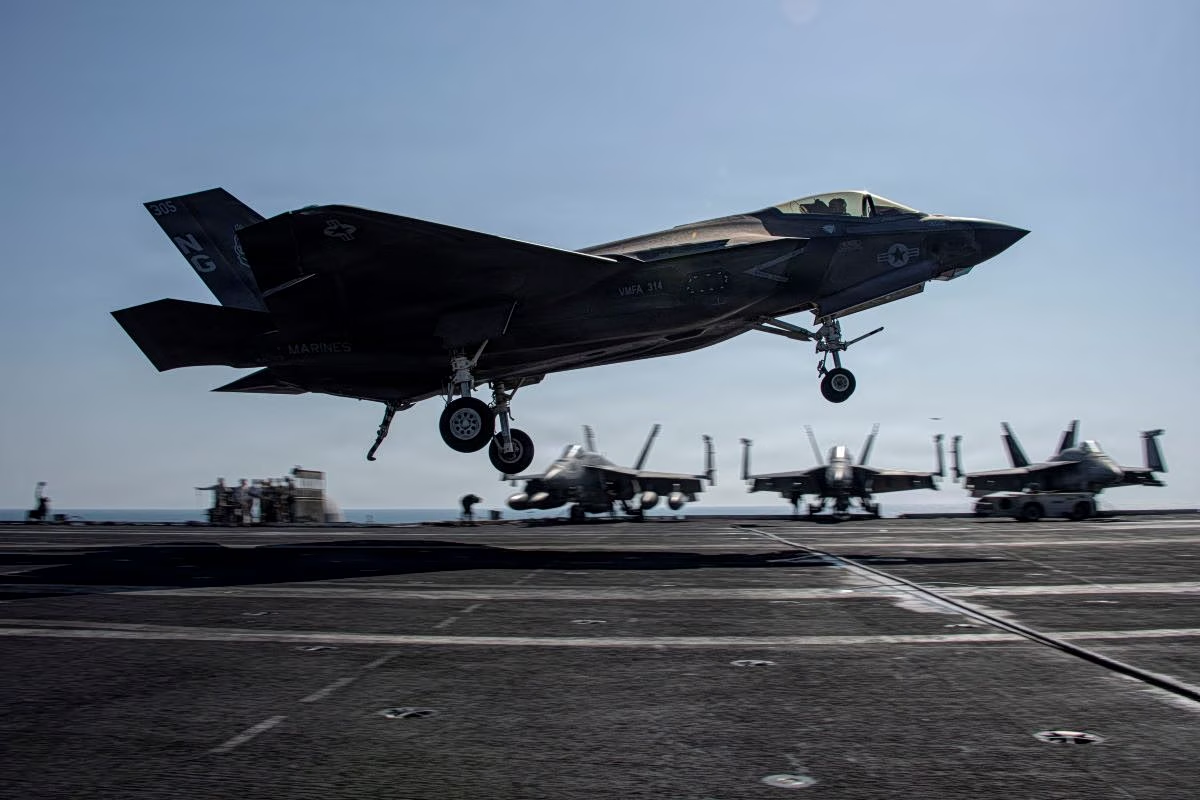
President Recep Tayyip Erdoğan himself made this clear during a recent meeting in Ankara with the German Chancellor, held in the context of negotiations over the F-16 fighter jet deal.
“There may be the Copenhagen criteria,” Erdoğan said pointedly, “but we have the Ankara criteria.”
That single phrase encapsulates, in brutally honest fashion, how Turkey now sees itself—a power that plays by its own rules.
For Greece, Dialogue Is No Longer Optional
This new reality demands a recalibration of Athens’ approach. Greece cannot afford to repeat the pattern of disengagement that in the past only hardened Turkey’s positions.
Instead, what’s needed is a new phase of dialogue—one that tests, at the very least, whether Ankara’s recent declarations about resolving differences in the Aegean and Cyprus reflect genuine intent or diplomatic maneuvering.
Refusing to engage would only leave the field open for Turkey to further shape the region’s agenda unchallenged.
Between Opportunity and Uncertainty
As Ankara moves to consolidate its status as Europe’s indispensable, yet unpredictable, partner, the balance of power in the Eastern Mediterranean continues to shift.
Whether Turkey’s latest overtures signal a strategic rebranding or simply another tactical move in its long game of regional dominance remains to be seen. But one thing is clear: the era when Greece could rely on inertia as a policy is over.
For Athens, the question is no longer whether to respond—but how.