
 Μake us preferred on Google
 German Chancellor Friedrich Merz begins his first official visit to Turkey on Thursday, October 30, with a wreath-laying ceremony at the mausoleum of Mustafa Kemal Ataturk, founder of the Turkish Republic. His trip comes just days after a long-standing dispute over Eurofighter jets was resolved — a symbolic gesture of thawing relations between Berlin and Ankara.
Eurofighters Open the Way
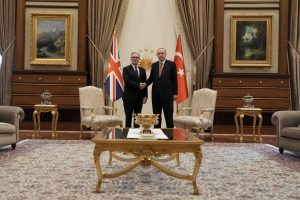
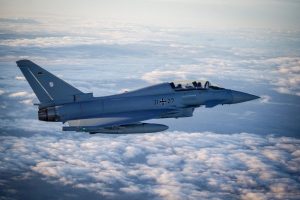
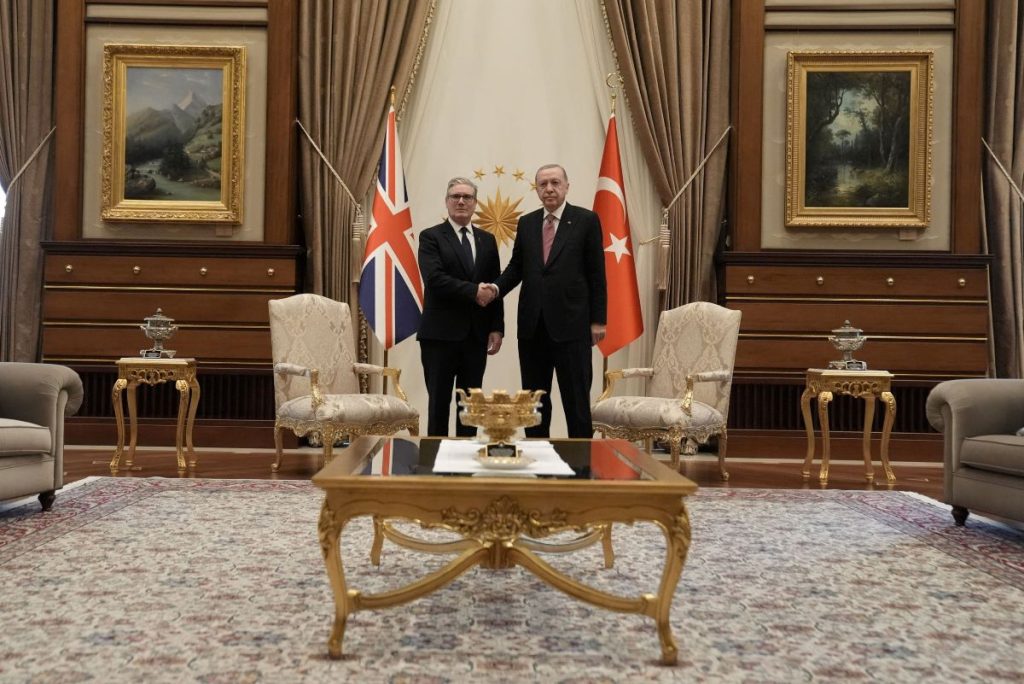
On Monday, British Prime Minister Keir Starmer, whose country holds the largest stake in the Eurofighter consortium, signed an agreement with President Recep Tayyip Erdogan for the delivery of 20 aircraft. The deal could not have moved forward without Berlin’s consent — a clear signal of Germany’s shifting approach toward Turkey since Russia’s invasion of Ukraine.
Merz will meet business representatives before holding talks with Erdogan at the presidential palace. A joint press conference is scheduled afterwards.
From Caution to Cooperation
Berlin’s green light for the Eurofighter deal marks a turning point. Germany now supports Turkey’s participation in the EU’s SAFE defense program despite Greek objections. “Eurofighters for a NATO ally serve collective defense,” sources close to Merz argue, explaining the reversal of previous governments’ objections based on human rights concerns and Turkey’s military operations in Syria.
With the United States scaling back its engagement in Europe, Berlin sees Ankara — NATO’s second-largest military power — as indispensable.
Migration, Gaza, and Visas
In return, Merz is expected to seek Turkish cooperation on migration. Germany has struggled to deport Turkish nationals, with more than 22,000 currently under deportation orders. Ankara could also play a role in facilitating the return of Syrian refugees, as Berlin plans to resume deportations under new agreements with Damascus.
Merz will also urge Erdogan to use his influence over Hamas to enable disarmament and pave the way for an international stabilization force in Gaza. Turkey, meanwhile, is pushing for easier visa procedures for its citizens and the unfreezing of its customs union with the EU — though analysts doubt these demands will be met soon.
A New Chapter, But at What Cost?
Merz’s 23-hour visit, during which he will not meet opposition figures, underscores Berlin’s determination to prioritize pragmatic engagement over values. As one German official put it, the new approach reflects “a positive agenda.” Critics, however, warn that Europe’s principles may once again be sacrificed on the altar of Realpolitik.