 Μake us preferred on Google
 Every August in Greece, a quiet crisis unfolds. As summer vacations begin, dogs—and sometimes other pets—are abandoned by the very people who once cared for them. Left by roadsides or in empty homes, these animals become silent victims of convenience.
But is this just a tragic seasonal pattern, or does it point to something more profound—perhaps even a moral failure? Could we, or should we, begin to see such abandonment as equivalent in seriousness to a parent deserting their child?
The answer is not simple. Yet the legal and cultural conversation surrounding animal rights has evolved dramatically in recent decades, and we are now closer than ever to viewing animals not simply as living property but as beings with intrinsic rights.
From Cruelty Laws to Complex Rights
Concern for animal welfare is not new. As early as the 17th century, the United Kingdom had laws banning the mistreatment of horses. By the 19th century, protections extended to livestock—cows, sheep, pigs—in many European countries. Over time, this framework was consolidated into European Union law, forming a patchwork of regulations that prohibit cruelty and mandate humane treatment for a broad range of animals.
Today, legal protections have grown into a dense web of obligations imposed on both public authorities and private individuals. These rules apply not only to farm animals and pets but to all creatures in the animal kingdom. There are effectively no hard legal limits on which animals deserve consideration—only scientific and ethical ones.
Do Animals Have Rights?
This question—do animals have rights in the legal sense?—is at the heart of a global legal and philosophical debate.
Skeptics argue that animals lack the cognitive capacity to understand the concept of a “right,” and therefore cannot be considered rights holders in the same way humans are. After all, a right typically implies the ability to demand certain treatment or protections from others—a level of agency animals simply don’t possess.
But others challenge this logic. Infants and people with advanced dementia also lack that cognitive awareness, yet our societies still recognize their fundamental rights. We do not require a being to understand their rights in order to be protected by them.
This debate reveals a deeper truth: our discomfort with animal suffering is not based on whether they can demand justice but on our own capacity for empathy. We are pained by their pain. And for utilitarian reasons, we recognize that those who harm animals are often more likely to harm humans. In protecting animals, we often seek to protect ourselves.
Legal Illusions—and Real Limits
Even if we legally recognize animals as rights-bearing beings, what would actually change?
Perhaps not much—at least in practice. It might make it easier for animal protection groups to represent animals in court, demanding enforcement of existing welfare laws. But the core content of those laws often merely codifies the obvious: animals should not be slaughtered in cruel ways, zoo animals should have sufficient space, and all animals should be spared unnecessary suffering.
These are baseline protections—not radical affirmations of animal autonomy or dignity.
Legal Experiments—and Philosophical Shifts
Across the world, some legal thinkers are testing the boundaries of these concepts.
In the United States, legal scholars have filed habeas corpus petitions (traditionally used to challenge unlawful human imprisonment) on behalf of animals confined in zoos. Others have cited the 13th Amendment—which bans slavery of any kind—to argue that animal captivity itself may be unconstitutional.
Some arguments go even further: that animals possess natural rights by virtue of being sentient, rights which predate any human legal system and which humans have a moral obligation to respect.
But how meaningful is it to grant animals such rights if human interests will always take precedence? If we continue to allow animal suffering for even trivial human conveniences, what purpose do those rights serve?
A Cultural Revolution in Waiting
The real transformation will come when human rights and animal rights are weighed as truly equal moral considerations—not when one automatically eclipses the other.
Getting there will require nothing short of a cultural revolution.
Science must guide us in determining which species feel pain, form memories, and possess the cognitive depth to set goals or reflect on their existence. We know, for instance, that mammals—dogs, elephants, dolphins—feel complex emotions. Some birds and primates display astonishing intelligence and memory.
But science alone isn’t enough. Politics must also evolve.
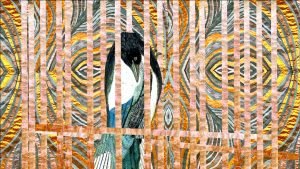
Just as democratic societies have gradually dismantled systems of oppression—against women, people of color, LGBTQ+ communities—perhaps the last great moral frontier is how we treat animals: the most voiceless, powerless beings in creation.
We once believed that slavery was compatible with civilization. We believed that women were property. We believed that children were miniature adults with no legal protections. Those beliefs have (mostly) been consigned to history.
Will our belief that animals exist only to serve us meet the same fate?
Ioannis Sarmas is the former caretaker Prime Minister of Greece and Honorary President of the Hellenic Court of Audit.