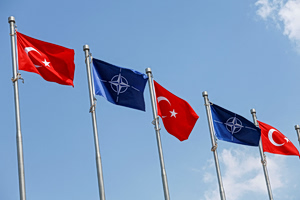
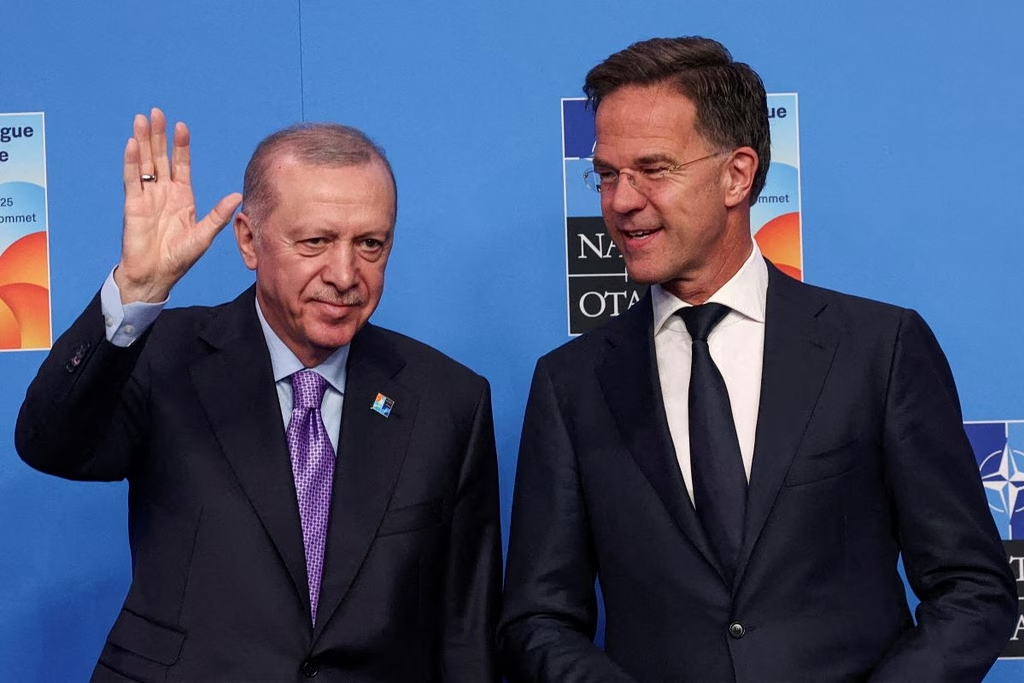
Ankara has been in a state of high alert for weeks. More than 50,000 police officers patrol the Turkish capital as the countdown runs to a NATO summit on which President Recep Tayyip Erdogan has staked considerable prestige. Within days it will be clear whether the gamble has paid off. Less clear is what Turkey expects to extract from two days of diplomacy.
The bet
At Ak Saray, the presidential complex where the 32 leaders will convene, Erdogan’s circle believes Turkey can now play mediator across several theaters at once and claim a distinct role in NATO’s security policy for the wider region. That, they believe, would make Ankara indispensable both to the EU’s pursuit of strategic autonomy and to the architecture of Western defense. Erdogan aspires to see Turkey applauded by American and European partners.
The analyst Murat Yetkin explains the Turkish agenda: raise defense spending from 2 percent towards 3.5 percent, and act as the connecting link across multiple fronts, from the war in Ukraine and the security of the Black Sea to the standoff between the United States and Iran.
What Washington brings
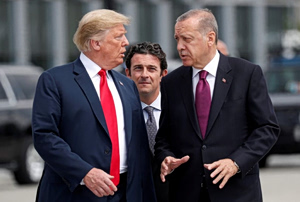
Recent remarks by Donald Trump, promising moves that would make the Turkish president “very happy,” were received in Ankara as an early gift. Trump’s visit raises the profile of both the bilateral relationship and the personal one. Turkey’s priorities for the two days are concrete: signals on readmission to the F-35 program, from which it was previously excluded, and on the supply of engines for its domestically developed KAAN fighter. Many Turkish analysts argue that the contents of this package will determine the country’s future relationship not just with Washington but with NATO as a whole.
The centerpiece, for Ankara, is the Trump-Erdogan meeting itself. Erdogan wants Trump to state publicly that the alliance is incomplete without Turkey, a message intended for every European capital, and Athens and Nicosia in particular. At NATO summits, the decisive exchanges often take place on the sidelines rather than in the plenary.
Sources who spoke to To Vima say a brief encounter between Erdogan and Greek Prime Minister Kyriakos Mitsotakis could happen. Athens has not confirmed a bilateral between the two leaders. Hanging over any such meeting is Turkey’s forthcoming ‘Blue Homeland’ law, legislation codifying Turkey’s expansive maritime claims in the Aegean into law. that asserts sweeping Turkish claims in the Aegean and eastern Mediterranean. Athens is also watching, with some unease, Turkey’s effort to work its way into European defense structures.
The European opening
After talks in Ankara with EU foreign policy chief Kaja Kallas, Turkish Defense Minister Yasar Guler said excluding a military power of Turkey’s standing from European defense initiatives was a strategic mistake. The remark was aimed unmistakably at Greece. Europe, he added, should take a ‘visionary approach’ and embrace cooperation with Turkey.
On the bilateral front, the French deputy defense minister, Alice Rufo, traveled to Ankara on June 26 to meet Lieutenant General Ilkay Altindag, Turkey’s director general for defense and security. The French defense ministry said the visit advanced the Franco-Turkish defense and armaments relationship and that opportunities for cooperation were numerous.
Ino Afentouli, who heads the Observatory of Geopolitics and Diplomacy at the Athens think tank ELIAMEP and previously held a senior post at NATO, told To Vima that Greece should treat Turkey’s entry into the European defense ecosystem as more than a possibility. “We must prepare for it and develop arguments that do not isolate us,” she said.
The autonomy problem
Turkey’s maneuvering plays out against a structural European weakness. The continent is under pressure to become strategically autonomous on a short timeline, but it cannot yet replicate what Washington provides in intelligence, surveillance and reconnaissance, long-range strike, air defense, strategic airlift, and command and control.
Bastian Giegerich, director of the International Institute for Strategic Studies, said the summit’s core purpose is to demonstrate that NATO members will hit their capability and defense-industrial targets despite adverse conditions, and that operational readiness will keep improving.
Joshua Huck, deputy chief of mission at the US embassy in Athens, told the first Athens Defense Conference last week that the United States remains fully committed to NATO. What has changed, he said, is the expectation that Washington will continue to carry a disproportionate share of the burden. The relationship, in his framing, is partnership, not abandonment.
Senior Greek military sources were blunter still in comments to To Vima: neither Europe can do without America nor America without Europe. The same sources pointed to NATO’s stake in regions stretching from the Arctic and Africa to the Red Sea and the Indo-Pacific, where the alliance needs a voice on both deployments and emerging missions.
Germany’s ambassador to Greece, Andreas Kindl, told To Vima the summit must send a clear message of unity and strength. That requires all allies to deliver on last year’s Hague summit commitments, above all higher defense spending, closer armaments cooperation, and the provision of military capabilities. Strengthening Europe’s conventional deterrent, he said, is vital to the continent’s defense.