War, described by Thucydides as a “violent teacher,” is once again reshaping global realities. The ongoing conflict in the Middle East—now a key crossroads between East and West—has triggered rapid geopolitical shifts, forcing Greece to rethink its defense strategy in real time.
In recent weeks, Athens has been adjusting its approach, balancing two urgent priorities: responding to immediate developments on the ground while reinforcing alliances and seeking new strategic footholds beyond the Eastern Mediterranean.
The “Cyprus Example”
In the aftermath of the war, Greece is expected to emerge with a significantly strengthened defense footprint.
Government officials increasingly describe the country as a “security provider,” not only for its own territory but for the wider region. This shift is already visible through:
- Military assistance sent to Cyprus
- Deployment of Patriot missile systems in Karpathos and Evros
- The involvement of a Greek Patriot battery in intercepting two Iranian missiles over Saudi Arabia
Beyond these developments, Athens is pursuing a dual strategy:
- Claiming a distinct role in advancing European defense autonomy
- Sending a clear message that the EU’s southern borders require protection, just as much as its eastern flank facing Russia
France and the Push for European Defense
A key partner in this effort is Emmanuel Macron.
The government of Kyriakos Mitsotakis is already moving to deepen bilateral ties with France. The two countries—both traditional naval powers—share longstanding strategic interests in the Eastern Mediterranean.
A renewal of their defense agreement is expected in April, when Macron is scheduled to visit Athens. According to reliable sources, both sides are exploring ways to strengthen the mutual defense clause, first introduced in their 2021 strategic partnership.
Flexible Alliances Over Grand European Plans
Recent events—particularly the defense of Cyprus—have reinforced a key conclusion for both Athens and Paris:
Smaller, more flexible coalitions deliver results on the ground.
This was also evident in the EU’s ASPIDES operation, where participating forces operated at different speeds and levels of commitment.
The takeaway is clear:
Talk of a fully unified European defense among all 27 EU members remains largely theoretical. Instead, pragmatic, smaller alliances are now at the center of Greece’s strategy—especially when it comes to strengthening defense in the EU’s southern flank.
At a recent EU summit, Mitsotakis and Nikos Christodoulides jointly called for updating Article 42.7—the EU’s mutual defense clause—to clarify when and how it should be activated in the event of an external attack.
Turkey: A Persistent Strategic Rival
Athens and Nicosia are also acting to preempt a possible resurgence of Turkey’s revisionist agenda.
Their goal is to build an effective collective response mechanism, again based on a “coalition of the willing.” There are no illusions that all major EU powers—such as Germany, Spain, or the Netherlands—would actively participate. Instead, the focus is on those willing and able to provide real support, with France once again at the forefront.
At the same time, Greece remains cautious but alert.
While Greek diplomats continue to describe Turkish reactions to Athens’ defense initiatives as “untimely” and “disproportionate”, there is no complacency. Ankara has stepped up its activity in the Middle East, a development closely monitored by Greek diplomacy.
Meanwhile, Greek Foreign Minister Giorgos Gerapetritis is pursuing a renewed diplomatic outreach to Libya, planning visits to both Benghazi and Tripoli, as negotiations over maritime boundaries continue.
Turkey’s Expanding Regional Ambitions
Greek officials are also closely watching moves by Hakan Fidan, who has recently:
- Advanced military cooperation talks with Saudi Arabia and Pakistan
- Brought Egypt into the broader equation
- Promoted deeper defense collaboration across the Gulf region
Turkey is increasingly positioning itself—leveraging its defense industry and the weakening of Iran—as a regional security guarantor, with ambitions to lead the wider Muslim world.
Greece’s Gulf Strategy
Athens, however, has also strengthened its ties with key Gulf players, particularly Saudi Arabia and the UAE.
Following the successful deployment of Greek Patriot systems, Mitsotakis held talks with the Saudi Crown Prince. According to confirmed information, the two leaders discussed:
- Renewing defense cooperation
- Extending the deployment of the Greek Patriot battery on Saudi territory
Given the ongoing war, this extension is now seen as crucial for Riyadh’s security.
At the same time, Greek officials expect:
- Increased investment interest from Gulf countries
- Acceleration of digital data connectivity projects
The Trump Factor
A major unknown remains Donald Trump.
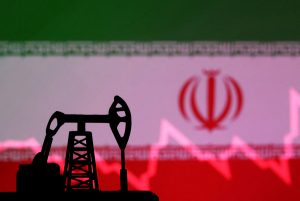
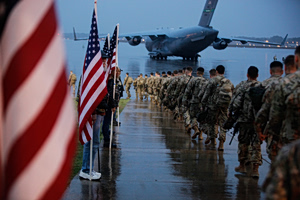
Following his renewed criticism of NATO—especially after European allies rejected a US proposal to secure the Strait of Hormuz—Athens must now assess how transatlantic relations will evolve after the war.
What is certain is that the United States will recalibrate its strategy and presence in the Eastern Mediterranean, once the regional balance becomes clearer.
According to a senior diplomatic source, referencing comments by Matthew Whitaker, Greece remains a key ally on NATO’s southeastern flank.
“Our relationship with Washington is not externally dictated and does not depend solely on the US president’s stance toward Europe,” the source noted.
A Delicate Balancing Act
So far, the Greek government believes it has managed to maintain a careful balance between Brussels and Washington—strengthening ties through diplomatic contacts and energy agreements.
However, cracks have begun to appear.
Following Athens’ clear refusal to participate in a potential mission in the Strait of Hormuz, tensions have emerged within this balancing strategy. As a result, Mitsotakis has called for a public debate on the implications of the crisis—particularly the potential closure of the Strait.
Experienced diplomats warn that Greece cannot afford to rule itself out of such initiatives in advance—especially when the stakes involve its powerful merchant shipping fleet, one of the largest in the world.
Still, any such decision carries significant risks—and potentially serious domestic political costs.