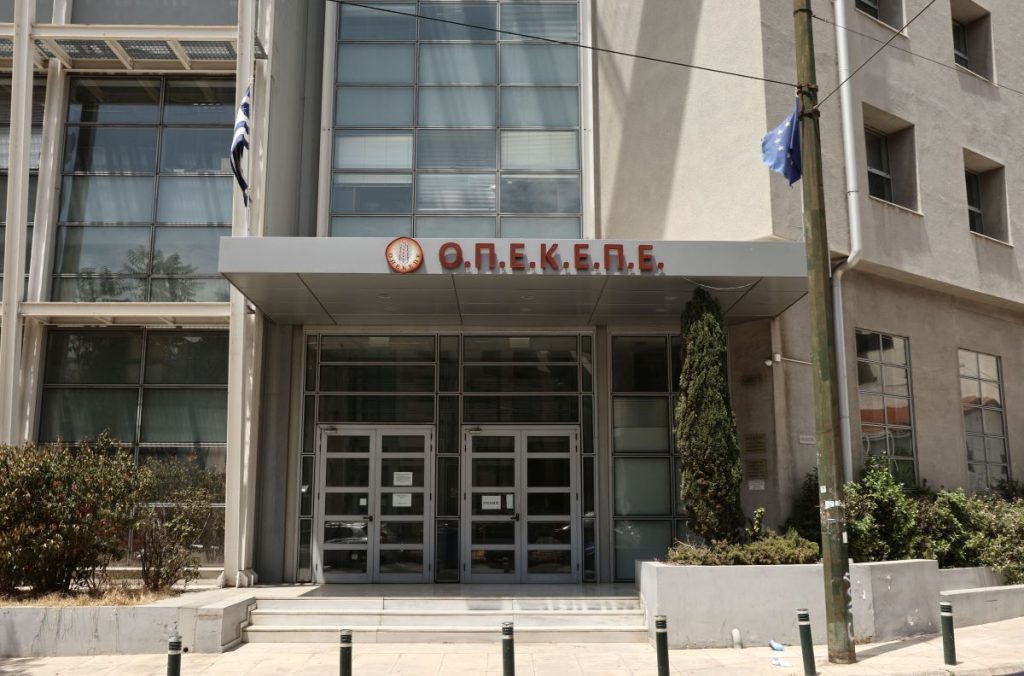
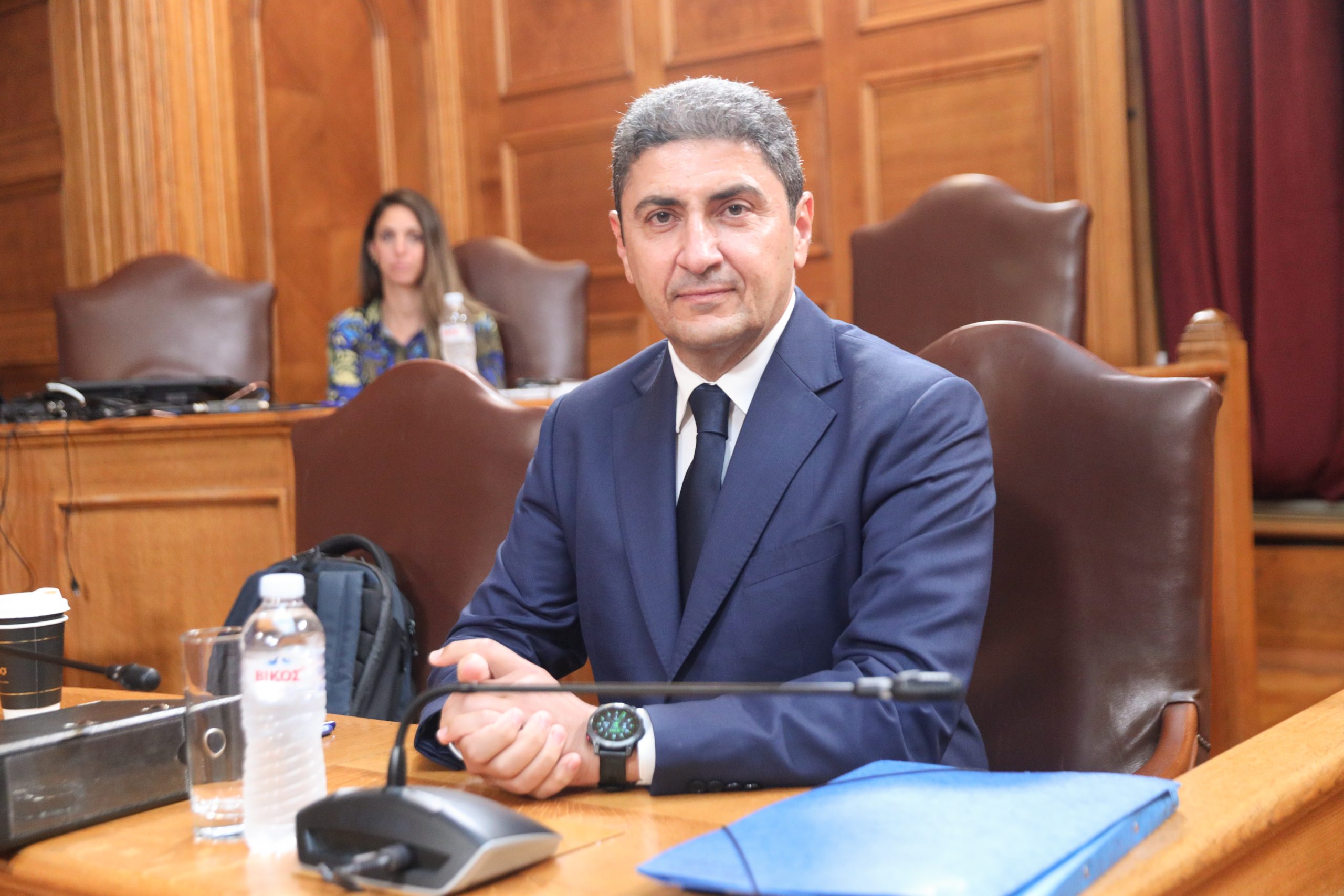
Former Minister of Rural Development and Food Lefteris Avgenakis appeared before Parliament’s investigative committee on Monday to answer questions about his role in the ongoing OPEKEPE scandal, while the government continues efforts to rebuild confidence in the country’s farm subsidy system.
Avgenakis, whose name appears in documents sent to Parliament by the European Public Prosecutor’s Office (EPPO), rejected suggestions of personal involvement in any wrongdoing. “The material transmitted to Parliament does not accuse me of anything illegal,” he said, describing the controversy as “a mix of speculation and political theatrics.”
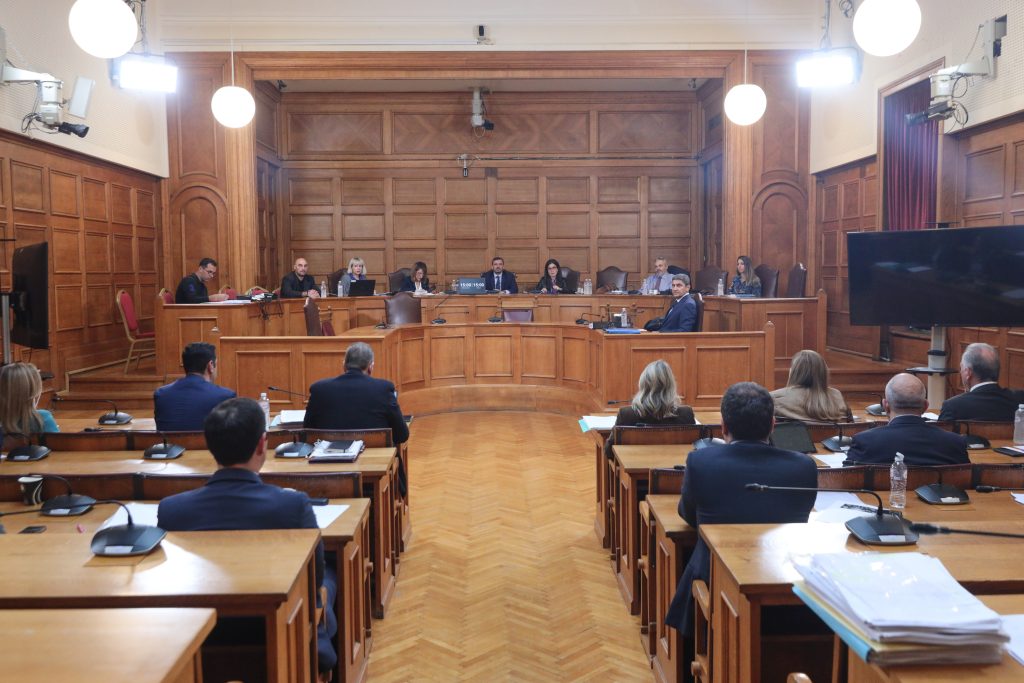
Meeting of Parliament’s Inquiry Committee on OPEKEPE, tasked with investigating the agency’s operations, identifying any liabilities, and restoring trust in Greece’s farm subsidy system. Wednesday, November 5, 2025. (Giannis Panagopoulos/EUROKINISSI)
The former minister said his priority during his tenure was to restore transparency and institutional order within OPEKEPE—the Payment and Control Agency for Guidance and Guarantee Community Aid, which distributes EU agricultural subsidies. He said the agency should operate “as a state institution, not as anyone’s personal tool.”
Avgenakis defended his decision to dismiss OPEKEPE’s then-president Evangelos Simandrakos citing “serious mistakes and incorrect payments” and explaining that repayment had been requested from those who received funds in error. “There was never any pressure from me—never, never, never,” he said, rejecting claims that he interfered in subsidy decisions or pressured staff to lift payment restrictions.
Tensions rose during questioning by opposition MPs, including Milena Apostolaki of PASOK, who cited alleged political favoritism in agency appointments. Avgenakis countered that all staffing decisions were based on merit. “The criteria were efficiency and competence,” he said, denying accusations that his office made partisan hires. He also claimed there had been “an attempt to politically target Crete,” his home region.
Tensions rise over Tycheropoulou documents
Just before Avgenakis’s appearance, Paraskevi (Vivi) Tycheropoulou, a senior OPEKEPE official who has previously assisted European prosecutors, submitted additional documents to the committee.
Sources within the ruling New Democracy party accused her of trying to influence public perception ahead of the hearing. Party officials said her documents referred to old cases that had already been reviewed and showed no evidence of improper political pressure.
Tycheropoulou has played a key role in the broader OPEKEPE affair, having previously reported internal irregularities and cooperated with the EPPO in investigations into subsidy mismanagement.
Greece submits revised action plan for OPEKEPE to the European Commission
While the political debate unfolded in Athens, the European Commission confirmed that it has received Greece’s revised Action Plan to modernize OPEKEPE and its Integrated Administration and Control System (IACS)—the digital framework that manages EU agricultural subsidies.
Commission spokesperson Balazs Ujvari said Brussels would respond within two months, after assessing whether the new plan adequately addresses past shortcomings. In August, the Commission had told Greece it was “not fully satisfied” with the earlier version and requested a stronger, more detailed reform proposal.
The new Action Plan 2 includes sweeping measures: a high-resolution digital map of farmland using satellite data and artificial intelligence; a centralized livestock registry to track each animal eligible for EU funding; tighter ownership verification to curb fake leases; and more targeted audits with advanced risk analysis tools.
Deputy Prime Minister Kostis Hatzidakis described the reforms as “a decisive step to rebuild credibility,” while Minister of Rural Development and Food Kostas Tsiaras called them “a new era for transparency and fairness in farm payments.” Giorgos Pitsilis, Governor, of the Independent Authority for Public Revenue, (AADE), said integrating OPEKEPE’s systems into the tax authority’s digital infrastructure will enable real-time cross-checks and stronger oversight.
A test of transparency
The latest developments highlight both Brussels’ demand for accountability and Greece’s struggle to reform a system that has faced months of revelations about mismanagement and fraud.
As the European Commission reviews the government’s new plan and the parliamentary inquiry continues, the OPEKEPE saga remains a test of Greece’s ability to restore transparency, enforce controls, and regain the trust of European institutions—and of its own farmers.