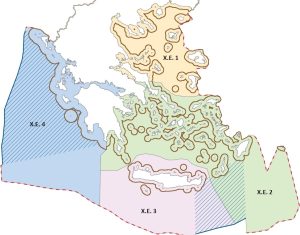
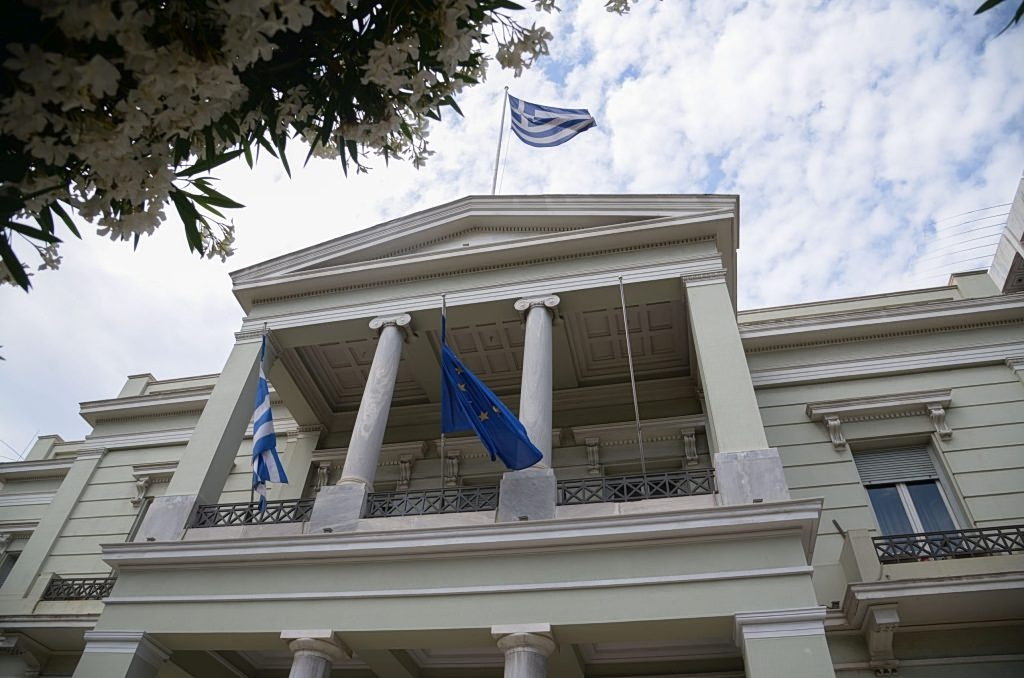
“Diplomatic sources” quoted extensively by local media on Tuesday afternoon echoed Athens’ standing position that delimitation of maritime zones and the continental shelf are the only pending issues in the Aegean between Greece and Turkey.
The reaction, albeit in the standard “unofficial manner”, comes after same-day comments by Turkish Foreign Minister Hakan Fidan before Turkey’s national assembly. Fidan called for Turkey to receive its “fair share” in the eastern Mediterranean and emphasized that Ankara “supports the examination of all the differences in the Aegean as a whole.”
He also added that Ankara supports a solution within the framework of “international law and good neighborliness in a substantive and constructive manner.”
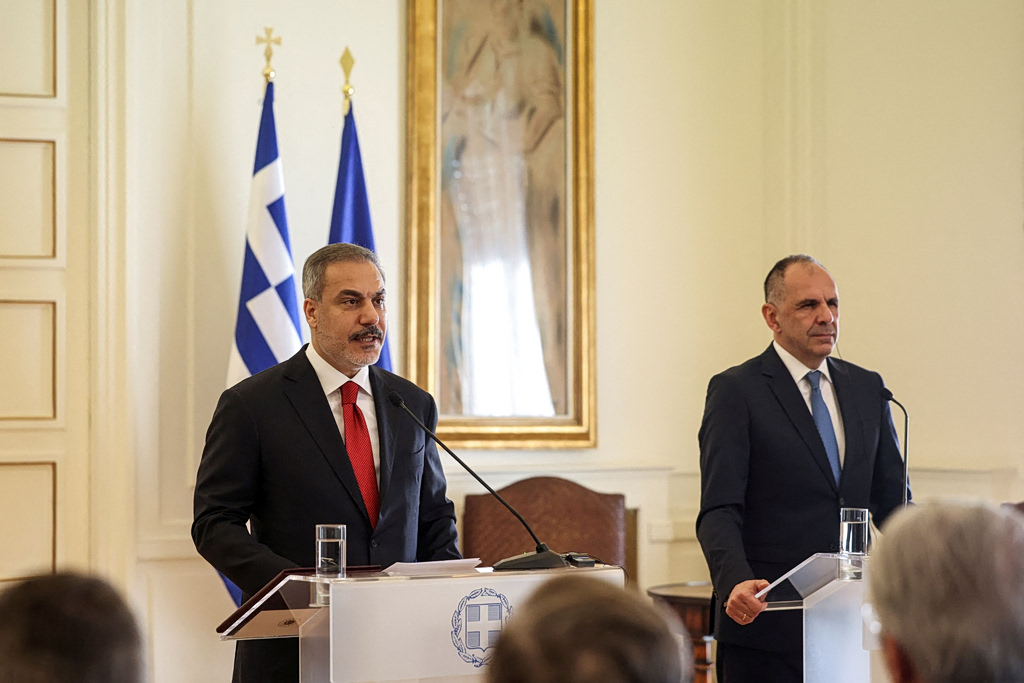
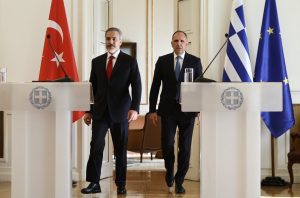
File photo: Turkish FM Hakan Fidan, left, with his Greek counterpart George Gerapetritis
The “international law” quip was particularly noteworthy, given that Turkey flatly rejects a handful of provisions stipulated in the voluminous and landmark UN Convention of the Law of the Sea (UNCLOS), articles that specify a state’s right to territorial waters and the process for delimitating maritime zones, i.e. exclusive economic zones.
“We want to see the Aegean and the eastern Mediterranean as a region of prosperity and stability,” Turkey’s top diplomat said, while also referring to the long-standing Cyprus problem and even the Muslim minority in Greece’s northeast province of Thrace.
In terms of the latter, Fidan again referred to a “Turkish minority” in “western Thrace”, while citing “our continuing efforts to protect its rights … taking reciprocal steps when necessary.”
Greece has consistently and vociferously rejected Ankara’s use of the term “Turkish minority”, pointing directly to the 1923 Treaty of Lausanne, of which both countries are primary signatories. The latter refers to a “Moslem minority” in Thrace, as the specific religious community includes Pomaks and Muslim Roma (gypsies).
“…as such, revisionist positions and proposals are completely unacceptable…Greece remains committed to the principles of International Law and wishes, guided always by national interest, to continue a structured dialogue with Turkey on the basis of these principles,” the same diplomatic sources said.
In terms of the “Turkish minority” reference, the sources cited the treaty directly, stressing that the “…treaty of Lausanne clearly defines the character of the minority in Thrace as religious, to whose members Greece provides full equality and citizenship.”