Greece rejects Ankara’s claims as unfounded and reiterates that its sole bilateral dispute with Turkey concerns a delimitation of maritime zones
Ankara’s unilateral marine park declarations in the northeast Aegean add a new environmental and administrative dimension to its long-running unilateral claims
The Turkish foreign minister acknowledged Iran's 12-nautical-mile territorial waters in the all-important waterway, even as Ankara continues to dispute Greece's right to apply the same UNCLOS provision in the Aegean
Tunisia's formal UN objection to Libya's maritime claims strengthens Athens' argument that the 2019 Turkey-Libya maritime accord lacks international backing or legitimacy, as Greece, Israel deepen defense cooperation in the meantime
Athens says talks with Tripoli and Benghazi are advancing as discussions focus on EEZ delimitation under international maritime law
Greek officials have warned that any domestic maritime legislation merely seeks to amplify disputed claims in the Aegean, eastern Mediterranean, but without a basis in international law
Greek officials have noted that any Turkish attempt to legislate disputed sea zones would violate international law, while Athens seeks to preserve fragile “calm waters” amid a ever-fluid eastern Mediterranean power balances
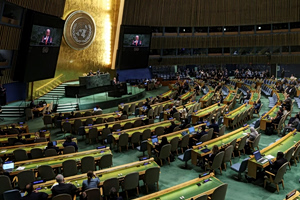
Greece’s Deputy Permanent Representative to the UN said the Montreux Convention regarding the regime of the straits is the sole international legal instrument governing navigation through the Dardanelles, the Sea of Marmara and the Bosporus
The Greek delegation at the UN General Assembly emphasized Athens' commitment to freedom of navigation, a fundamental pillar of international security
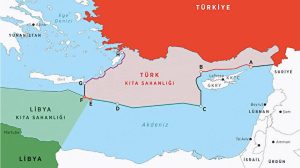
The official letter by Ankara points to alleged violations against its unilaterally declared Exclusive Economic Zone (EEZ) in the eastern Mediterranean, one of the more prominent exercises in 'Turkography' since 2019
Irate response by Turkish CHP party deputy chairman, who invokes 'international law'
What the Agreement on the Conservation and Sustainable Use of Marine Biological Diversity in Areas Beyond National Jurisdiction (BBNJ) covers, which came into force on January 17 – the geopolitical dimensions and its connection to the global struggle over rare earths and maritime trade routes
Reports in the local media on Thursday cited annoyance by Turkish foreign ministry 'sources', as Ankara continues to claim 'jurisdiction in maritime zones between clusters of Greek islands
Turkey, a non-signatory to UN Convention on the Law of the Sea (UNCLOS), ratified the so-called 'High Seas Treaty'
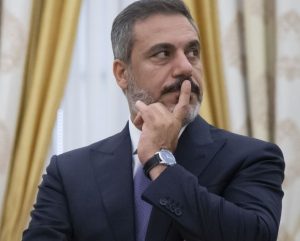
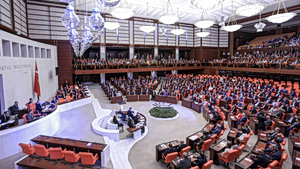
The reaction, albeit in an “unofficial manner”, comes after same-day comments by Turkish Foreign Minister Hakan Fidan before Turkey’s national assembly
Cyprus is an EU and UN member-states, although 37% of the island republic remains occupied by Turkey since 1974, while the latter has also propped up a Turkish Cypriot pseudo-state in the occupied areas since 1983
'An update of Greece's MSP map on the Commission's platform was carried out in accordance with the Law of the Sea and the bilateral agreements,' a foreign ministry spokeswoman in Athens reiterated on Friday
The Egyptian reaction, according to reports in Greek media on Friday, also dispute Libyan claims for hydrocarbon exploration and exploitation blocks in the east Mediterranean
Kallas stated that the EU wanted third countries to act in accordance with international law, including the United Nations Convention on the Law of the Sea (UNCLOS).
The agreement generated Greece’s stern reaction, irked other regional countries and eventually earned disapproval by the EU, as it essentially ignored the Law of the Sea and tried to 'erase' all Greek island territories