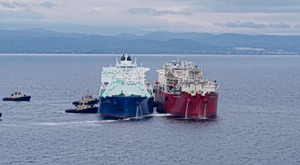
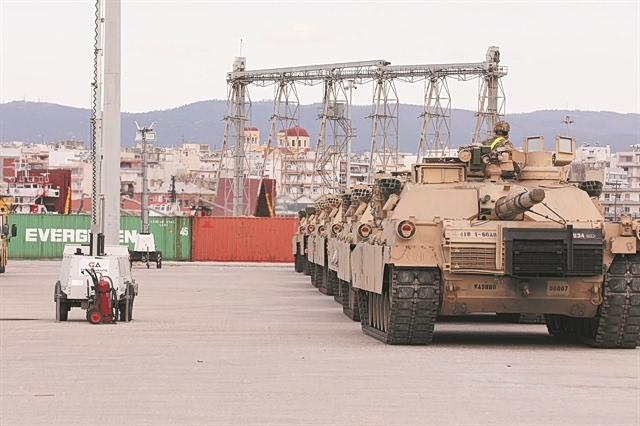
Greek Defense Minister Nikos Dendias on Thursday underscored the growing geopolitical importance of the extreme northeast port city of Alexandroupolis, speaking at this week’s East Macedonia and Thrace Forum IV, and using a WWI-era naval battle as an example.
Speaking a day after the 111th anniversary of the Ottoman victory (March 18) in the naval battle of the Dardanelles during Gallipoli Campaign in 1915, a year into World War I, Dendias stressed that geography can shape the course of history.
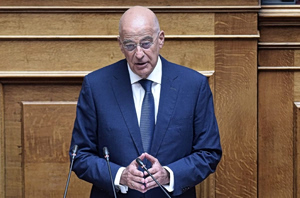
Defense Minister Nikos Dendias.
Interestingly enough, Dendias drew a historical parallel to Winston Churchill and the First World War by referencing the latter’s efforts, as First Lord of the Admiralty, to break the blockade of the Dardanelles and the Ottoman Empire’s control of the straits. The latter impeded the Entente’s supply routes to Russia.
“If Alexandroupolis had existed as a hub back then, along with the vertical (energy) corridor we are developing today, the outcome of World War I would have been entirely different,” Dendias said.
He added that the port city has evolved from relative obscurity into a key gateway for the West into Eastern Europe, noting that “a few years ago, no one abroad knew Alexandroupolis—now everyone does.”
The minister also stressed that “nothing is guaranteed,” emphasizing that democracy, freedom, and free markets require constant effort and modern defense capabilities to remain secure.
US NATO Envoy
On his part, Matthew Whitaker, the United States Permanent Representative to NATO, highlighted the need for greater efficiency in defense spending, pointing out what he called an emerging imbalance in modern warfare costs, citing conflicts such as those in Ukraine and the Middle East:
“You cannot shoot down a $10,000 drone with a $4 million missile,” he emphasized.
Alter Ego Media is a media sponsor of the forum.