“This Is Very Much Part of the Iranian Game Plan”
By Dimitris Mavrokefalidis, UK Correspondent
LONDON – A Greek national accused of conducting surveillance on a London-based Iranian journalist allegedly used a covert camera concealed inside a sock to gather intelligence on behalf of a foreign state, a British court has heard.
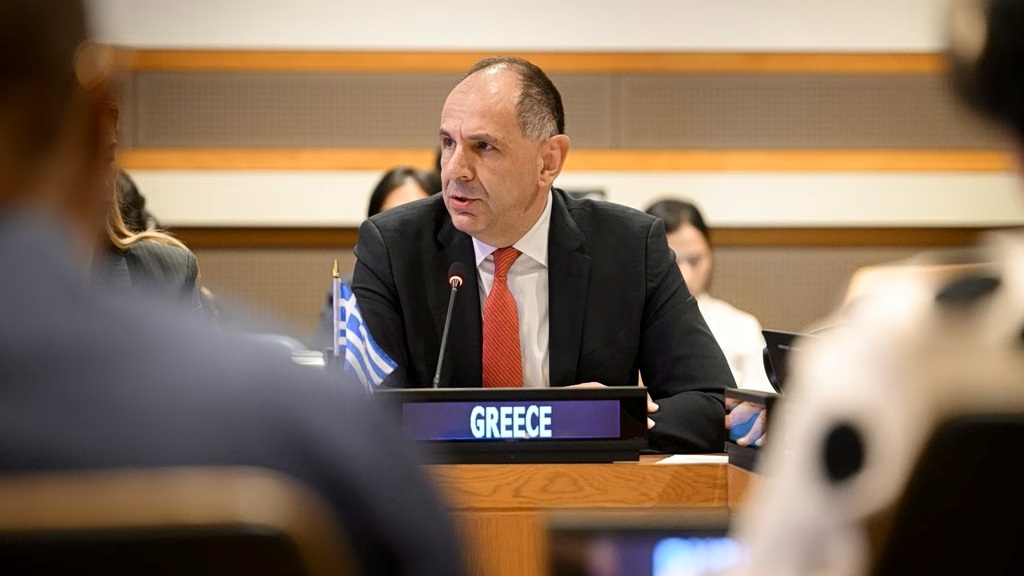
Ioannis Aidinidis, 46, appeared before Westminster Magistrates’ Court on 29 May charged with assisting a foreign intelligence service believed to be linked to Iran, following an investigation by Counter Terrorism Policing (CTP) London.
Prosecutors allege that Aidinidis travelled to the United Kingdom twice, in April and May this year, to carry out surveillance on a journalist working for Iran International, the Persian-language television broadcaster that has frequently been critical of the Iranian authorities.
According to prosecutor Lee Ingham, Aidinidis photographed and filmed addresses and vehicle registration plates connected to the journalist during both visits.
During the second trip, prosecutors allege he installed a covert camera hidden inside a sock, capable of transmitting information abroad.
Aidinidis, who was born in Georgia and is reported to live in Germany, is also accused of receiving funding to conduct the surveillance. The allegations have not yet been tested at trial.
Commander Helen Flanagan, Head of CTP London said: “We know this may cause concern for many people here in the UK, and particularly those working in Persian-language media.
“We continue to work closely with a number of organisations and individuals to provide them with advice and support around their safety and security and this includes the specific individual and organisation linked to this investigation.”
Latest Chapter in a Growing Security Threat
The case is the latest in a series of incidents involving Iran International journalists and has renewed concerns about what media organisations and security experts describe as a pattern of transnational repression targeting critics of the Iranian government.
The broadcaster has previously been at the centre of high-profile security investigations in the UK.
Last year, Iran International presenter Pouria Zeraati was stabbed outside his home in Wimbledon, south-west London.
Prosecutors later alleged that the attack had been ordered by a third party acting on behalf of the Iranian state. The men accused in that case have denied the charges.
Against this backdrop, the latest allegations have intensified concerns about the safety of journalists working for the broadcaster.
“We Have Faced Threats, Intimidation and Surveillance”
Speaking exclusively to TO VIMA, Adam Baillie, spokesman for Iran International, declined to comment on the specifics of the Aidinidis case because legal proceedings are ongoing.
“We can’t make any comment other than to repeat what is in the police report,” he said. “The whole affair is subject to legal proceedings, so we’re not allowed to comment.”
However, Baillie said journalists at the broadcaster have long faced threats and intimidation.
“We have faced threats which have escalated since we were declared by the Islamic Republic of Iran as a terrorist organisation,” he said.
“We’ve been subject to intimidation, surveillance and all kinds of threats.”
Asked whether the broadcaster’s journalists were regularly targeted, he replied: “We are the subject of the fifth court case involving these kinds of threats, so pretty much we can say that, yes, we are targeted.”
Baillie described a sustained campaign of online abuse and intimidation directed at staff.
“People’s families are threatened in Iran. This is the most common thing to happen,” he said.
“There are many, many dozens of instances of very serious threats and harassment of people’s families.”
According to Baillie, nearly 70 Iran International journalists have been publicly identified by Iranian authorities as hostile to the state.
“It is a very, very serious matter,” he added.
Journalists Continue Reporting Despite Pressure
Despite the threats, Baillie insisted that journalists continue to work freely and independently.
“We report freely and we do report independently,” he said. “It doesn’t prevent us doing that. It just adds to the pressures on people.”
He acknowledged the psychological burden placed on staff but said it had not weakened their commitment.
“If anything, it seems to strengthen their resolve to keep doing the job they do, which is to report news from Iran for Iranians.”
Baillie also praised the support provided by British authorities.
“The police are very, very supportive of us,” he said. “We follow very closely any advice they give us.”
He revealed that armed police protection had been provided at certain times, including at the broadcaster’s former headquarters in west London.
“They have been amazingly responsive to our needs,” he said.
Former Security Chief Warns of Wider Pattern
Roger McMillan, who served as Director of Security at Iran International between 2020 and 2024, told TO VIMA that while the allegations were shocking, they were not unexpected.
“It’s a shocking event, but sadly not unsurprising,” he said. “Iran International has such impact in Iran and clearly is a thorn in the side of the government.”
McMillan argued that the case demonstrates the lengths to which hostile actors may be willing to go in order to monitor journalists.
“What you now see is the extent of the network that the IRGC are prepared to use to further harass and frighten these journalists,” he said.
He described the allegations involving the concealed camera as consistent with covert surveillance operations.
“I would assess that as being something that is not perhaps out of the ordinary for someone attempting to conduct covert surveillance,” he said.
At the same time, he praised the Metropolitan Police investigation that led to the arrest.
“It is down to the hard work and testament to the hard work put in by the Metropolitan Police, who go very much the extra mile to ensure that these journalists are protected.”
“Part of the Iranian Playbook”
McMillan said the case reflects what he sees as a broader strategy aimed at critics of the Iranian regime, both inside and outside the country.
“I think it’s very much in their playbook,” he said. “Anybody who is critical of the regime, whether in Iran or overseas, will feel the wrath of the regime at some point in their lives.”
He described the targeting of journalists and their families as part of a long-standing pattern.
“This is very much part of the Iranian game plan — to threaten and harass journalists and their families.”
According to McMillan, journalists working for Iran International have faced surveillance attempts, threats and coercion for years.
“This is not new,” he said. “The journalists have experienced numerous attempts to put them under surveillance, to threaten them and to coerce them.”
Press Freedom Under Pressure
The case has once again highlighted concerns about the safety of exiled journalists operating in democratic countries.
McMillan warned that authoritarian governments increasingly seek to silence critics beyond their borders.
“It shows a willingness at whatever level to shut down the freedom of speech of the press,” he said.
“Freedom of the press is critically important, particularly in a country such as Iran, which has spent decades suppressing freedom of speech and access to information.”
As legal proceedings against Aidinidis continue, the allegations are likely to fuel further debate about foreign state activity in Britain and the challenges facing journalists who report on some of the world’s most restrictive regimes.
For Iran International’s staff, however, the message appears unchanged: despite threats, surveillance allegations and security concerns, they intend to continue reporting.
“The journalists carry on,” Baillie said. “No one has stopped working as a result of it.”