 Μake us preferred on Google
 The guilty verdict in Greece’s Predator spyware trial has unleashed a new wave of political confrontation after an Athens court handed down the first criminal convictions in the long-running surveillance scandal.
The four defendants were sentenced to 126 years and eight months each, with eight years to be served and the remainder suspended pending appeal. But even as the court closed one chapter of the case, the ruling has reopened broader questions about political accountability and the resilience of Greece’s democratic institutions.
Opposition figures quickly signaled that the decision does not settle the matter. Instead, they argue, it marks the beginning of a deeper reckoning over how such an operation unfolded and who ultimately bears responsibility.
Androulakis: “A Major Blow to a Shadow System”
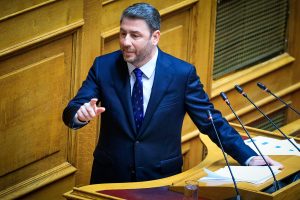
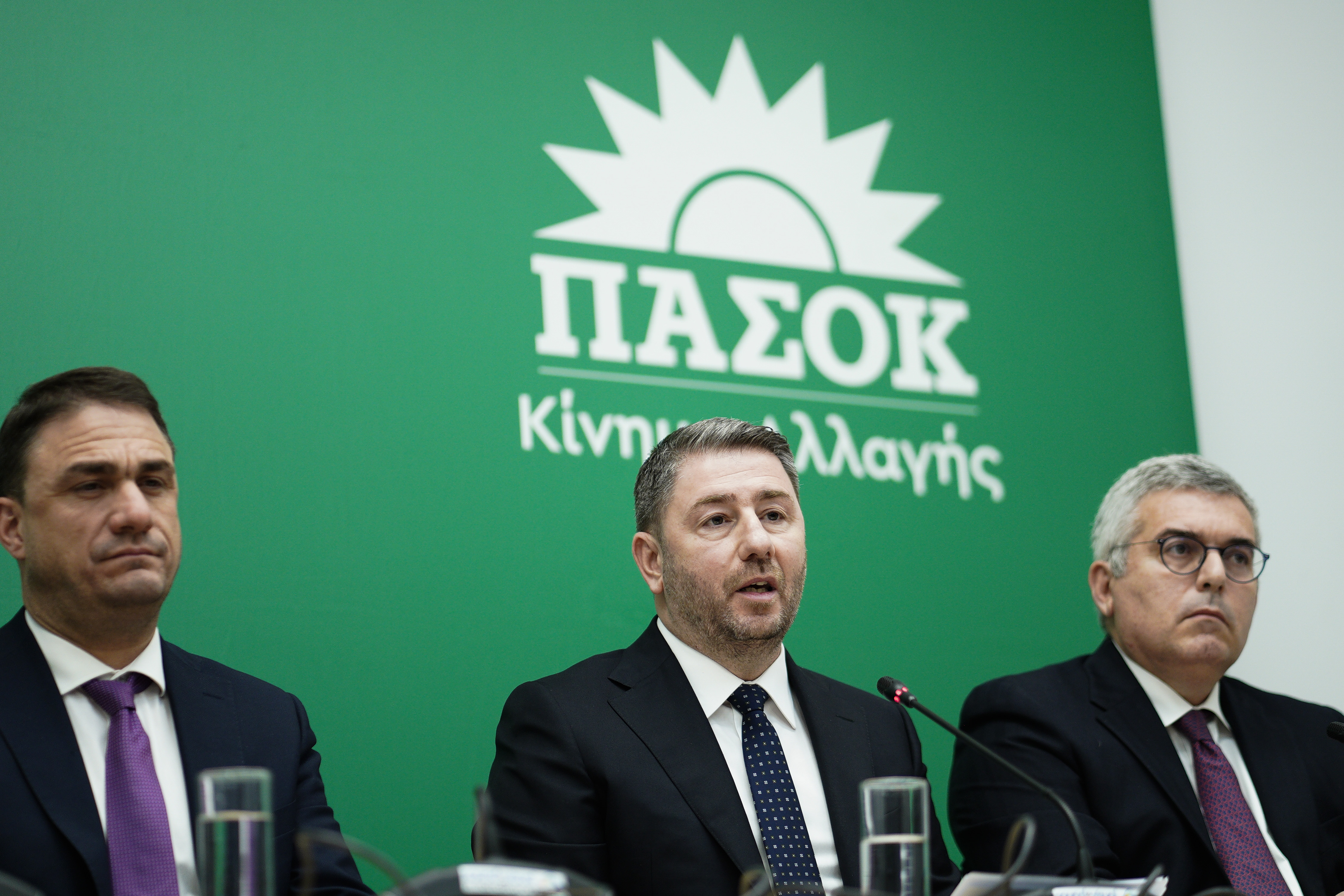
Nikos Androulakis, leader of PASOK and one of the confirmed targets of Predator spyware, framed the verdict as vindication after what he described as a four-year legal and political battle.
He said the ruling stemmed from the criminal complaint he filed in July 2022 and called it “a major blow to a shadow system” that, in his view, operated from within the prime minister’s office.
Androulakis argued that the surveillance affair not only violated fundamental rights and democratic safeguards but also posed national security risks. He pointed to the alleged monitoring of senior military officials and warned that sensitive material may have fallen into unknown hands.
He also criticized earlier handling of the case by senior judicial authorities, saying significant aspects of the scandal had previously been set aside.
At the same time, he stressed that the matter is far from closed. He highlighted the court’s decision to forward the case file back to prosecutors for further investigation — including potential espionage charges — as a sign that broader accountability may follow.
“The struggle will continue,” he said, adding that all those responsible must ultimately answer both politically and legally.
A New Parliamentary Initiative
Hours after the verdict, Androulakis announced that PASOK will seek the formation of a new parliamentary investigative committee once the court’s written decision is finalized.
He said he would also formally raise the issue in Parliament and request a leaders’ debate, arguing that the surveillance affair reshapes the political agenda and demands clear positions from all parties.
According to his lawyer, Christos Kaklamanis, the court has requested that all individuals identified by Greece’s communications watchdog as recipients of Predator-linked messages — but who did not file criminal complaints — be called to testify. That group includes political figures and senior members of the armed forces.
Kaklamanis added that once the ruling is formally drafted, it will open a new cycle of judicial investigation. He noted that timing is critical, as certain offenses risk becoming time-barred if proceedings are delayed.
Syriza: “Who Put Them Up to It?”
The main opposition party, Syriza, also responded with sharp criticism.
Party spokesperson Kostas Zachariadis openly questioned whether the convicted individuals could have acted without political backing.
“Who put these four up to doing this job?” he asked during a televised interview, expressing doubt that such extensive surveillance — targeting business figures, journalists and even senior military leadership — could have unfolded without political responsibility being implicated.
Zachariadis recalled that in 2022 Prime Minister Kyriakos Mitsotakis said he was unaware of the affair and dismissed his then–secretary-general. “What happens now?” he asked. “Will the prime minister make a statement? Will he inform Mr. Androulakis?”
He described the case as a serious blow to democracy, saying issues of democratic governance are paramount and warning that this period could ultimately be remembered as “a very dark chapter” for the country.
Tsipras: Accountability Must Extend Further
Former Prime Minister Alexis Tsipras reacted in sharply worded remarks, arguing that the verdict exposes unresolved political responsibility.
Referring to the lengthy prison sentences imposed on the four defendants, Tsipras suggested that deeper layers of accountability remain untouched. He said two individuals had effectively avoided prosecution because they were not included in the indictment.
In a direct attack, Tsipras named Prime Minister Kyriakos Mitsotakis and former government secretary-general Grigoris Dimitriadis, accusing them of moral and operational responsibility in what he described as a serious assault on the rule of law.
He added that the latest developments make it increasingly difficult, in his view, for “the real perpetrators” to avoid answering both before the courts and before the public.
Venizelos: The Rule of Law Cannot Be Politically Managed
Evangelos Venizelos offered a more institutional assessment, warning that cases involving what he described as “open wounds in the body of the rule of law” cannot be declared closed by political will alone.
He said the court’s decision — along with the detailed trial record — documents what he characterized as a grave institutional breach carried out through cooperating structures operating alongside the state.
Venizelos also cautioned against any weakening of constitutional protections safeguarding the confidentiality of communications. In a pointed remark, he noted that judicial oversight does not exist only in Athens, but also in Strasbourg; an apparent reference to the European Court of Human Rights.
Far From the Final Chapter
While the verdict represents the first criminal convictions in the Predator spyware scandal, the political reverberations suggest the affair is far from settled.
With new parliamentary initiatives underway and prosecutors set to examine potential additional charges, including possible espionage, the Predator case will remains at the center of Greece’s political debate.