 Μake us preferred on Google
Greece’s Ministry of Environment and Energy submitted a draft presidential decree establishing the South Aegean National Marine Park 1 – Southern Cyclades to the Council of State, the country’s highest administrative court, on Friday, October 16. Once the court reviews the plan and issues its opinion, the decree will be formally enacted.
According to the ministry, the move fulfills a pledge Prime Minister Kyriakos Mitsotakis made at the “Our Ocean” conference in Athens in April 2024 to create two national marine parks: one in the South Aegean’s Southern Cyclades and one in the Ionian Sea.
The ministry described the decree as a landmark initiative to protect Greece’s marine natural resources, setting up a unified legal framework that balances biodiversity conservation with the sustainable development of island communities.
What the Park Covers
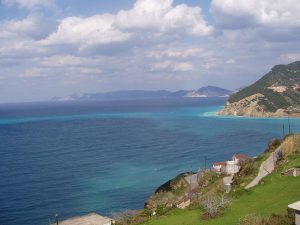
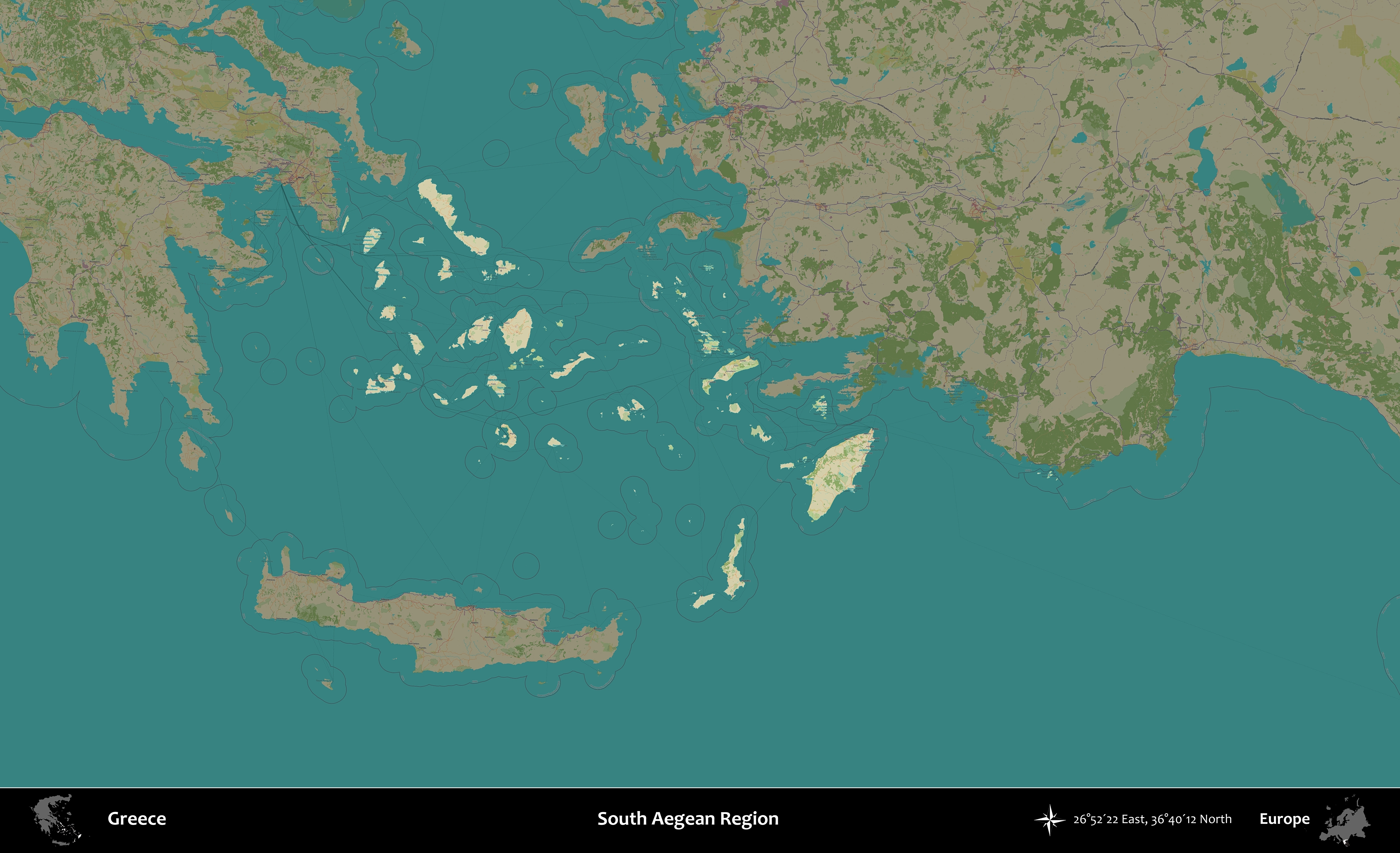
The park includes 73 clusters of islands and islets, along with the land-based Natura 2000 areas of the inhabited islands of Milos, Kimolos, Folegandros, Sikinos, Santorini, Anafi, Amorgos, Irakleia, Schinoussa, Koufonisi, Kinaros, and Levitha. It also covers the surrounding waters of the South Aegean region within Greece’s territorial waters. In total, 18 marine and land areas within the park are already part of the EU’s Natura 2000 network of protected sites.
The park spans more than 9,000 square kilometers (about 3,475 square miles) of sea and 250 square kilometers (about 97 square miles) of land. Its creation will place 8,407.14 square kilometers (roughly 3,246 square miles) of sea under protection, on top of the marine areas already protected under Natura 2000.
A Biodiversity Hotspot
The area is considered one of the most important centers of marine and island biodiversity in the Mediterranean. It is home to 37.5% of Greece’s population of Mediterranean monk seals, which equals 19% of the species’ global population. Its underwater habitats, including Posidonia seagrass meadows, coralligenous reefs, and deep-sea ecosystems, serve as key breeding grounds for other marine mammals, whales and dolphins, fish, and invertebrates.
The park is also vital for seabirds. It contains breeding habitats for 17.7% of Greece’s population of Eleonora’s falcons, 12.5% of its Yelkouan shearwaters, 11% of its Scopoli’s shearwaters, 36% of its Audouin’s gulls, and 13% of its European shags.
What the Decree Would Do
The draft decree sets up a single framework for protecting and managing both land and sea within the park. According to the ministry, it defines clearly and in detail, for the first time, which activities are allowed in each of the park’s 196 protection zones. Specific management measures will be laid out in a separate management plan, which will also include financial support for fishermen affected by new fishing restrictions.
Key measures for the marine area include:
- A complete ban on bottom trawling, with compensation for affected fishermen.
- A ban on fishing within half a nautical mile of the coast from April 15 to May 31, which may be revisited under the management plan.
- Adoption of the rules of “Amorgorama,” a local fisheries management initiative on Amorgos regarded as a success, and the introduction of similar measures around Akrotiri on Santorini.
- A gradual crackdown on uncontrolled anchoring in areas with seagrass meadows and other sensitive habitats, such as reefs.
- Preserving, and where possible strengthening, traditional activities such as livestock farming, beekeeping, and small-scale coastal fishing, which have been practiced in the area for thousands of years. Dry-stone walls, terraces, cisterns, and other features of the local cultural heritage will also be maintained and showcased.
- Activities, projects, and infrastructure serving national defense purposes will be allowed without restriction.
Papastavrou: Protecting the Sea Is a Duty to the Country
Environment and Energy Minister Stavros Papastavrou said Greece is moving forward with a clear plan and determination to protect marine life in areas under its sovereignty. With the creation of the South Aegean park and the upcoming Ionian Sea National Marine Park, he said, Greece is expected to exceed the European target of protecting 30% of its seas ahead of its 2030 commitment, reaching more than 35%.
Papastavrou added that the government is moving quickly to safeguard the unique biodiversity of the Southern Cyclades while supporting local communities and the sustainable development of the islands. He described protecting the country’s marine wealth as a responsibility to the nation and to future generations.