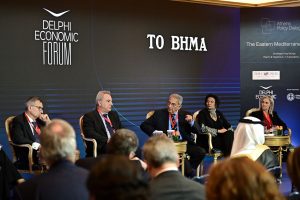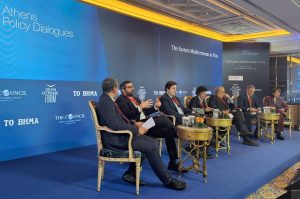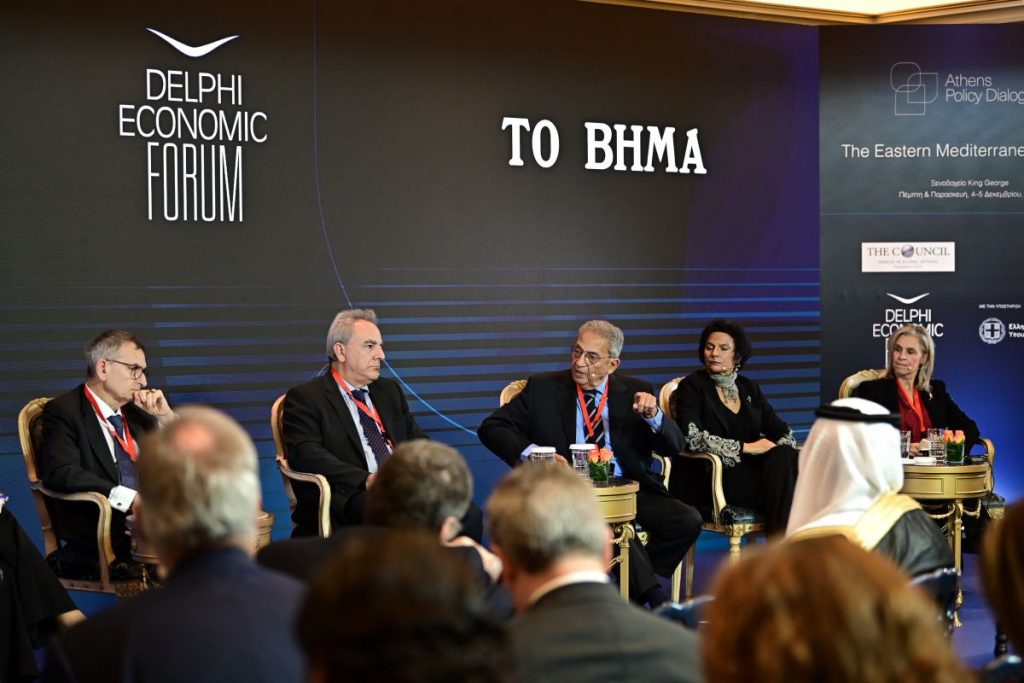
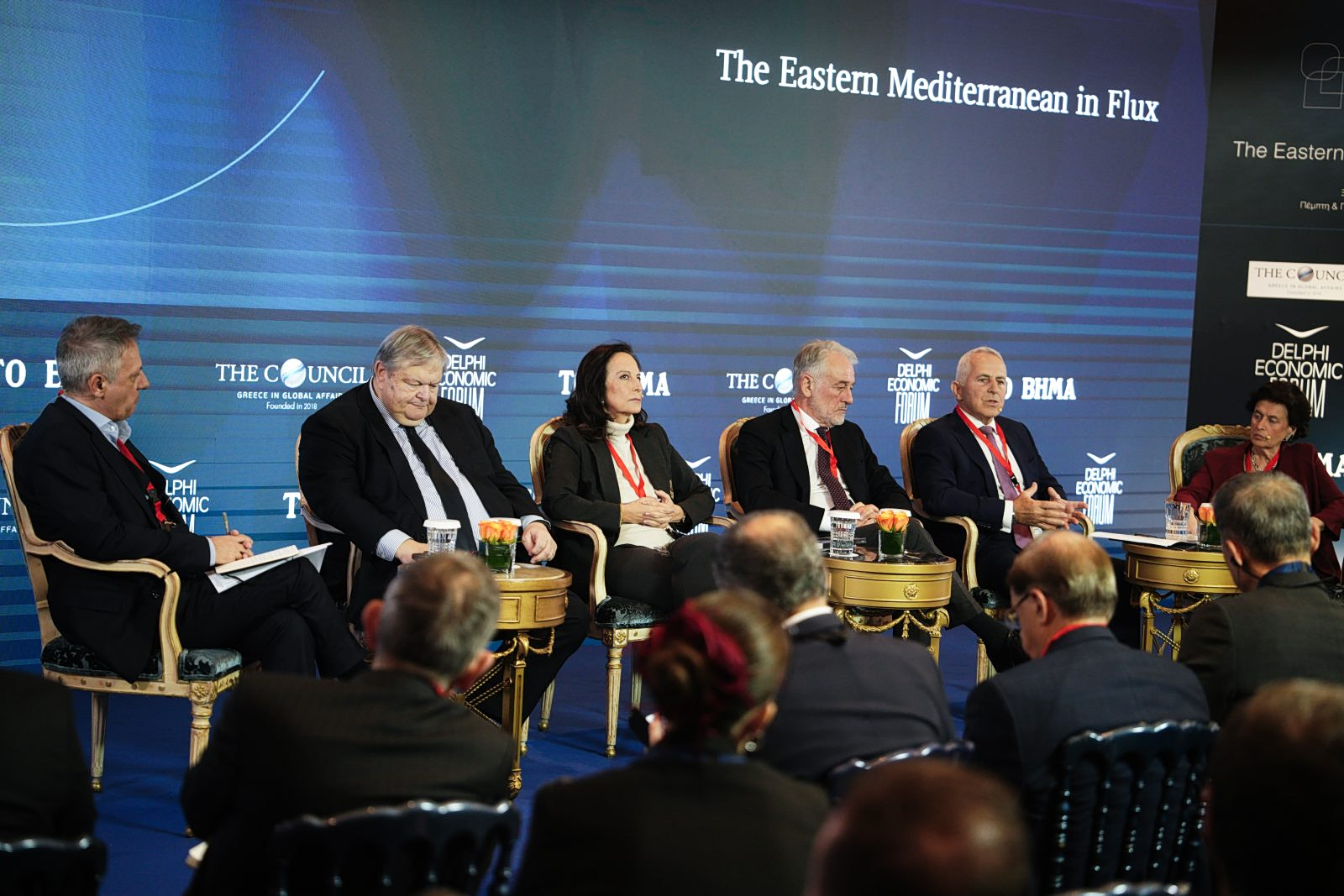
The rapidly shifting geopolitical landscape of the Eastern Mediterranean dominated discussions at the Athens Policy Dialogues, where senior Greek officials, diplomats and foreign policy experts analyzed the challenges and prospects of Greece’s proposed “5×5” framework for regional cooperation.
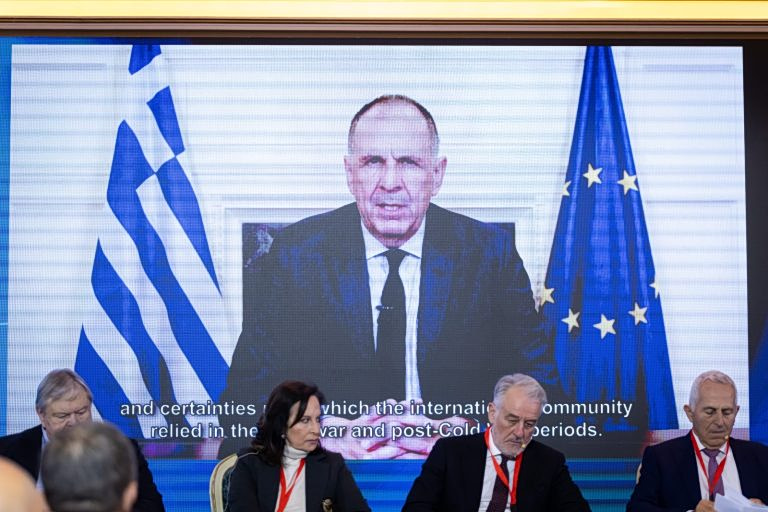
The event, held on 4–5 December in Athens, unfolded against what participants described as an increasingly volatile international environment. In a prerecorded message, Foreign Minister George Gerapetritis spoke of “an era of major challenges,” marked by conflicts in Ukraine, Gaza and Sudan, which he said have “shaken long-standing principles and certainties.” He warned that the world has become “more unpredictable than ever,” with growing pressure on international institutions and international law.
Former Deputy Prime Minister and Foreign Minister Evangelos Venizelos echoed this view, describing the global system as “fluid and uncertain,” adding that in the past eleven months “all stereotypes have collapsed.” He spoke of a return to “spheres of influence,” and referred to the “relentless pace” of former U.S. President Donald Trump’s transactional approach, noting that current trends suggest “no intention of isolationism, but active engagement.” Venizelos urged Greece to update its national strategy for the challenges ahead.
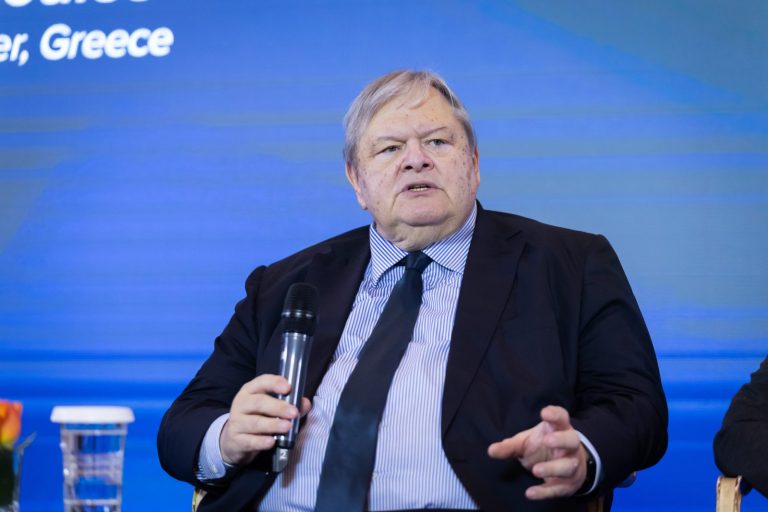
Referring to Greece’s 5×5 initiative, Venizelos stressed that Athens is sending “a clear message that we do not want initiatives that exclude Turkey,” and called for continued bilateral engagement with both Turkey and Libya. He underlined that the initiative concerns the wider Eastern Mediterranean—“not the Aegean”—highlighting Egypt’s central role and the need for additional regional efforts. On energy issues, he noted that the United States “sells LNG everywhere—we are not the only buyers in the Eastern Mediterranean.”
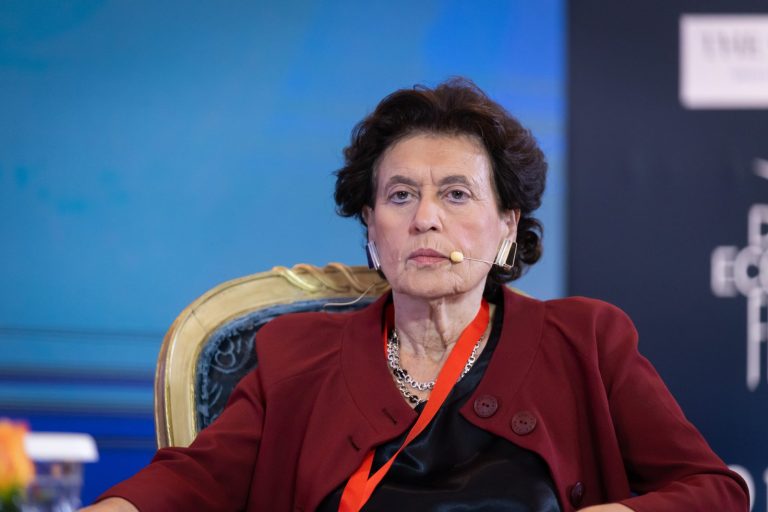
Loukás Tsoukalis, President of the Hellenic Foundation for European and Foreign Policy (ELIAMEP), described dialogue as “almost always better than the alternatives,” calling the 5×5 initiative “welcome.” Still, he cautioned that expanding the format to include countries like Turkey and Libya raises difficult questions of representation, particularly regarding the Turkish Cypriot community and Libya’s internal divisions. He warned that the region remains “a difficult minefield,” with maritime zones and sovereign rights at the heart of disputes. He also questioned whether natural gas will still be in high demand in a decade as the green transition accelerates, concluding that while the initiative is positive, “expectations should remain modest.”
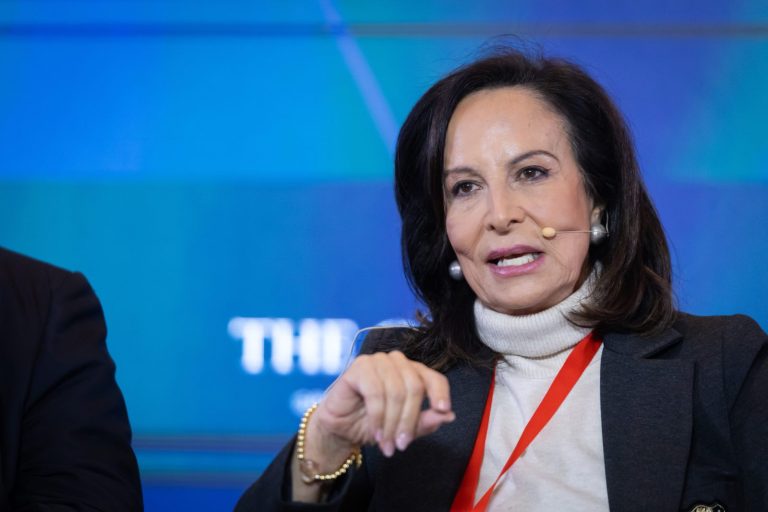
Anna Diamantopoulou, former EU Commissioner, emphasized the scale of global change and noted that Greece is moving forward “without first building a national front.” She described the U.S. as a power now centered on energy, with Greece assuming a role as “an LNG transit point,” while China has become “the second force in the Middle East,” advancing its influence through trade rather than conflict. She warned that regional cooperation cannot proceed without the EU or without the framework of international and maritime law.
Former Defense Minister Admiral Evangelos Apostolakis added that the Eastern Mediterranean is “a region of major uncertainty,” while Greece aims to become an energy hub. He believes the 5×5 format “may help provide solutions,” though he noted ongoing complexities with Turkey and Libya.
Closing the panel, Ino Afentouli, Executive Director of the Institute of International Relations, described the initiative as “a national effort aimed at establishing regional cooperation,” but one that “would be more comfortable within a European framework.” Because the EU is “not active in the region,” she argued, the discussion must be placed within the broader U.S. strategic context. She stressed that Washington’s approach is “transactional,” focused on energy resources and on positioning Greece as a key transit country.
The discussion, moderated by Periklis Dimitrolopoulos, underscored both the urgency and the complexity of shaping a regional strategy in one of the world’s most unpredictable geopolitical environments.