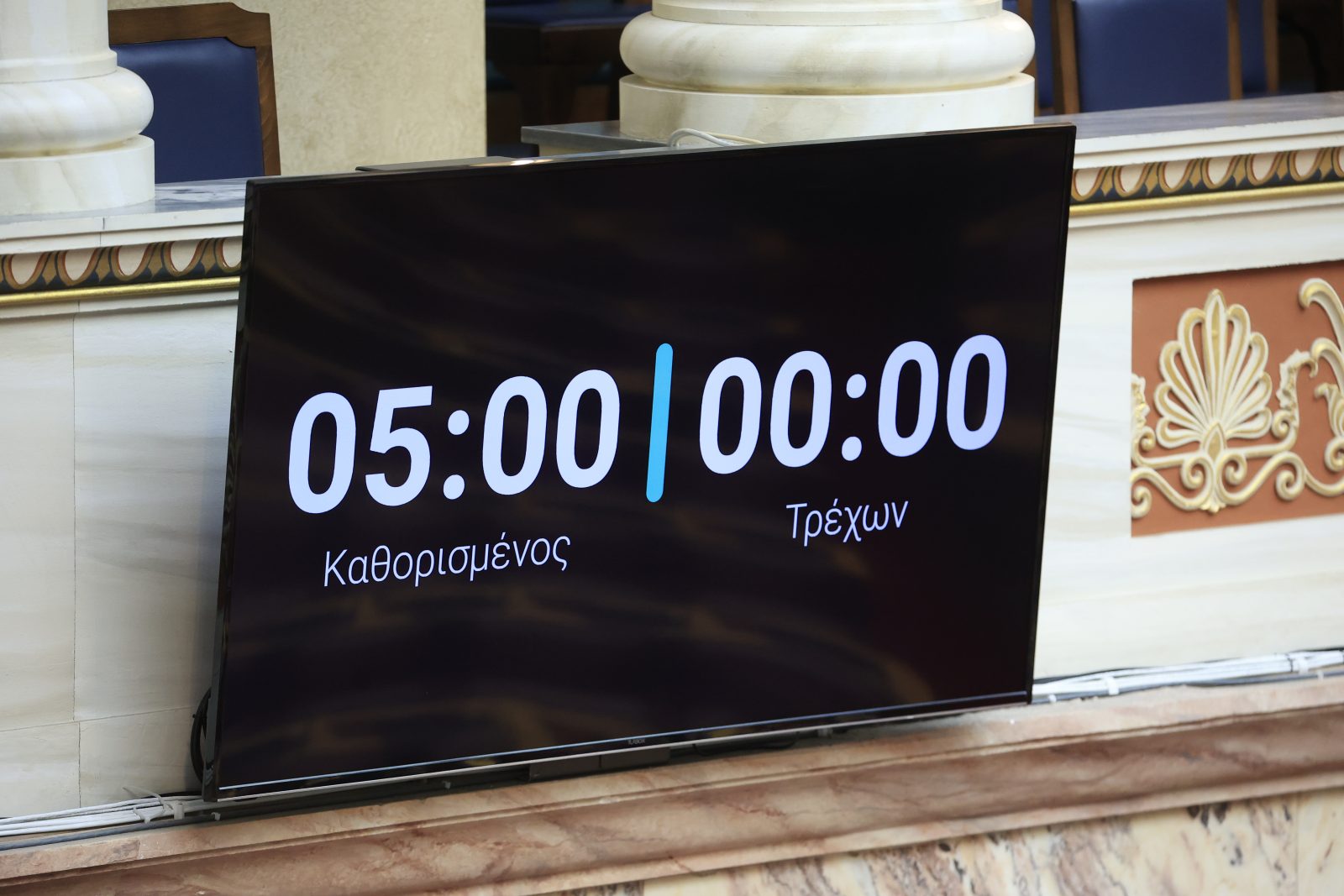
Greece’s Parliament activated on Wednesday a new automatic time-control system, marking a major shift in how parliamentary debates are conducted. The system, informally called the “time-cutter,” automatically silences speakers who exceed their allotted time, part of a broader effort to modernise procedures and enforce discipline in the chamber.
The system made its official debut at 9 a.m. during the session of current affairs questions, and will also be used in upcoming discussions on the Parliament’s budget and the Defense Ministry’s bill. Final technical tests were completed earlier this week by the Speaker’s Secretariat.
How the “Time-Cutter” Works
Once a speaker exceeds their permitted time, the microphone automatically switches off, their additional remarks are not recorded in the official transcript, and the Parliament’s live broadcast camera cuts away to a wide shot of the chamber.
Following a proposal by Deputy Speaker Nikitas Kaklamanis, the Conference of Presidents approved a 25% grace period, after which the system activates without exception.
The Speaker’s office described the measure as part of an effort to make debates “more structured and efficient,” aligning the Hellenic Parliament with time-management practices common in other European legislatures.
End of Dual Speaking Privileges
The updated parliamentary rules also end the practice of dual speaking roles, which previously allowed certain officials—such as former speakers who also lead political parties—to speak twice as long under two capacities. The move has sparked criticism, notably from Zoe Konstantopoulou, leader of the “Course of Freedom” party, who called it a restriction on political expression.
Under the new framework, ministers and party leaders may now speak up to three times per day, while all other MPs must adhere strictly to the speaking order list.
Revised Speaking Times
The reform adjusts time limits across the board.
- MPs: 9 minutes (up from 7)
- Parliamentary representatives: 27 minutes (up from 21)
- Committee rapporteurs: 28 minutes (up from 22)
- Ministers: 13 minutes (up from 10)
- Party leaders: 25 minutes for parties with over 50 MPs, 19 minutes for smaller parties
Exceptions remain for major sessions such as confidence votes, budget debates, and prime ministerial briefings, where party leaders will still enjoy extended speaking time.