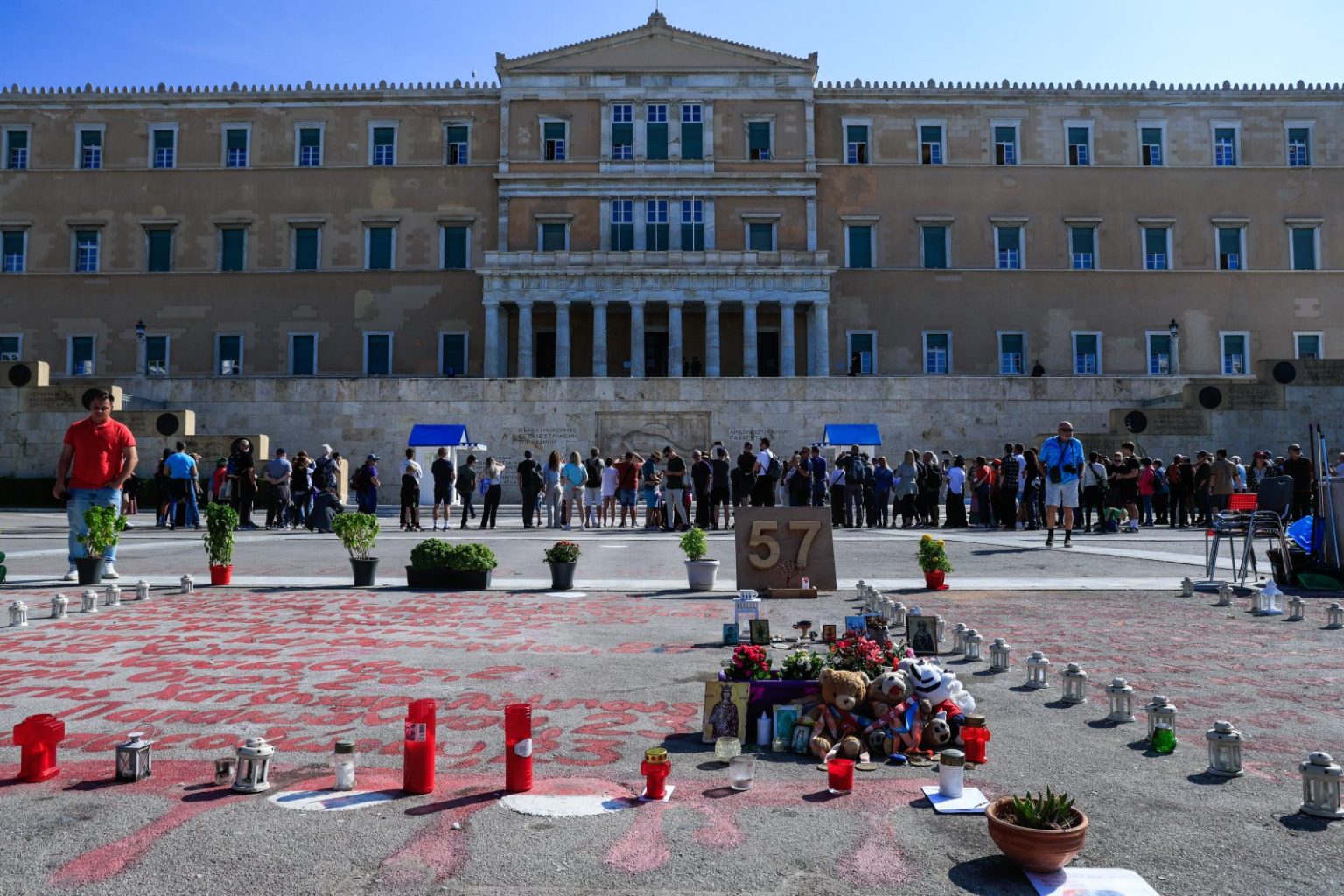
A heated debate is under way in the Greek Parliament as Prime Minister Kyriakos Mitsotakis defended a proposed government bill aimed at protecting the Tomb of the Unknown Soldier . The government plans to prohibit all demonstrations and gatherings unrelated to the monument’s commemorative purpose, a move it says will preserve the dignity and symbolic unity of the site.
“The Tomb of the Unknown Soldier is a sacred space that belongs to no government, party, organization, or individual,” Mitsotakis said. “It is a place of coexistence and memory for those who fell for the homeland.”
The monument, located in front of the Parliament building at Syntagma Square, honors Greek soldiers who died in war. For decades, it has also served as a symbolic location for demonstrations and acts of protest. The prime minister criticized what he called a “blurred landscape of responsibilities” that had turned the area into “a backdrop for partisan exploitation.”
Under the proposed changes, the Ministry of National Defense will assume responsibility for the care and preservation of the monument, while the Hellenic Police will ensure its protection. Mitsotakis clarified that the ban applies exclusively to the immediate area of the memorial, not to the rest of Syntagma Square, which remains open to public gatherings.
“The Tomb is not a billboard for causes, no matter how legitimate they may be,” he said. “It is a cenotaph dedicated to unknown heroes.”
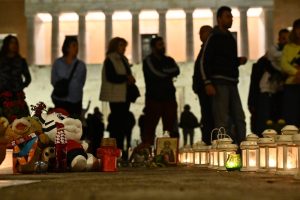
The prime minister also referenced recent protests related to the Tempi train tragedy, where 57 people lost their lives in February 2023. He expressed sympathy for the victims’ families but condemned what he described as “activism at a sacred site,” arguing that such acts did not serve the families’ cause.
“No one can comprehend your pain,” he said, addressing the families directly. “But exploiting grief for political purposes dishonors both the victims and the nation’s memory.”
Mitsotakis further accused some opposition parties of “artificially fueling division” over the issue.
Opposition leader Nikos Androulakis of PASOK–KINAL countered that the government was engaging in “hypocrisy” and “internal party maneuvering,” arguing that existing laws were sufficient to address concerns about the monument’s use.
“You took up the banner of patriotism against the anarchists and are now presenting this as reform,” Androulakis said. “In reality, nothing is changing—except that private contractors will now be responsible for cleaning the monument.”
Despite the sharp exchanges, the government’s proposal appears likely to pass, given the ruling party’s parliamentary majority.
In his closing remarks, Mitsotakis reiterated that sacred spaces “belong to everyone, not just to those who shout the loudest.” The measure, he said, aims to ensure that the Tomb of the Unknown Soldier remains a “place of unity, not confrontation.”
Political Reactions
Earlier in the day former Prime Minister Alexis Tsipras accused the current administration of treating the monument as a personal property and diminishing collective memory.
The Communist Party (KKE) condemned the bill from the parliamentary floor, warning that it risks dividing the public and could expand the role of the military in civil matters. Party leader Dimitris Koutsoumbas emphasized that the monument should honor the fallen without becoming a political tool or a tourist attraction for selfies.
The PASOK party also raised constitutional objections, calling the amendment “legally questionable” and “unnecessary.”
Other parties, including SYRIZA, Plefsi Eleftherias, and Nea Aristera, also raised concerns about potential constitutional issues and the implications of the law.
Karystianou: “From a Monument of Memory to a Monument of Amnesia”
Among the strongest reactions came from Maria Karystianou, president of the Tempi 2023 Victims’ Families Association, who condemned the amendment in a powerful public statement.
Karystianou accused the government of transforming the Tomb of the Unknown Soldier “from a monument of memory into a monument of amnesia,” arguing that the bill’s true aim is to silence public remembrance and protest. She compared the move to “a law that even the wartime occupation government never dared to pass,” referencing a 1943 protest held at the same site.“Today, the Prime Minister defends his Louis-XIV arrogance — that no one should remind him people remember what he has done,” she wrote, describing the bill as an attempt to “bury the purity of conscience under the pretext of cleanliness.”
In a symbolic vow of defiance, Karystianou said victims’ families will continue to commemorate their loved ones at the monument regardless of restrictions: “If they erase the names, we will write them again with rose petals. And if they ban roses, we’ll find wildflowers. If they destroy everything, we’ll write their names with our blood until it runs dry.”
She concluded by calling on all opposition parties to stand united with the victims’ families against what she described as an effort to “criminalize memory itself.”
What the Bill Proposes
The legislation allows public access to the Tomb and its surrounding area while prohibiting its use for any other purpose, such as outdoor gatherings or altering the space.
The Ministry of Defense would be responsible for the monument’s maintenance and preservation, while the Hellenic Police would enforce public order in the area. The law does not affect the names of victims from the Tempi train tragedy inscribed on the monument.
Violations could result in fines ranging from €300 to €40,000, or imprisonment of up to one year. Lesser offenses could lead to reduced sentences or community service.