The calendar does not always determine our perception of time. New Year’s Day may mark the change of year, but in many respects the “year” begins in September, after returning from the summer break. That is when the school year or the soccer season begins. It is also when the political season begins, always marked by the presence of political party leaders at the Thessaloniki International Fair.
Indeed, over the years, the Thessaloniki International Fair (TIF) has become established as an institutionalized event of high visibility in the public sphere. This means a consistently recurring “ritualized political event” that, as such, has its own structure and organizational rules: from the order in which political figures appear, based on the government-opposition hierarchy, to the format of their interventions, namely speeches and press conferences, and from institutional meetings with the so-called “productive bodies” within the Fair to the mass protest events outside its gates.
Within this framework, the TIF event can serve multiple functions. It provides an opportunity for political parties and their leaders to present their main objectives and commitments, lay out policy positions or highlight issues on the agenda, and put forward a political narrative — all in conjunction with each political leader’s performance of a leadership role, through a political “performance” before the public and the media.
For all these reasons, the political and communications ecosystem tends to attach particular importance to the TIF, especially in election years such as the one we are currently going through.
The question, however, is whether this visibility corresponds to the actual influence that the Thessaloniki fair exerts on the course of political developments. We can seek an answer by turning, on the one hand, to history and, on the other, to the dynamics of party competition.
Many times, the interest surrounding the TIF is intense but also short-lived: it swells for a few days and then leaves behind only a faint footprint. Really, how many and which appearances by political leaders there have marked the political history of the past two decades? More than one, but not many.
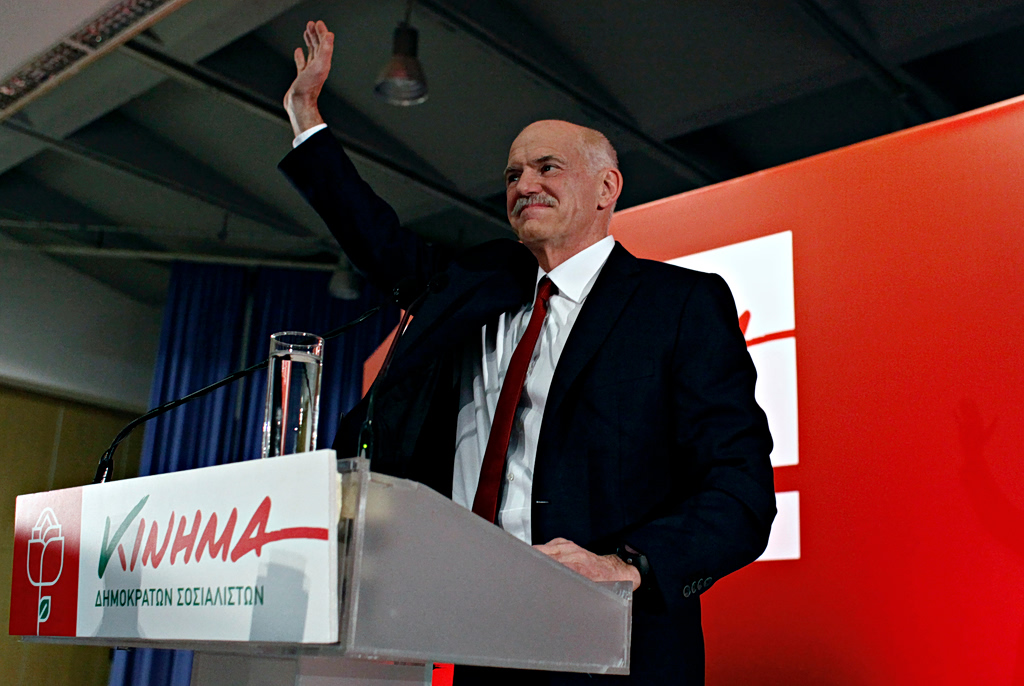
Looking back, the appearance of George Papandreou at the 2009 TIF stands out, when, shortly before the elections, he presented PASOK’s governing program in a speech from which the phrase “there is money” was later singled out and ridiculed in the heated environment of the economic crisis, although it does not, of course, convey everything that was said. Another notable appearance was that of the young leader of the “anti-bailout” opposition, Alexis Tsipras, at the 2014 TIF, shortly before the January 2015 elections that would bring SYRIZA to government.
Tsipras presented the “Thessaloniki Program” as a package of policies aimed at reversing long-term austerity and protecting the social groups that had been hit hardest. Although it too was ridiculed in retrospect in light of what followed — the referendum and the third bailout program — it was of crucial importance because it gave SYRIZA an image of governability and a political alternative. The appearance of Kyriakos Mitsotakis at the 2018 TIF served a similar function. There, too, as leader of the main opposition, he presented a governing program centered on tax cuts, attracting investment, the digital reform of the state and, ultimately, a return to “normality,” which also became the framework for New Democracy’s government policy after the 2019 elections.
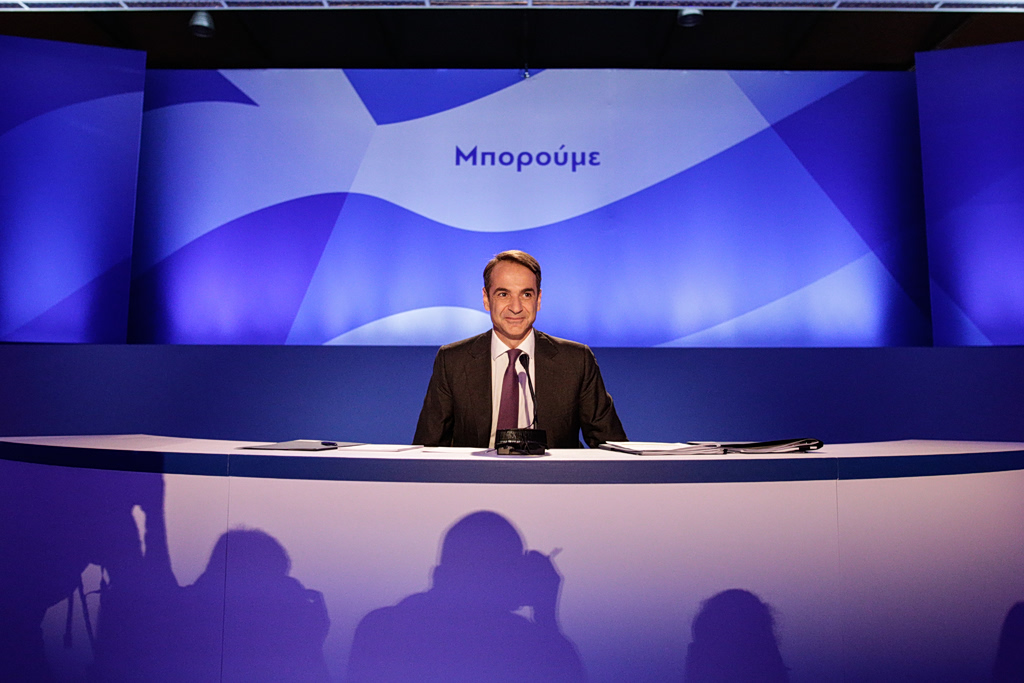
Press conference held by the President of the New Democracy, main oppossition party, Kyriakos Mitsotakis, during the 83rd Thessaloniki International Fair (TIF) in Thessaloniki, Greece on September 16, 2018 / Συνέντευξη τύπου του προέδρου της Νέας Δημοκρατίας Κυριάκου Μητσοτάκη κατά την διάρκεια της 83ης ΔΕΘ, 16 Σεπτεμβρίου 2018.
Although these distinct moments at the TIF were linked to an impending change of government, it does not follow that they constituted the catalytic event that reversed the balance between the parties. The “TIF moment” appears rather to seal an existing political dynamic than to determine it. This is also shown by looking at the evolution of voting intentions for the two main “contenders” in each of these three periods, based on the available longitudinal data from Metron Analysis surveys.
Indeed, George Papandreou’s PASOK had “overtaken” Kostas Karamanlis’ New Democracy after the summer of 2008, when the Vatopedi scandal dominated the agenda, and had established a clear lead well before its leader’s pre-election appearance at the 2009 TIF (Chart 1). Alexis Tsipras’ SYRIZA had already begun leading New Democracy in 2013, consolidating its advantage from the summer of 2014 (Chart 2), while Kyriakos Mitsotakis’ New Democracy had maintained a steady lead over SYRIZA since 2016, following the third bailout program and long before the change in government in 2019 (Chart 3).
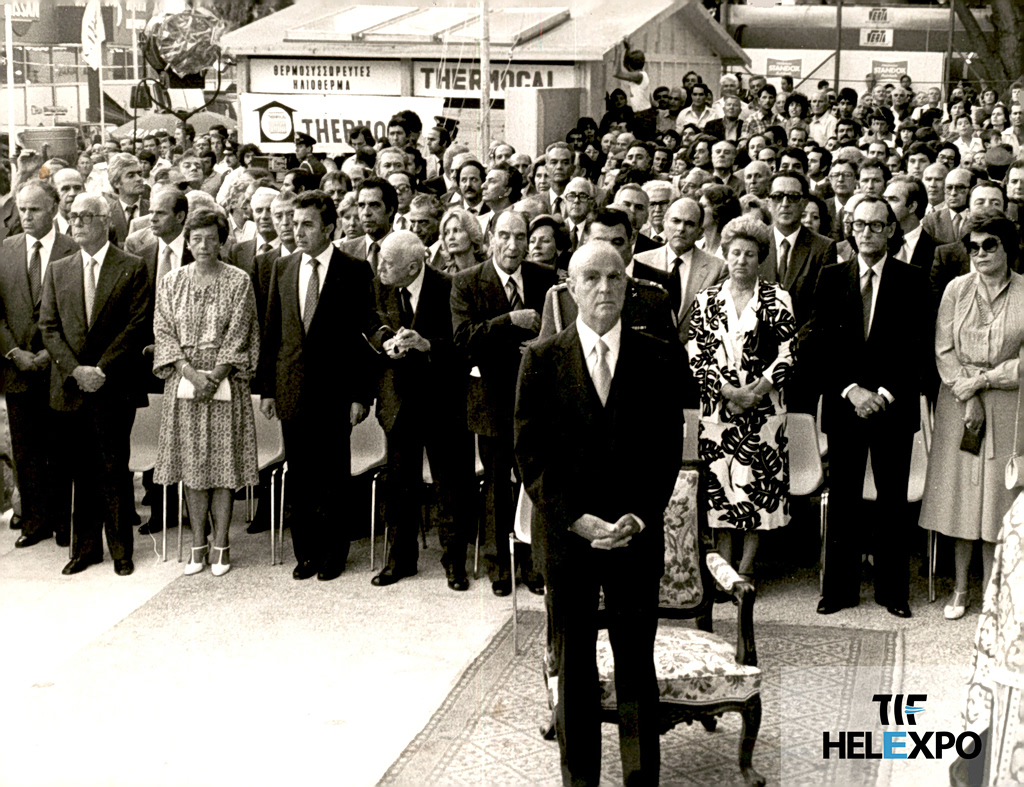
Opening of the 43rd TIF: Prime Minister Konstantinos Karamanlis
Consequently, at least from the perspective of changes in the balance of political forces, we should have limited expectations of this year’s TIF as well. This does not mean, however, that the ritualized communications event that it represents will not have political significance and a political function — although not the same one for all the players.
Certainly, it will serve as the unofficial starting gun for the pre-election period, since in any case we are in an election year. From there, the Prime Minister is called upon to present measures and commitments that respond to the main sources of social discontent; the president of PASOK is called upon to complement the party’s policy positions with a convincing performance of a leadership profile; and the head of the Hellenic Solution is called upon to outline an alternative governing program, together with the people who will support it.
All of them, of course, will attempt to put forward the agenda issues that will dominate public discussion ahead of the elections, with the ambition of also defining the main pre-election narrative. And we, the citizens, will listen to them carefully and perhaps, as journalists also ritualistically remark every year, “not get our hopes up too high.”
Thanks are due to Penny Apostolopoulou, Senior Research Executive at Metron Analysis, for her assistance in processing the data.