 Μake us preferred on Google
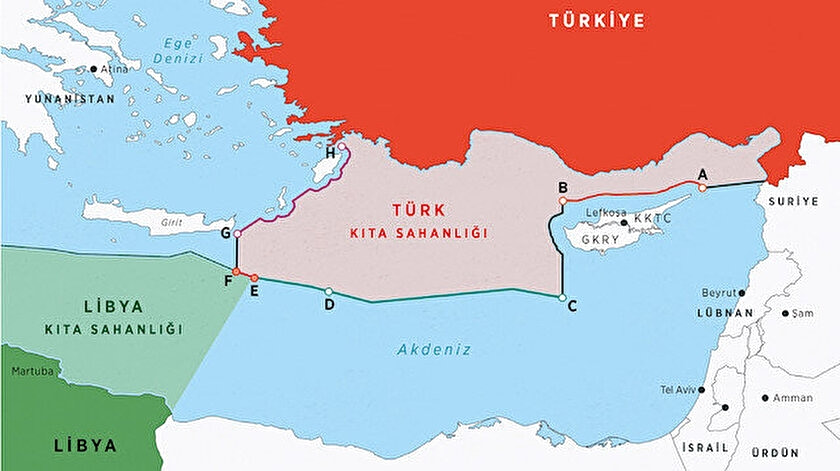
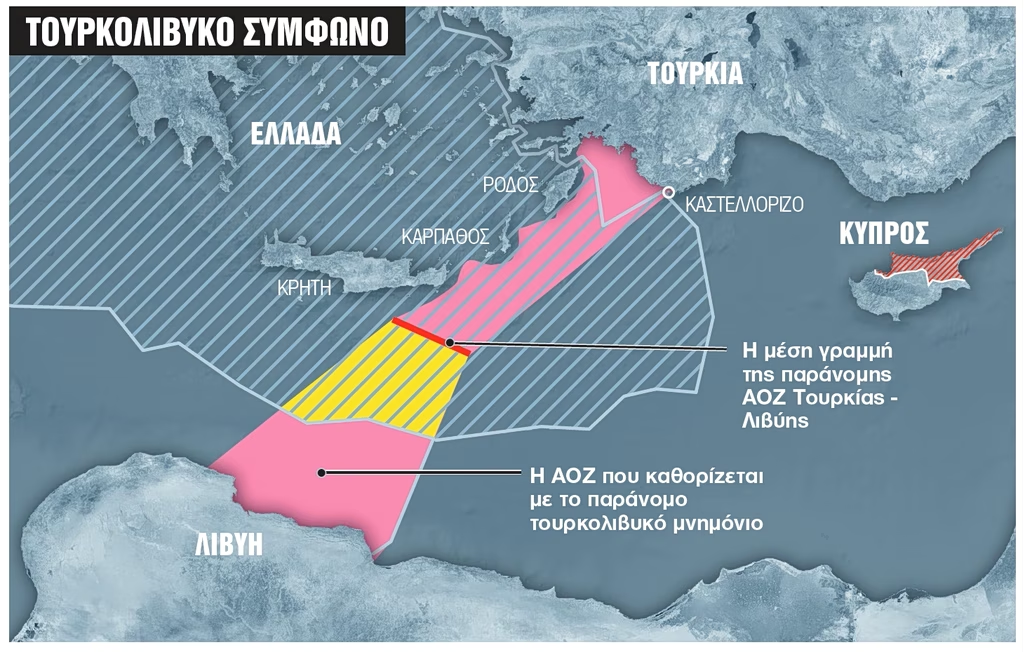
A map show the approximate delimitation of EEZs between Turkey and Libya and their disparate landmasses. Greece, regional countries and the EU consider the agreement as baseless, illegal and not producing results.
Foreign Minister George Gerapetritis discussed the matter on Thursday by phone with his Egyptian counterpart, Badr Abdelatty, with the two ministers also reviewing bilateral strategic relations and regional developments. The two sides, representing Greece and Egypt, reportedly reaffirmed their commitment to international law, including the United Nations Convention on the Law of the Sea (UNCLOS), and agreed to pursue an extension of the existing maritime delimitation agreement in accordance with its provisions.
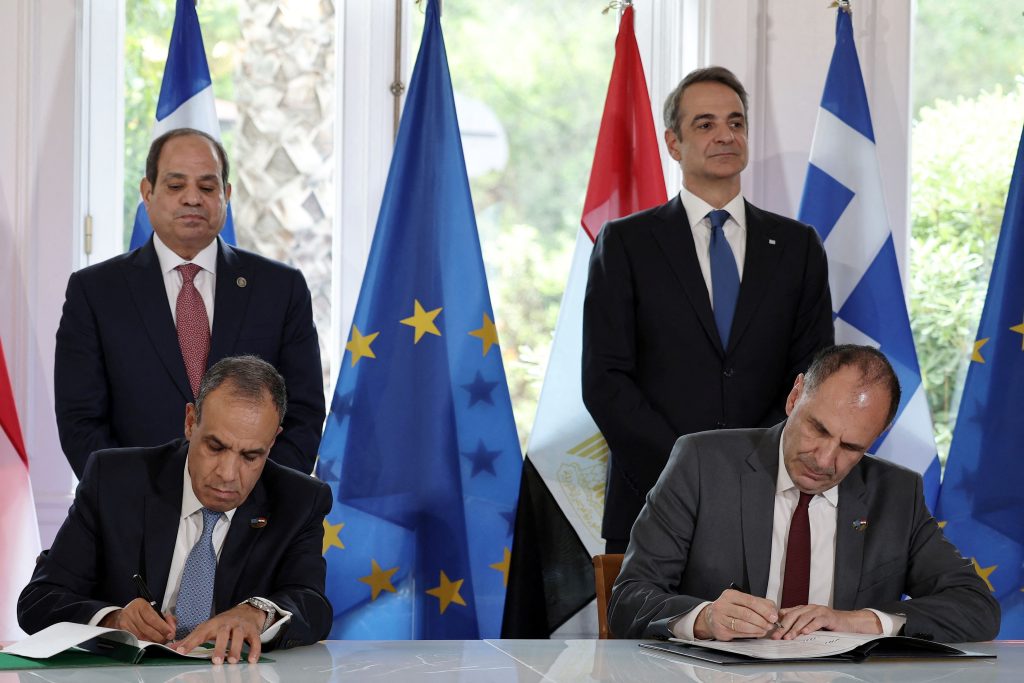
Egypt’s President Abdel Fattah al-Sisi and Greek Prime Minister Kyriakos Mitsotakis look on as Egypt’s Foreign Minister Badr Abdelatty and Greek Foreign Minister Giorgos Gerapetritis sign cooperation agreements at the Maximos Mansion, in Athens, Greece, May 7, 2025. REUTERS/Louiza Vradi
The discussions followed Tuesday’s approval, by Libya’s eastern-based House of Representatives, of the 2019 Turkey-Libya memorandum on the delimitation of maritime zones in the Mediterranean. The vote marked a reversal of the same legislature’s 2020 position, when it rejected the agreements signed between Ankara and the then Tripoli-based Government of National Accord.
Greece has described the memorandum as illegal, invalid and without legal effect, arguing that Turkey and Libya do not have opposite or adjacent coastlines that would provide a legal basis for the proposed delimitation. Athens also maintains that the agreement disregards the maritime entitlements of Greek islands, including Mediterranean’s fifth-largest island – Crete – and infringes on the sovereign rights of third countries.
The European Union also reaffirmed its longstanding opposition to the agreement. European Commission President Ursula von der Leyen and European Council President Antonio Costa said the bloc deeply regretted the Libyan parliament’s decision, stressing that the memorandum infringes on the sovereign rights of third states, does not comply with the Law of the Sea and is “null and void.” They also reiterated the EU’s solidarity with Greece and Cyprus and reiterated its opposition to outside interference in Libya.
The EU’s position, established in European Council conclusions in December 2019, was reaffirmed in June 2025. On Wednesday, EU foreign policy chief Kaja Kallas raised the Libyan vote during talks with Turkish Foreign Minister Hakan Fidan in Brussels, reiterating that the agreement infringes on the sovereign rights of third states.
Egypt also condemned the ratification, describing it as absolutely null and void and stating that it would have no legal effect on its maritime rights. Israel likewise denounced the decision, saying the agreement infringes on the sovereign rights of its regional allies and undermines stability in the eastern Mediterranean.
Finally, Israel this week also aired its condemnation of the controversial Turkey-Libya agreement.
Athens has stepped up its diplomatic response, informing partners and allies and raising the issue at the United Nations. Greece maintains that the parliamentary vote does not alter the memorandum’s legal status and cannot, by itself, determine maritime boundaries under international law.
Gerapetritis has said Greece has the diplomatic and institutional means to take substantive action to prevent implementation of the agreement. He pointed to Athens’ role in relations between Libya and the European Union, including Turkey’s EU accession process, while emphasizing that Greece would safeguard its sovereign rights. The government has also said that planned offshore exploration south of Crete will proceed.
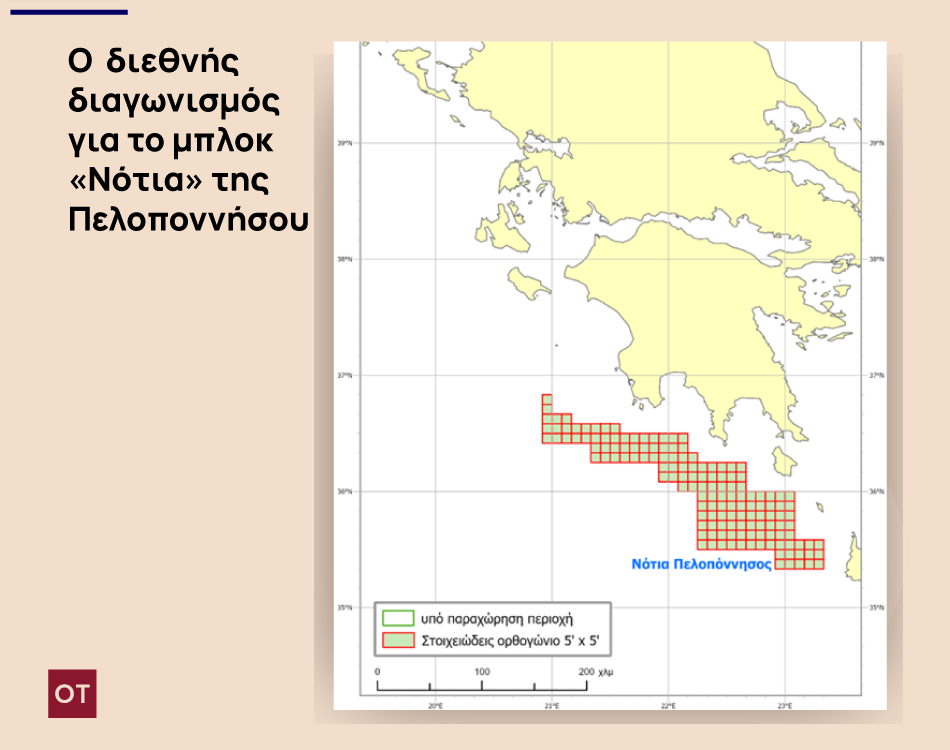
Greece has ignored the Turkey-Libya agreement and auctioned off sea blocks south of Crete for hydrocarbon exploration based on a “median line” distance between the mainland, Crete and the North African coast.
Deputy Prime Minister Kostis Hatzidakis described the ratification as an unwelcome development but said it did not overturn Greece’s achievements in foreign and defense policy in recent years.
Washington has meanwhile called on Greece and Turkey to resolve their maritime differences through good-faith negotiations. The US State Department said diplomatic solutions could facilitate trade, investment and research activities and encouraged the two NATO allies to continue bilateral dialogue.
Turkey, by contrast, has defended the memorandum’s legal validity, arguing that the delimitation of maritime jurisdiction falls within the sovereign rights of the coastal states concerned and cannot be invalidated by unilateral assessments from third countries. Turkey has neither signed or ratified UNCLOS, but rather “cherry picks” provisions it deems as securing its interests and rejecting those it judges are negative for its interests – such as inhabited islands generating EEZ boundaries.