As the planet completes another orbit around the Sun, citizens’ concerns revolve around security. Nation-states are refocusing on strategic issues, defense budgets are being revised upward, and the European Union is rushing to equip itself to adequately face external threats.
Most Europeans have entered rather abruptly into the new environment of intense geopolitical turbulence—a phenomenon called the “forced coming-of-age of the Old Continent.” However, the same does not apply to Greece.
On one hand, the persistent Turkish threat, and on the other, the traditional geostrategic importance of the Eastern Mediterranean as a second line of defense for Western interests, keep Athens constantly alert.
Although the Mitsotakis government strongly supports the European defense autonomy initiative, it simultaneously recognizes that security is primarily a national responsibility. “Security depends on us,” officials in the Greek capital assert, intensifying efforts both to strengthen Greece’s diplomatic position at the key crossroads between East and West and to further fortify the Armed Forces.
“Unprecedented Situation of Total Asymmetry”
Senior Greek diplomatic officials express concern about rapid changes in the regional and wider geopolitical landscape. Sources describe to To Vima “an unprecedented situation of total asymmetry,” requiring additional bilateral and multilateral initiatives.
Following the latest trilateral conference, Athens places particular emphasis on strategic cooperation with Israel, including Cyprus, as a framework capable of ensuring stability in the Eastern Mediterranean and functioning as a counterbalance to Turkish revisionism.
It is notable that Kyriakos Mitsotakis, Nikos Christodoulides, and Benjamin Netanyahu are continuously seeking additional partnership opportunities, for example in security and defense, with the first step recently taken via the signing of the trilateral military cooperation plan.
Sources with deep knowledge of the Foreign Ministry’s leadership indicate that Athens prioritizes participation in the IMEC plan—the India–Middle East–Europe corridor via Cyprus and Greece—a cornerstone of U.S. foreign policy since Donald Trump’s first term to counter Chinese trade expansionism.
The government believes that if Greece positions itself as a link in the U.S. interests chain, it will both strengthen its geopolitical footprint and further fortify its security system.
This diplomatic logic also underlies Greek-American energy agreements and, more broadly, the effort to transform Greece into an energy hub, actively promoted by the U.S. Embassy in Athens.
The Message from Engagement in the Aegean
The primary factor shaping Greece’s security needs in the Aegean and Eastern Mediterranean is Turkey, with the main challenge—repeatedly emphasized in To Vima—being the maintenance of calm waters while exercising sovereignty on the ground and participating in multilateral frameworks regardless of Ankara’s interests.
Greek initiatives in recent months and cooperation with Israel have cooled Greek-Turkish relations, though within limits. In mid-December, the first engagement of armed fighters in the central Aegean in a long time was recorded, with the Turkish Defense Ministry publicly arguing that Greece is inconsistent and violating international law since territorial waters do not align with airspace.
A senior diplomatic source reiterates that Athens seeks uninterrupted dialogue, aiming for the session of the Supreme Cooperation Council and the Mitsotakis–Erdogan summit in Ankara.
Even if prospects for major progress, such as maritime zone delimitation, are virtually nonexistent, Greece’s priority is to keep communication channels open to prevent escalation. Simultaneously, it signals willingness to engage in convergence initiatives, such as the five-party cooperation among Eastern Mediterranean states.
In Athens, it is understood that President Erdogan controls the challenges (as demonstrated in his New Year’s message, warning of “challenges and threats against our country and the Turkish Cypriot people” and stating that “we will never tolerate faits accomplis, predatory practices, or piracy in our ‘Blue Homeland’”), so Greece must be prepared for any eventuality.
Accordingly, no one can rule out Ankara returning to expansionist policies, if not in the Aegean, then in the Eastern Mediterranean, where it seeks greater strategic space.
“Turkey Will Always Make Its Presence Felt”
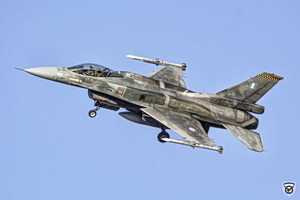
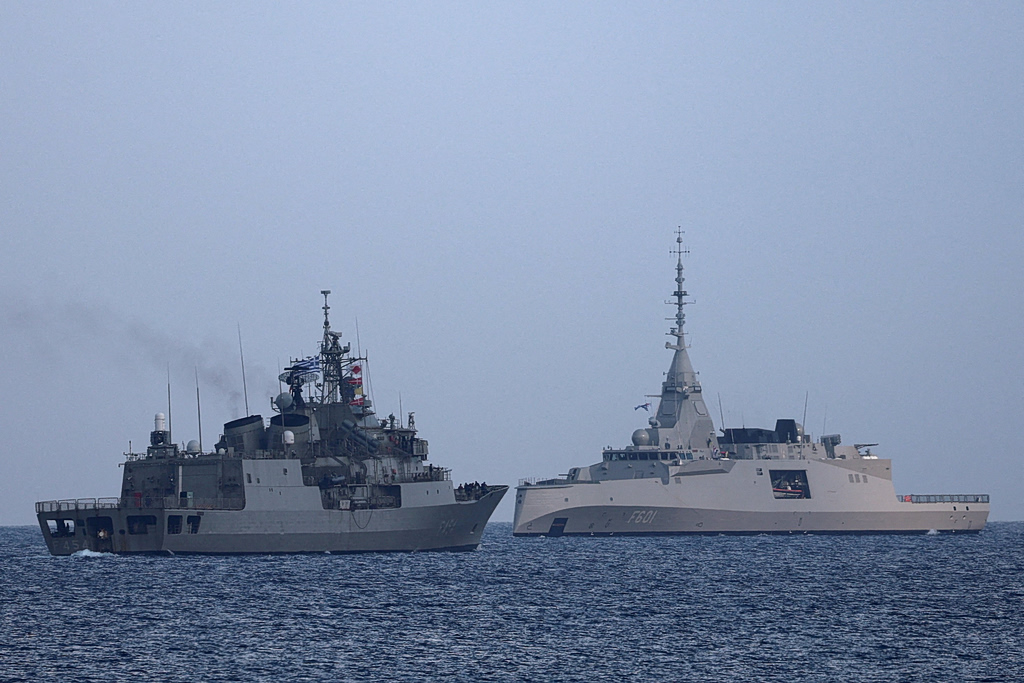
It is no secret that the strategy to enhance the Armed Forces’ operational capabilities is almost exclusively aimed at deterring Turkish revisionism. Aligned with current demands, including Washington’s pressure for NATO members to increase defense spending to 5%, the Long-Term Defense Armament Program 2025–2036 reaches €30 billion. Frigates Belharra and U.S. fifth-generation F-35 fighters symbolically and practically advance the Greek military into a new era.
Sources from the Ministry of Defense told To Vima that “Turkey will always make its presence felt,” while associates of Nikos Dendias highlight his recent statements: “Greece has not expressed revisionist rhetoric, has not threatened anyone with war, but is fully determined to defend its sovereignty and sovereign rights.”
Agenda 2030: Modern Deterrence
Regarding “Agenda 2030,” the government’s Armed Forces reform program, the goal is to create a new deterrence doctrine incorporating all elements of modern conflicts, including structural changes in the battlefield, primarily through drone use.
The political leadership emphasizes that Greece must achieve qualitative superiority in key areas, having operational capabilities beyond the mere number of assets.
Focus on Innovative Products
Concerns remain in the Pentagon regarding the growth of the Turkish defense industry, particularly technological advances in unmanned aerial vehicles.
Consequently, within Agenda 2030, the “Achilles Shield” project stands out as a comprehensive deterrence initiative: anti-missile, anti-aircraft, and anti-drone. Strengthening Greek domestic production, particularly in innovative defense products, remains critical, though the country is already behind rapid developments in security technology. The Greek Innovation Center was only established during Dendias’ tenure as Minister.
Finally, despite speculation about U.S. intervention to reconcile Greece and Turkey, the American embassy welcomes strengthening an allied army such as Greece’s, especially if funds are directed toward U.S. weapons systems.