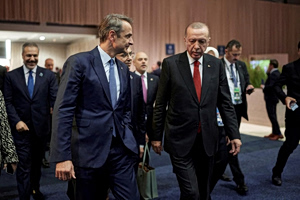
A closely watched meeting in Ankara on Wednesday afternoon between visiting Greek Prime Minister Kyriakos Mitsotakis and host Recep Tayyip Erdogan was publicly – and privately – hailed as utterly positive and as a continuation of rapprochement between the two sides, while also noteworthy for the issues-cum “thorns” directly cited by the former during joint statements.

Mitsotakis, among others, called for Ankara to rescind an unprecedented resolution by the Turkish grand assembly, dating from 1995, threatening Athens with war in case Greece exercises its legal rights to extend territorial waters to 12 nautical miles. He referred to “significant disagreements” between the two neighbors, possibly hinting that those issues were again broached in Wednesday’s talks.
“… delimitation of maritime zones is the only difference that could be brought before the (international) Court, based on the (UN) Law of the Sea. Our position on minorities is clear, based on the Treaty of Lausanne. Let us work on how minorities can become bridges of friendship between our peoples,” Mitsotakis said, in what appeared to be a prepared statement during the joint briefing afterwards.
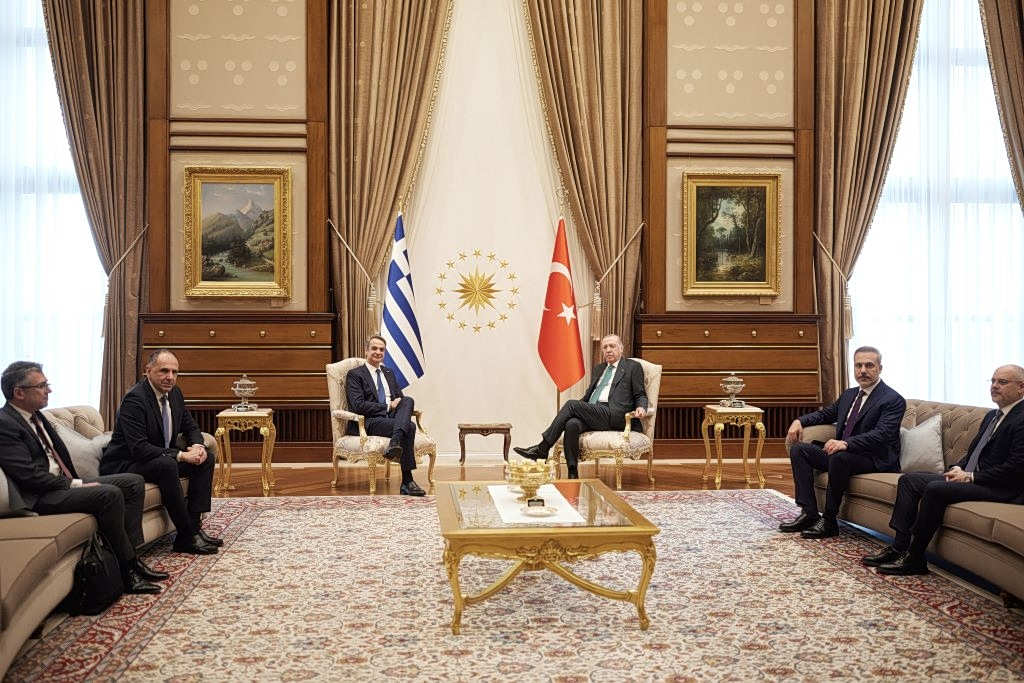
Both leaders headed up two sizeable delegations of ministers that met in Ankara for the 6th High-Level Cooperation Council (HLCC) between the two countries. The last such summit took place 17 months ago, while convening Wednesday’s meetings were plagued by delays in the interim.
In face-to-face talks, Erdogan and Mitsotakis met for more than 90 minutes at the imposing presidential mansion in the Turkish capital.
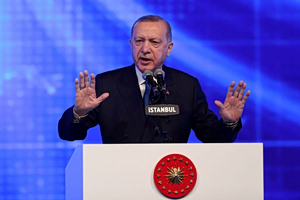
Erdogan kicks off statements
Among others, the Turkish president said both sides agree that “we will continue our dialogue and see that the agreements we sign provide us with the best common ground for strengthening mutual contacts. We will continue our efforts to strengthen mutual trade.”
He continued by saying that “…although existing issues are thorny, they are not unsolvable under international law, provided there is political will and a desire for a solution. Regarding the issue of minorities, we must act with a sense of historical responsibility, so that the ‘Turkish minority’ of western Thrace can fully benefit from religious freedoms and freedoms in education. We reject Israel’s decisions on Gaza. A fair solution is needed in the Palestinian question.”
The reference to “Turkish minority” in the northeast Greece province of Thrace is something that is bitterly disputed by Athens, which points to the 1923 Lausanne Treaty as stipulating “Moslem inhabitants” with no reference to “Turkish”.
Ankara has also repeatedly promoted the concept of Muslim faithful in the Greek province electing their muftis, instead of being appointed by the Greek state. In Turkey, such Islamic legal scholars adjudicating local religious administrative affairs are appointed.
Mitsotakis
“Our presence in Ankara at the 6th Summit of the Supreme Council confirms the value of dialogue and good neighborly relations in a fluid environment,” the Greek prime minister stressed, adding:
“We have established a new model of direct cooperation, and we are called upon to manage our problems calmly, without crises and tensions, in accordance with international law. Migration flows in the Aegean have decreased by 60% and can be further reduced,” he said, while referring directly to last week’s maritime accident in the eastern Aegean, where 12 people died after the collision of a migrant boat with a Greek coast guard patrol craft.
Specifically on the casus belli (threat of war) still preventing a full blossoming of bilateral ties, he said:
“It is time to remove any threat to our relations; if not now, then when?”
Responding to the reference about a “Turkish minority,” Mitsotakis noted that “our position on minorities is clear, and their status is defined with absolute clarity in the Treaty of Lausanne. The Greek Muslim minority is a religious minority, as explicitly stated in the treaty, without any room for misinterpretation. The Greek Muslim minority and the Greek minority in Turkey, despite its decline, can indeed become bridges of friendship between the two countries,” he pointed out.
Yunanistan Başbakanı Kiryakos Miçotakis ile Anlaşmaların İmza Töreni ve Ortak Basın Toplantısı https://t.co/P7Rh5Wy7nd
— Recep Tayyip Erdoğan (@RTErdogan) February 11, 2026
Other issues
“We look forward to the end of the war in Ukraine and the launch of the second phase of the peace plan for Gaza. Greece firmly supports the two states (solution), but with the complete disarmament of Hamas so that Israel can live in security. Greece opposes any annexation of the West Bank by Israel, as well as the settlements that hinder the establishment of a Palestinian state.
“Fate has determined that we live in the same neighborhood; we cannot change geography, but we can make it our ally, honoring the legacy of Eleftherios Venizelos and Kemal Atatürk.
“I look forward to seeing you in Greece at the next Cooperation Council,” he concluded, inviting the Turkish president to Athens.
No press questions were taken after the joint briefing.
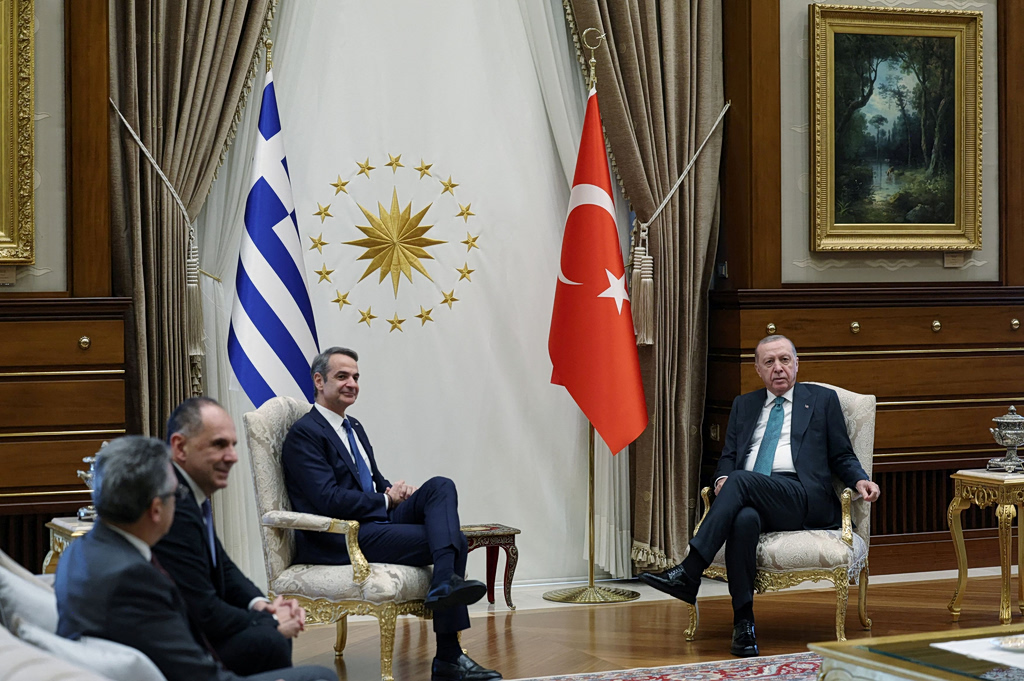
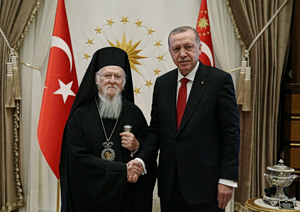
Turkey’s President Tayyip Erdogan meets with Greek Prime Minister Kyriakos Mitsotakis at the Presidential Palace in Ankara, Turkey, February 11, 2026. Murat Kula/PPO/Handout via REUTERS