 Μake us preferred on Google
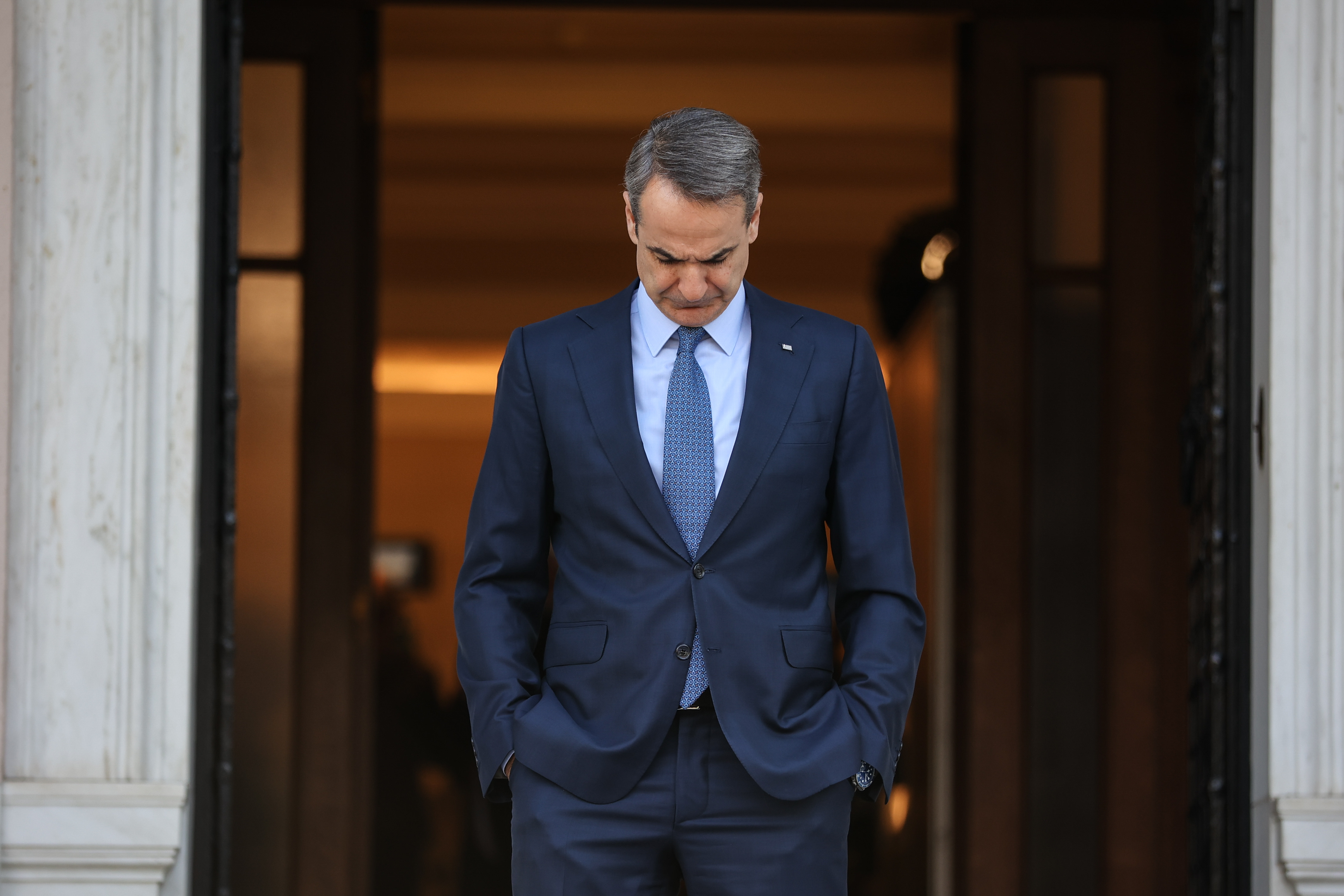
 With the OPEKEPE case files barely through parliament’s doors, Kyriakos Mitsotakis had already made his move. Three ministers whose names appear in the case files were out by midday Friday, replaced by “fresh” faces in what the prime minister’s office was at pains to present as an orderly government reshuffle and not a forced retreat.
The appointments tell their own story. Margaritis Schinas, a former European Commission vice president, takes over as Minister of Rural Development and Food; a high-profile name for a ministry now at the epicenter of Greece’s worst subsidy scandal in recent memory. Makarios Lazaridis is appointed deputy minister alongside him. He is a figure firmly rooted in the party’s conservative wing, a choice that signals Mitsotakis is also keeping an eye on his parliamentary flank at a moment when he can ill afford internal dissent.
Evangelos Tournas steps in as Minister for Climate Crisis and Civil Protection. A retired air force general from Chania who once served as chief of the Hellenic Air Force General Staff, Tournas is no stranger to the role. He previously served as deputy minister for Civil Protection under Mitsotakis. Notably, none of the incoming ministers and deputies are members of parliament and therefore untouched by the legal proceedings that brought down their predecessors. At the Health Ministry, the mental health portfolio previously held by departing Deputy Minister Dimitris Vartzopoulos will be redistributed internally rather than assigned to a new appointee.
A Government Reshuffle, Not Resignations: The Semantics Matter
The choreography around the departures was revealing. The Rural Development Ministry initially announced that Kostas Tsiaras had submitted his resignation to the prime minister given the EPPO’s request to lift his immunity. Within minutes, the prime minister’s office moved to correct the record — and the framing.
“We are not talking about ministerial resignations, but about changes to the government lineup,” sources from the prime minister’s office said, adding that the government spokesman would make a formal announcement within the half hour.
When the announcement came, government spokseman Pavlos Marinakis stepped to the podium, read out the new appointments, and left without once acknowledging the elephant in the room.
They Leave the Cabinet, Not Parliament
One detail that did not escape notice: none of the three departing ministers loses their parliamentary seat. Tsiaras, Kefalogiannis, and Vartzopoulos remain members of parliament until a further decision is made and will be sitting in the chamber when the votes on their own immunity come to the floor.
Opposition: Not Enough
The reshuffle did little to quiet the opposition. PASOK spokesman Kostas Tsoukalas, speaking for Greece’s main opposition party, was scathing. “One record after another is being broken by the New Democracy government. We have government reshuffles decided not by Mitsotakis but by the European Public Prosecutor’s Office,” he said. “No reshuffle can save a government whose parliamentary majority is kept afloat by MPs under criminal investigation. The only solution is early elections.”
Tsoukalas also pointed to what he called the deeper rot at the heart of the scandal: that OPEKEPE officials implicated in the first EPPO case file remain in their posts, that the agency has been under EU supervision since May 2024, and that the action plan submitted by the government in November 2025 has yet to receive European Commission approval. Until yesterday, he noted, the prime minister had been insisting that the very same Rural Development leadership had brought order to the illegal subsidies mess.
SYRIZA spokesman Kostas Zachariadis was equally blunt: “Ministerial resignations are not enough. A reshuffle is not enough. The fish rots from the head. Political responsibility for the scandals, the corruption and the rot falls on Mitsotakis himself — he is part of the problem, he is the problem. In cases like these, it is the ballot box and the people that provide the answer.”