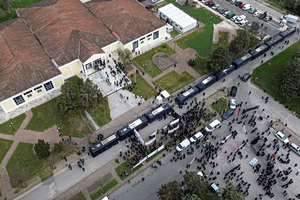
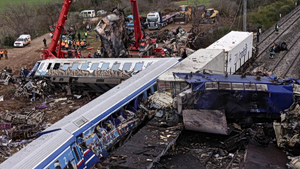
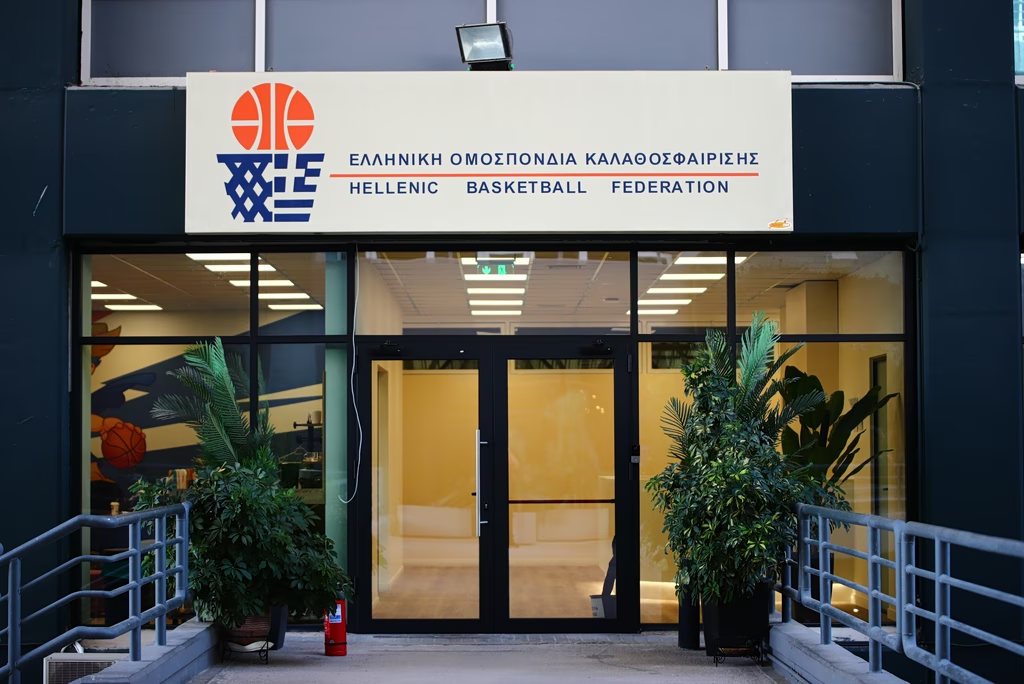
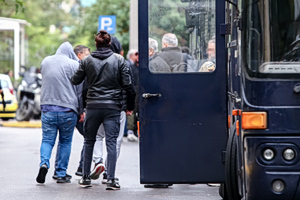
A month has passed since the last hearing, which was suspended to allow reconstruction and expansion work at the “Gaiopolis” conference center courtroom, where proceedings are taking place. The renovations were intended to meet the demands of the landmark trial. Following the technical interventions, seating capacity was increased by 100 places, while the audience area — originally covering 452.01 square meters — was expanded by an additional 109.57 square meters, where screens and seating for the public have now been installed.
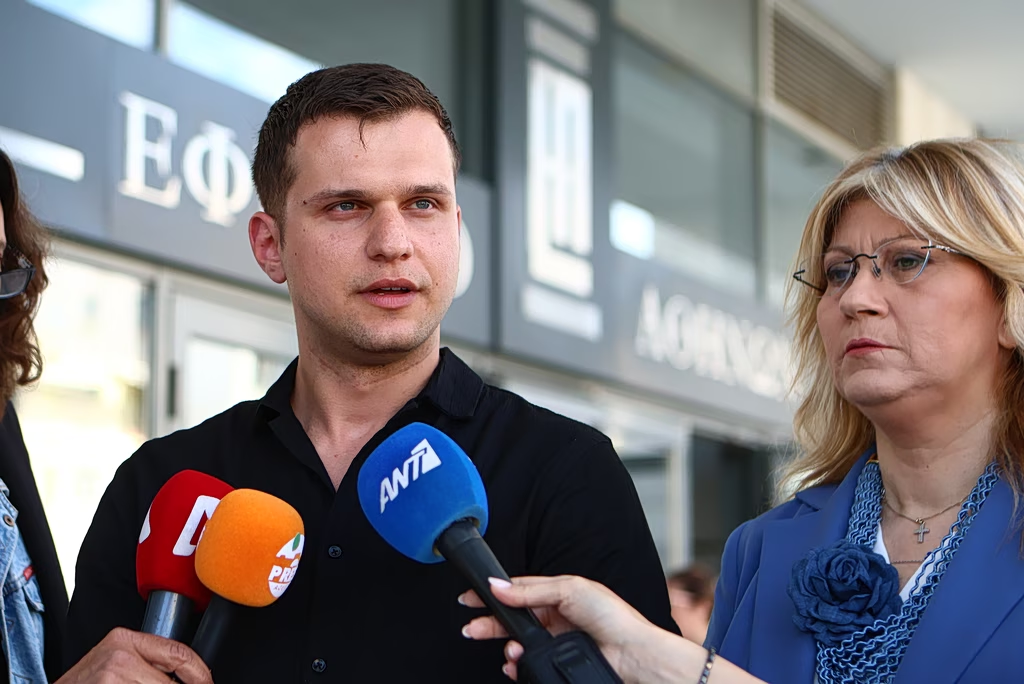
Despite those changes, protests from relatives of the victims continue. During a press conference held Monday by the association representing victims’ families, Pavlos Aslanidis and Eleni Vasara described the courtroom as entirely unsuitable, arguing that it is unacceptable for relatives to follow the proceedings through screens located outside the main courtroom.
As for the progress of the proceedings, which began on March 23, the case remains at an early procedural stage. The court has not yet completed the examination of objections raised by defense lawyers regarding the participation of the Bar Associations and the The Panhellenic Traction Personnel Association (PEPE) in supporting the prosecution. A defense attorney has also announced plans to challenge the participation of the victims’ relatives in support of the charges.
At the center of attention for both sides is expected to be the Greek state’s formal participation in support of the prosecution. As is already known, the Greek state is not proceeding against all 36 non-political defendants involved in the case, but only against four of them — the three station masters in Larissa and their supervising inspector.
“The defendants, while obligated to act with due diligence for the safe routing of trains, committed acts and omissions that directly led to the collision. Therefore, they constitute the primary perpetrators of the offense, from which damage to the Greek state resulted,” lawyers representing the state had argued, among other points.
However, according to figures involved in the trial, this distinction among the defendants appears to reinforce the government’s narrative that the tragedy was primarily the result of human error. As a result, it has sparked reactions not only from defense lawyers, but also from attorneys representing the victims’ families, who intend to formally object.
Defense lawyer Themis Sofos, who represents the station masters’ inspector, has already voiced strong objections.
At the same time, Zoe Konstantopoulou, who represents relatives of victims of the rail disaster, announced that she will challenge the Greek state’s participation in support of the prosecution. She argued that in other related cases — including the trial concerning the “missing” videos and the case involving officials of Greece’s National Transparency Authority over the ERGOSE Contract 717 railway project, the state did not appear against the accused.
She also objected to the state’s decision to proceed only against the four railway officials.
“The participation of the Greek state, as formulated, constitutes direct interference in the trial. There is an attempt to target four of the defendants. An outrageous effort is underway to protect defendants connected to the government and shielded by it,” Konstantopoulou claimed.
Once all sides have presented their arguments regarding these objections, the judges are expected to issue a ruling. As for when the first witness will finally be called to testify, all indications suggest that many more hearings will be required before that stage is reached.
At every stage of the trial, however, the central issue remains ensuring that those responsible are held accountable under the principles of a fair trial.