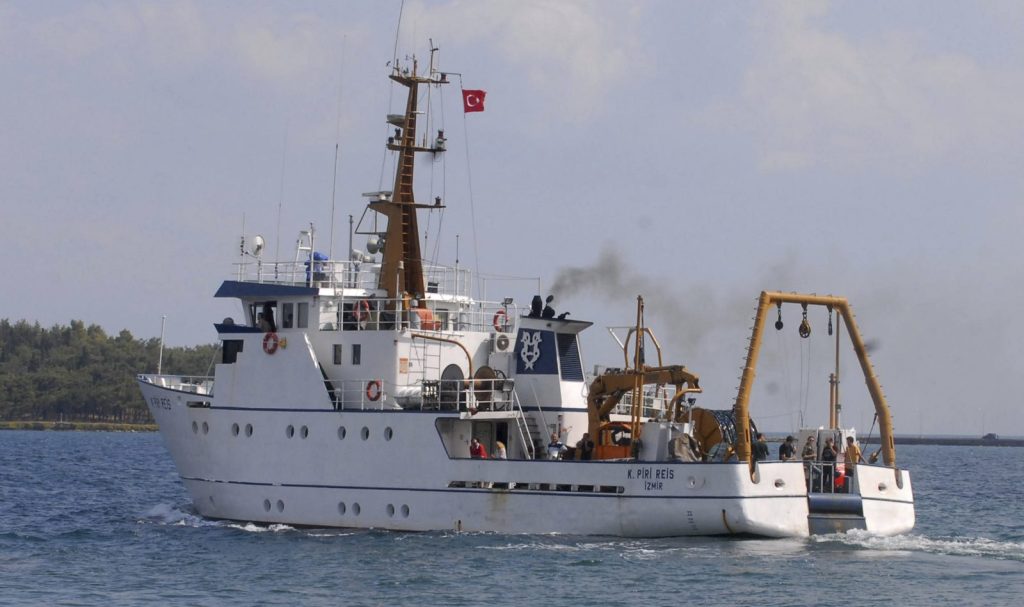
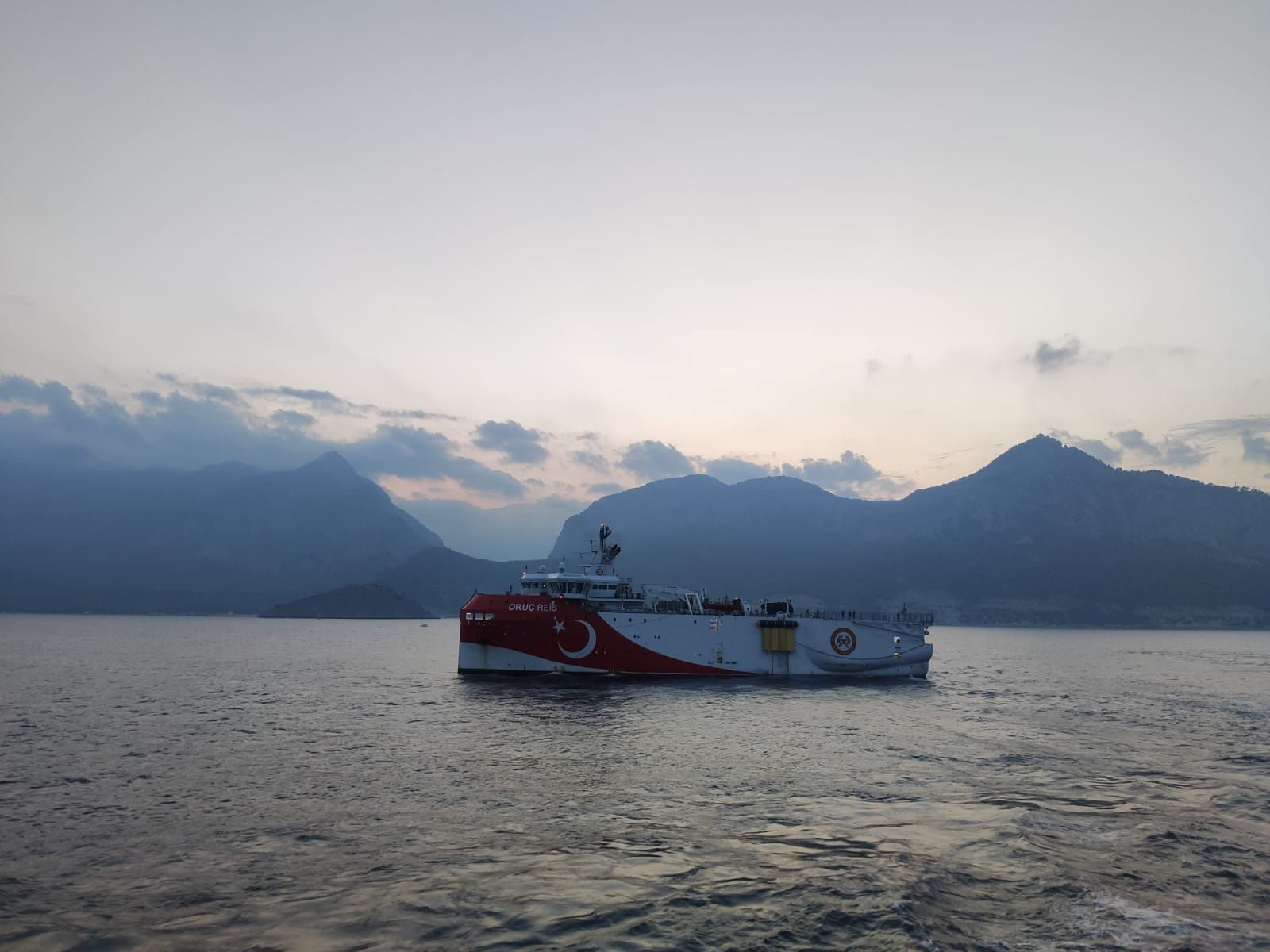
Turkey is once again raising the issue of continental shelf rights in the Aegean through the expected deployment of the research vessel Piri Reis. The planned surveys cover areas west of Lesvos, south of Chios and as far as the small islet of Kalogeros.
Although these waters are international, the authority to issue research permits belongs to Athens, which retains exclusive jurisdiction in the zones concerned.
Greek response with counter-Navtex
Greece reacted immediately, issuing a counter-Navtex to Ankara’s advisory published by the Smyrna Hydrographic Station.
By challenging permit jurisdiction, Turkey is effectively reopening the dispute over the Aegean continental shelf, claiming—illegally—that the surveyed areas fall within its potential continental shelf.
Ignoring island rights under maritime law
Ankara’s long-standing position, reflected again in its official maritime spatial planning map, is that the median line between Greece and Turkey should be measured solely from the two countries’ mainland coasts. This interpretation disregards the sovereign rights of Greek islands, in violation of the UN Convention on the Law of the Sea.
In practice, this approach would cut the Aegean in half, restricting Greek islands to their six-nautical-mile territorial waters.
Diplomatic backdrop and Chevron factor
The move comes as Greek and Turkish delegations seek a suitable timeframe for a Mitsotakis–Erdoğan meeting on the sidelines of the UN General Assembly. The episode highlights the deep divide between the two sides, even under the hypothetical scenario of talks limited to the one dispute Athens acknowledges — the delimitation of maritime zones.
According to experienced diplomats, Ankara’s renewed activity also reflects frustration following U.S. energy giant Chevron’s interest in exploring and exploiting offshore blocks “Crete-1” and “Crete-2” south of Crete.
That reading is reinforced by the choice of vessel: the Piri Reis, known from the Greek–Turkish crisis of 1987, has limited oceanographic research capabilities.
Athens’ position
For now, the Piri Reis remains docked in Smyrna, with Athens closely monitoring its movements. The extent of its voyage will determine the level of tension Ankara seeks to introduce in the Aegean.
Analysts do not expect the situation to escalate dramatically at this stage — for instance, an approach toward Greek territorial waters could have triggered a severe crisis.
Meanwhile, Greece has also issued a Navtex reserving the Andros firing range, a move that Turkey has traditionally objected to.