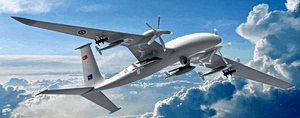
The flight of a Turkish Bayraktar TB2 drone late on Thursday night, September 3, 2026, over the eastern Aegean, was a stark reminder that Ankara’s “quiet” activity in the Athens FIR after sunset remains ongoing.
This particular UAV did more than commit a routine airspace violation. Moving just before midnight, it traced an especially unusual and provocative path, “drawing” a distinctive pattern on digital flight-tracking maps.
This incident is the latest example of a broader, specialized Intelligence, Surveillance, and Reconnaissance (ISR) strategy unfolding under cover of darkness.
The operational profile of the night: Why fly in the dark?
When a Turkish drone enters the Athens FIR at night, the purpose of the mission changes fundamentally. It’s not a simple flag-showing exercise, but a purely operational mission, or what Greece is gradually coming to understand as “psychological operations.”
Modern Turkish UAVs are equipped with state-of-the-art electro-optical cameras and infrared thermal-imaging sensors. In the dark, these systems can detect the heat signatures of Greek Navy vessels, track troop movements on the islands, and map out defensive positions without being visible to the naked eye. At the same time, the night flights serve as a constant reflex test for Greek radar, checking response times under low-visibility conditions.
How things have evolved over the past five years
The frequency of these night missions hasn’t stayed constant. It has gone through two starkly different phases.
The peak period (2021 to early 2023): During the height of Greek-Turkish tensions, Turkey ran an around-the-clock operational pattern. Drones flew nonstop, day and night, carrying out provocative overflights even over inhabited Greek islands, such as Kinaros and Kandeliousa, in the dead of night.
The de-escalation and today’s picture (2024 to 2026): After the signing of the “Athens Declaration,” night drone flights dropped noticeably, to avoid an air incident in the dark that could trigger a crisis. Still, the activity never stopped entirely. As Thursday night’s flight showed, Turkey keeps activating its UAVs at night whenever it wants to send political signals or conduct targeted reconnaissance, even as daytime violations remain frequent, the recent burst of 11 violations by Turkish aircraft and drones on September 2 being a case in point.
The strategy of attrition, and the Greek response
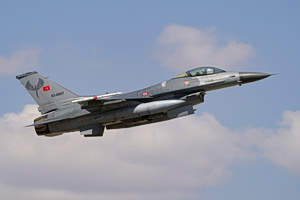
Flying drones at night also serves an economic strategy of attrition. A UAV flight costs Turkey very little, while the Greek Air Force is often forced to scramble manned F-16 fighters to identify and intercept them, as happened recently near Alexandroupoli, putting a heavy fuel-cost burden on the armed forces.
Greece, however, is gradually shifting its doctrine. By developing an integrated, multi-layered anti-drone and air-defense system, the Greek side is gaining the ability to detect, track, and, if necessary, neutralize or electronically jam hostile UAVs, without always needing a costly fighter jet scramble. Of course, the decision to shoot one down, by whatever means, remains purely a political one.
The night flights of Turkish drones in the Athens FIR, the latest example being Thursday night’s incident, are a precise indicator of Ankara’s hybrid strategy. Despite periods of diplomatic easing, the technological upgrading of Turkish UAVs makes constant vigilance and investment in modern anti-drone technology the only path to safeguarding Greek sovereignty over the Aegean, at every hour of the day and night.