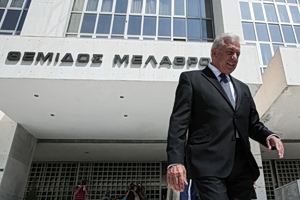
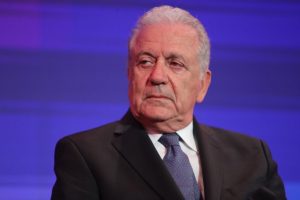
The Greek parliament will soon take up Belgium’s request to waive the immunity of Dimitris Avramopoulos, the former European commissioner, a constitutional precondition for any investigation into his role in Qatargate. The file was forwarded by Deputy Justice Minister Ioannis D. Bougas, and Avramopoulos, who maintains he did nothing wrong, has said he will not stand in its way.
At issue is a payment of about 75,000 euros that Avramopoulos received from NGO Fight Impunity, which has been at the center of the Qatargate investigation. The former Commissioner and New Democracy MP says he had written permission from the European Commission to work with the organization, and that the money was declared in his asset statement Greek officials are required to file, and duly taxed.
Where will Avramopoulos be tried?
Once immunity is waived, the case can take one of two routes. Avramopoulos could be tried in Greece, with the venue settled by the Council of Appeals Court Judges, a panel of senior appellate judges, or the matter could pass to the Belgian magistrate handling the wider Qatargate investigation. His lawyers, and some legal observers, believe he is likely to be tried in Greece. But there is a real prospect the case goes to Belgium instead, since it concerns the conduct of EU officials in Brussels. He is represented by Spyros Pappas, who runs a large law firm in the city.
Why the warrant was issued
The warrant was issued largely because Avramopoulos failed twice to appear before the authorities after being summoned to explain himself, according to reports. It remains unclear whether the Belgian authorities hold evidence beyond Avramopoulos role as honorary board member of NGO Fight Impunity founded by Pier Antonio Panzeri. The charges flow from Belgium’s treatment of said NGO as a criminal network: prosecutors regard it as a vehicle for laundering money. Avramopoulos has said that his involvement, his fee and everything connected to the NGO were lawful, declared and taxed.