 Μake us preferred on Google
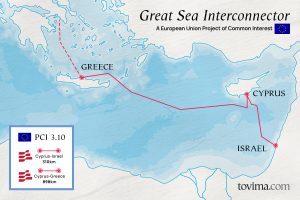
 A bipartisan group of House lawmakers is urging the Trump administration to make the Great Sea Interconnector, a planned undersea electricity cable among Greece, Cyprus, and Israel, a priority of American policy in the Eastern Mediterranean.
In a letter to Secretary of State Marco Rubio and Ben Black, the chief executive of the U.S. International Development Finance Corporation, six lawmakers argued that the project could become an important part of the India Middle East Europe Economic Corridor, or IMEC, a proposed network of trade and infrastructure links stretching from India to Europe.
“The Eastern Mediterranean will play a vitally important role as a gateway to IMEC,” the lawmakers wrote, describing the interconnector as a key piece of infrastructure for the corridor.
The effort is led by Representative Brad Schneider, Democrat of Illinois, and Representative Gus Bilirakis, Republican of Florida. Representatives Jake Auchincloss of Massachusetts, Dan Goldman of New York, Craig Goldman of Texas and Haley Stevens of Michigan also signed the letter.
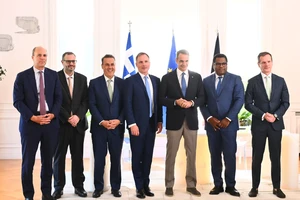
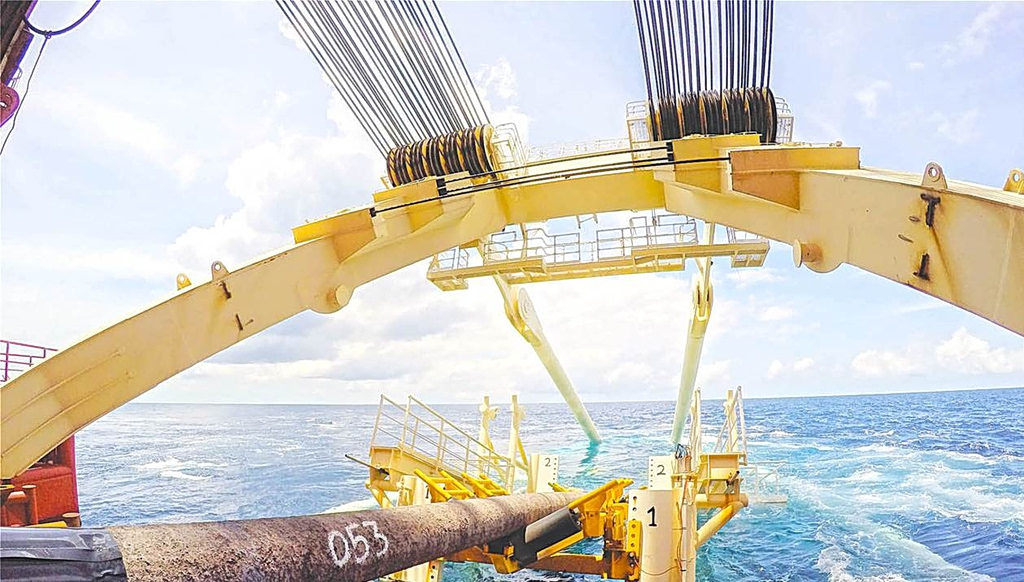
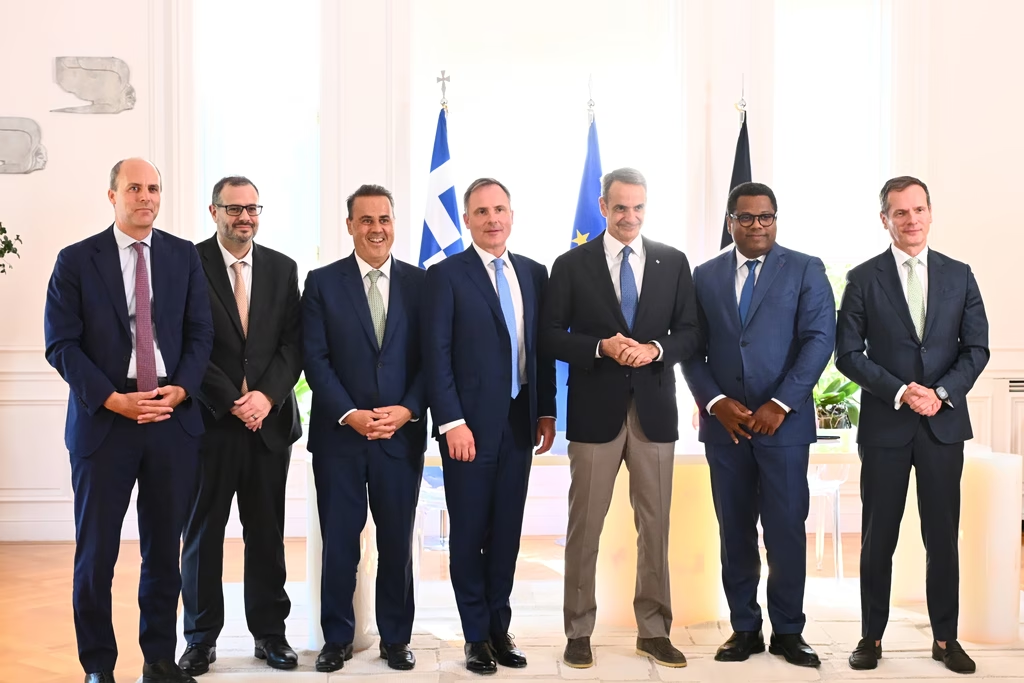
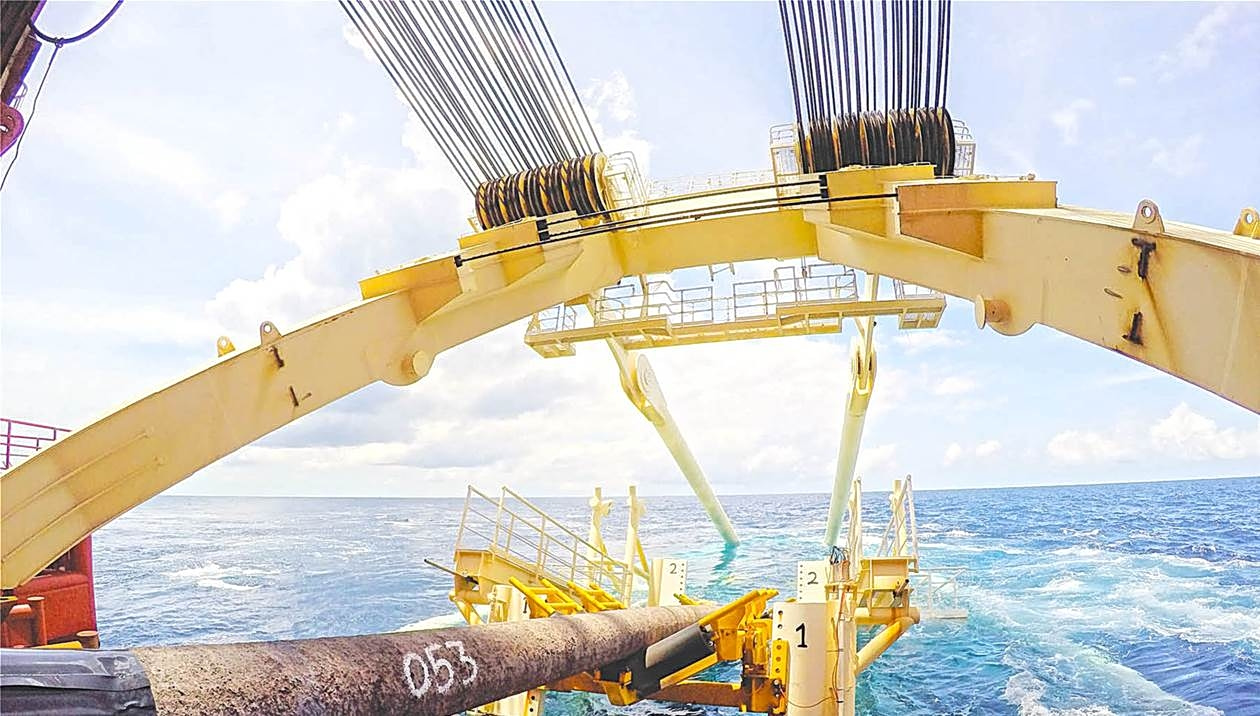
The appeal comes less than a week after the French infrastructure investment firm Meridiam signed an agreement in Athens to take a majority stake in Great Sea Interconnector, the special purpose company established by Greece’s Independent Power Transmission Operator to develop the project. A separate agreement among the Greek grid operator, the project company and the cable manufacturer Nexans covers seabed surveys needed to advance construction.
The project is intended first to connect Crete and Cyprus, bringing Cyprus into the European electricity transmission system. A second section would extend the connection from Cyprus to Israel. Cyprus remains the only European Union member state whose electricity grid is not connected to another country.
In their letter, the lawmakers said the project would improve energy security, allow electricity to move in both directions between Europe and the Eastern Mediterranean and deepen energy ties among Greece, Cyprus and Israel. They also argued that Washington has an interest in backing infrastructure that diversifies energy routes and offers alternatives to networks controlled by strategic competitors.
The most sensitive part of the letter comes at the end, where the lawmakers ask the administration for a classified briefing on the “geopolitical challenges” surrounding the project.
They do not identify those challenges publicly. But the request comes against the backdrop of longstanding disputes over maritime jurisdiction in the Eastern Mediterranean, where energy and infrastructure projects have repeatedly become entangled in competing claims.
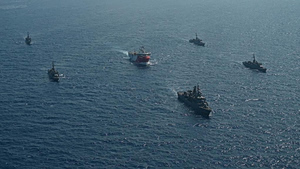
Turkish naval vessels have shadowed or impeded ships conducting seabed surveys near the Greek islands of Kasos and Karpathos, where Ankara disputes Greece’s jurisdiction over parts of the continental shelf.
Reuters reported that survey vessels working for the project left the area earlier than scheduled in early 2025 after Turkey challenged Greek jurisdiction, while Turkish defense officials have said that work cannot proceed through waters claimed by Turkey without Ankara’s consent.
That assertion conflicts with the rules set out in the United Nations Convention on the Law of the Sea. Under Article 79, coastal states may not impede the laying or maintenance of submarine cables on their continental shelf. Unlike pipelines, whose route requires the consent of the coastal state, submarine cables are not subject to the same requirement.
In other words, even where maritime boundaries are disputed, international maritime law does not give a coastal state a general veto over the laying of an undersea electricity cable.
Turkey is not a party to UNCLOS and disputes Greece’s maritime claims in the area. Greece maintains that Ankara’s attempts to obstruct the project are contrary to international law, a position that rests in part on the convention’s protections for submarine cables.
That gives the interconnector significance beyond its engineering and financing. Its progress has become tied to a broader question facing the region: whether major cross border infrastructure can move forward despite unresolved geopolitical disputes.
The lawmakers also place the project within the framework of the Eastern Mediterranean Gateway Act, bipartisan legislation introduced by Mr. Schneider and Mr. Bilirakis in the House in 2025. The measure would direct the State Department to give greater priority to the Eastern Mediterranean, particularly in energy security, infrastructure and cooperation with regional partners.
The House Foreign Affairs Committee approved its version of the measure in January. A Senate version sponsored by Senators Dave McCormick, Republican of Pennsylvania, and Cory Booker, Democrat of New Jersey, was approved by the Senate Foreign Relations Committee on June 17. Neither bill has completed passage through Congress.
The congressional effort follows public support for the interconnector from Energy Secretary Chris Wright in June, when the United States, Greece, Cyprus, Israel and Rice University agreed to establish the Eastern Mediterranean Energy Center in Houston.
Responding to a question from To Vima and the Cypriot broadcaster RIK, Mr. Wright said the United States wanted to see more energy infrastructure built around the world, particularly among American friends and allies.
“The United States absolutely wants to see more energy infrastructure built around the world, and particularly among our friends and allies,” Mr. Wright said.
“So of course, we’re supportive and interested in that project,” he added, saying that Washington hoped for “an amicable resolution” that would not stand in the way of building energy infrastructure.
The new letter seeks to push that support further, asking the State Department and the development finance agency to make the project a policy priority.