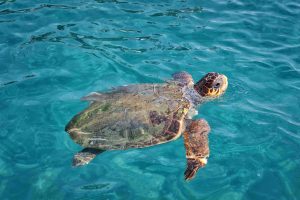
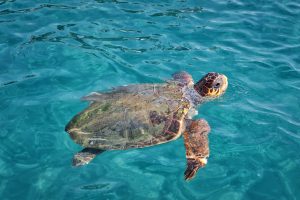
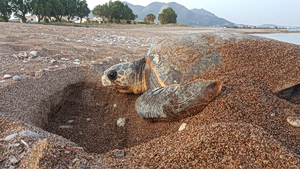
It was back in now far-off 1993 when researchers from the Archelon conservation group first located a young Caretta caretta (loggerhead) sea turtle in the Kalo Nero beach. Fast forward to the summer of 2025 and volunteers again met up with the same turtle, now a mature mother returning to the same beach to lay her eggs.
The return of “Turtle P4849” to Kalo Nero – Greek for “Good Water” – 32 years later broke the previous record for the specific region of extreme southwest mainland Greece.
“When we analyzed the turtles’ identification codes, we realized that this was a turtle that had first been tagged in the area 32 years ago. Specifically, turtle P4849 was tagged on July 7, 1993, and today it represents the turtle with the longest documented reproductive lifespan in the Kyparissia Bay,” the report by Archelon, the sea turtle conservation society of Greece, notes.
Kyparissia Bay and the same-name beachfront is among the longest in Greece, considered as “jewel” in a land with countless pristine beaches, coves and seafronts.
“P4849” is now a living symbol of longevity, while she’s been recorded in 10 intermediate nesting seasons (every two to seven years) in Kyparissia Bay, having made a total of 18 confirmed nests. Researchers believe it is very likely that she may have laid eggs in other years as well or created additional nests that simply went undetected.
“It is astonishing to think that this turtle has been swimming in the Mediterranean since before mobile phones became widespread, surviving countless dangers, only to return each time to the place where she was born,” says the conservation group’s volunteer coordinator, Fryni Papanikolaou.
Although the absolute record for a Caretta caretta’s reproductive lifespan belongs to a turtle nesting in the nearby Ionian Sea island of Zakynthos (37 years), the “Lady of Kyparissia” proves that Greek beaches are critical life refuges.
Researchers estimate that the reproductive life of this endangered species may exceed 40 years, something that the microchip technology (PIT tags) used by Archelon is expected to confirm in the coming years.
Mature female turtles with many years of repeated nests form the foundation of this turtle population’s conservation.