Ants infected by this parasitic worm are certain to meet an inglorious end one day. Until then, though, they led a charmed life.
The parasite allows worker ants to live up to 20 years, matching the lifespan of the colony’s queen and far exceeding the usual 2 to 4 year lifespan of workers. Infected ants are smaller and lighter in color, but they smell like the queen, so the whole colony rushes to feed and care for them.
Settled into this comfortable life, the infected workers don’t even bother leaving the colony.
That is, until the day a woodpecker, a bird known for its fondness for ants, shows up. While their healthy nestmates flee to survive, the infected workers sit still and let the intruder eat them, restarting the parasite’s life cycle from the beginning.
The phenomenon itself was already known, but a new study published by Johannes Gutenberg University Mainz in the journal BMC Genomics adds fresh detail on the mechanism behind the parasitic disease, which affects exclusively the European ant species Temnothorax nylanderi.
The international research team ran genetic analyses on both the ant and its parasite, the tapeworm Anomotaenia brevis.
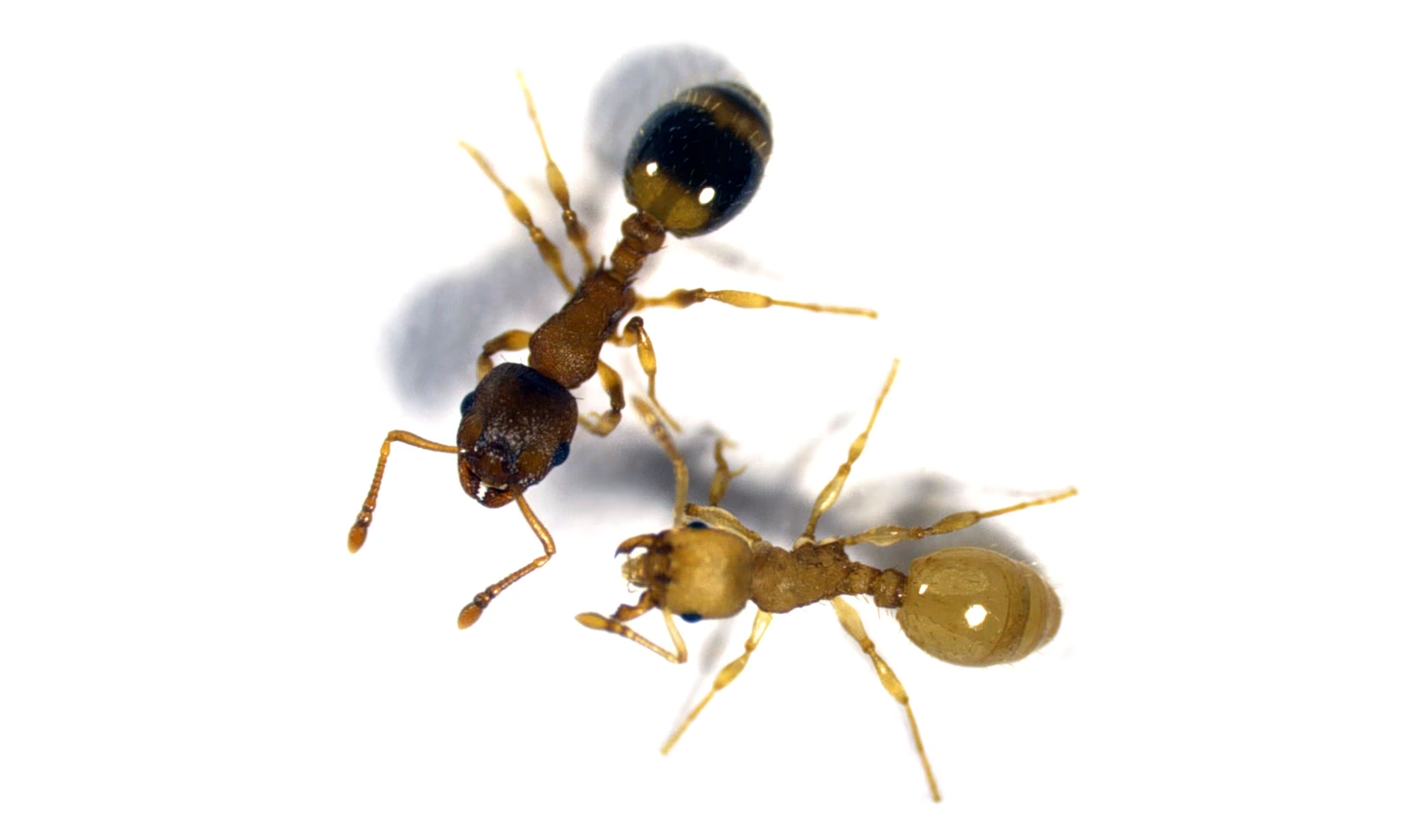
The infected worker ants are smaller and paler compared to their regular counterparts. Source: Susanne Foitzik
I Will Make You a Queen
The worm’s main host is the woodpecker, but its complex life cycle also uses ants as intermediate hosts, which become infected with parasite larvae through the droppings of infected birds.
The researchers found that the parasite shifts the metabolism of worker ants to resemble that of the queen, which explains their extended lifespan. Susanne Foitzik, the study’s senior author, noted that genetic analysis shows the infection doesn’t make the ants sick but instead alters their physiology in a very targeted way. At the molecular level, she said, infected workers showed a profile that partly resembled the queen’s.
A different picture emerged when researchers looked at gene expression in the brain, where no similarity to queens showed up at all. Infected workers had lower levels of molecules linked to behavior and feeding, which appears to explain their sluggishness and their dependence on the rest of the colony.
Oddly, these brain changes didn’t seem to come from substances released by the parasite itself, but from disruptions to the victims’ own nervous systems. First author Julia Blasi said the data suggest the parasite affects the ant indirectly, by interfering with the host’s own regulatory networks that control metabolism, the immune system, aging, and behavior.
Foitzik added that queens and workers in social insects share the same genetic makeup but differ significantly in lifestyle and lifespan, and the fact that infected workers show a molecular profile partly resembling the queen suggests the parasite is hijacking biological programs the ant already has.
Anomotaenia brevis is just one of many parasite species that manipulate their host’s behavior. Perhaps the most famous example is the Cordyceps fungi, which turn several insect species into “zombies” before growing long stalks that emerge from the host’s body like alien tentacles.