 Μake us preferred on Google
 Long before he decided to become a professional chef, Philip Zoitos had already found his place in the kitchen at home.
Since his teenage years, he remembers himself constantly making something in the kitchen. That natural attraction to cooking led him to study the culinary arts and, later, to his first jobs at local restaurants and food businesses in Athens.
His career never settled into just one version of the food industry. He opened and ran his own pub for 10 years, moved into the demanding world of catering, and today works at Asteria Domus Glyfada, a multipurpose venue on the Athenian Riviera.
And yet the role that has given cooking an entirely different dimension in his life is that of father.
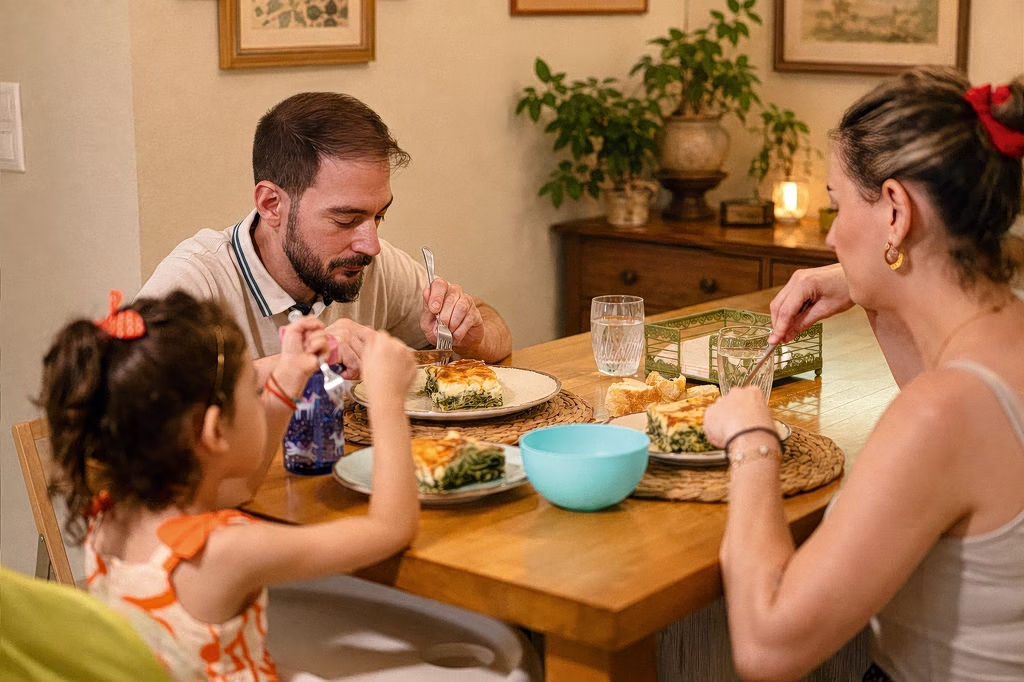
At home, his youngest—and perhaps most honest—food critic is his daughter, Margarita.
The magic starts with the smell
For Philip, cooking becomes captivating the moment the aromas of different ingredients come together and hint at something wonderful to come.
An exciting dish doesn’t wait until the first bite to reveal itself. It begins with the aroma filling the room, with the anticipation of lifting the lid or opening the oven.
Then comes the appearance, and finally the taste of all those ingredients coming together.
That balance isn’t simply a matter of technique. Knowledge, proper handling of ingredients and good recipes are essential, but Philip insists on something less measurable: meraki—the Greek idea of putting genuine care, passion and personal devotion into what you do.
Whether at home or in a professional kitchen, he believes that without it, the result will rarely be what you hoped for.
At every family meal, quality ingredients are non-negotiable. In professional kitchens, the goal is an honest balance between quality and price. Photo: Alexandros Alexandris
Ingredients and the real cost of food
Ingredients, he says, play an enormous role in cooking.
Every family would like to put high-quality food on the table, but constant price increases and growing demand are making that choice increasingly difficult.
One practical solution is to choose seasonal products, which tend to be better quality and can often be found at more reasonable prices.
In professional kitchens—and especially those catering large events—the question of quality versus quantity becomes even more complicated.
The goal, however, remains the same: achieve the best possible result while maintaining an honest balance between quality and price.
The toughest little food critic
When you’re cooking for someone who is paying for their meal, the bar is higher. You know they need to be satisfied if you want them to come back.
A child’s verdict, however, comes with its own particular challenges.
A young child wants something simple and delicious, and often prefers certain ingredients—such as onion or parsley—not to be visible in the dish at all.
And that’s where the difficulties begin.
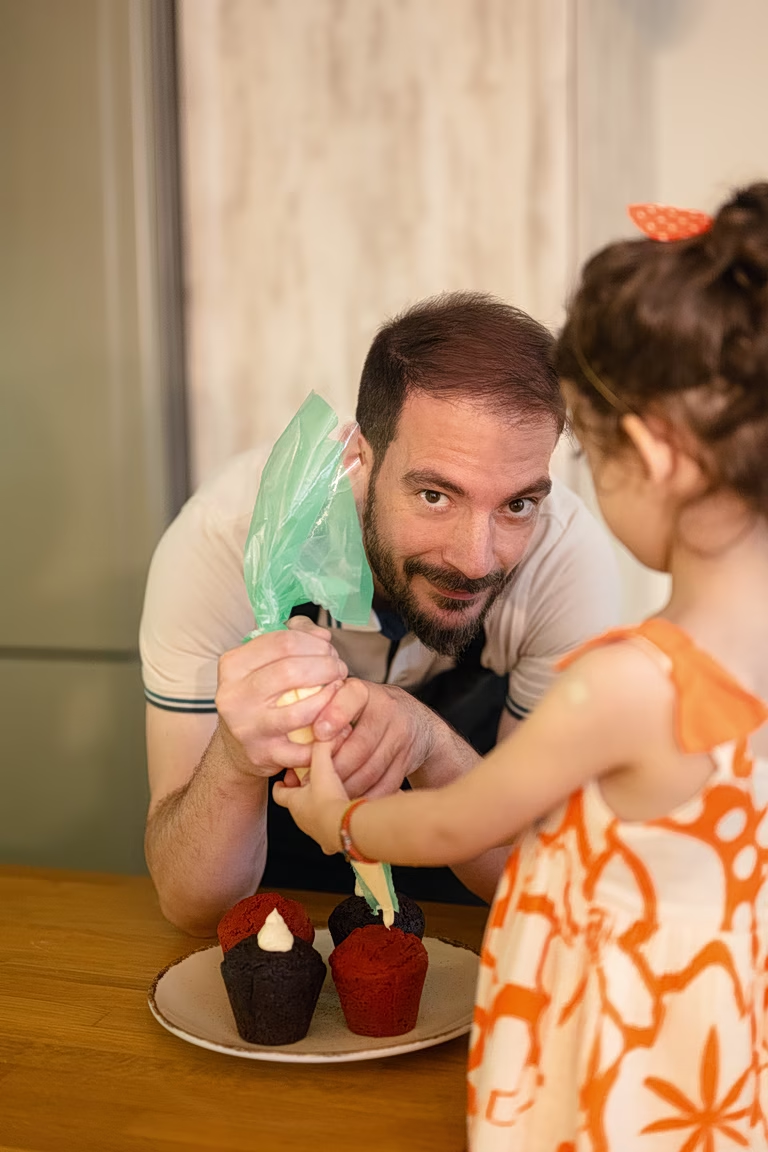
Little Margarita is always happy to help Dad in the kitchen and is the first to taste his creations. Photo: Alexandros Alexandris
No bans—just balance
A child’s relationship with food and different flavors isn’t built through absolute prohibitions.
After all, a little chocolate, ice cream or potato chips never hurt anyone. The key is moderation and frequency.
When children are very young, it is a good idea to limit these “sinful” choices. Later, once a child is old enough to discuss and understand food choices, parents can gradually introduce them to more sensible options.
Philip and his wife, Katerina Del Rosso, try to make everything at home so they can know as much as possible about what their family is eating.
Margarita is receptive to different flavors, which makes things easier.
Fried foods—delicious, as Philip readily admits—are generally avoided, and the oven does more of the work instead.
Cakes and cookies are made with very little or no sugar and, when appropriate, with a little honey.
When flavor becomes a memory
Philip makes a very strong connection between smell and memory.
He would like Margarita, as she grows up, to smell something one day and remember where she tasted a similar flavor: in someone’s home, at a taverna, or in a restaurant.
Those memories can begin with the humblest ingredient.
Who could forget the smell of oregano drying in the basement of a village home?
Perhaps that is also the most meaningful answer to the question of what makes a cook interesting: sensitivity toward ingredients, toward people, and toward the memories a dish can create.
In Philip’s kitchen, meraki is what turns food into an experience—and Margarita recognizes it.
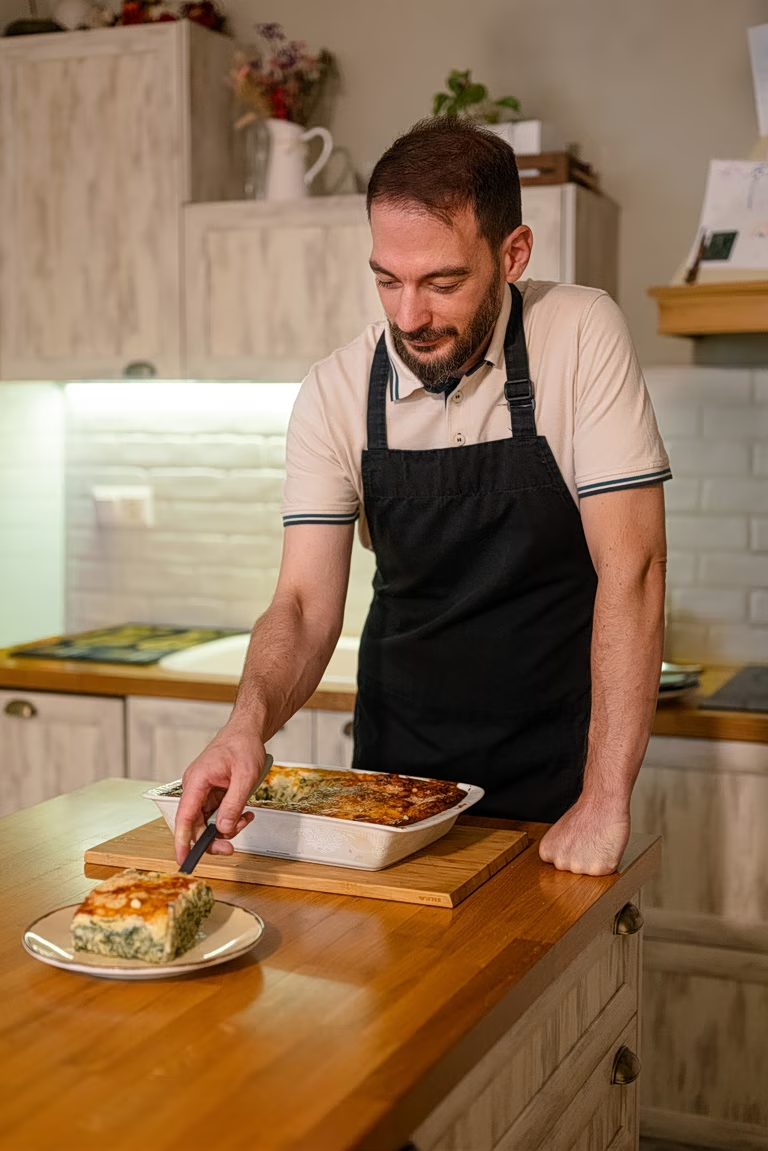
Spinach Lasagna With Anthotyro and Yogurt
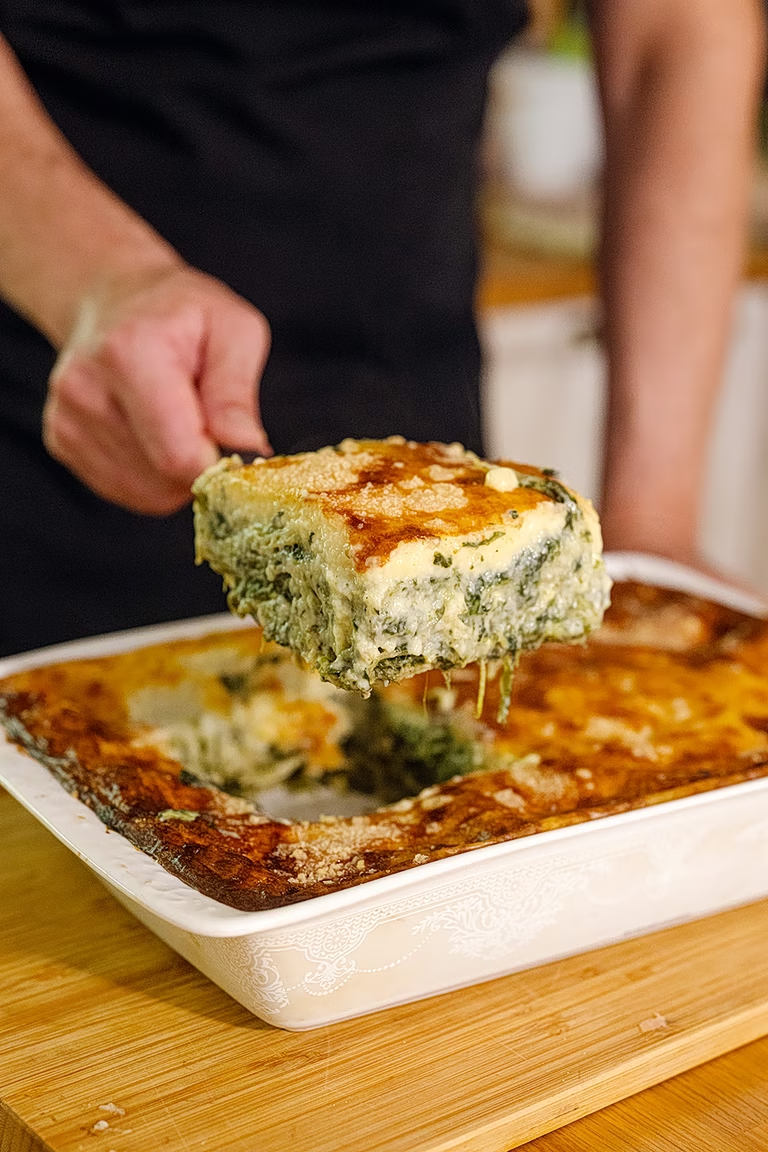
Photo: Philip Zoitos
Prep time: 30 minutes
Cook time: 20 minutes
Difficulty: Easy (*)
Serves: 10–12
Ingredients
- 500 g lasagna sheets
- 1 kg cleaned spinach
- 50 g finely chopped green onions
- 200 g anthotyro cheese
- 100 g yogurt
- 100 g grated pecorino
- 1 liter milk
- 100 g all-purpose flour
- 100 g butter
- ½ bunch finely chopped dill
- 50 g extra-virgin olive oil
- 5 g nutmeg
- Salt and pepper
Directions
- Sauté the spinach in a pot with the olive oil. Add the green onions and dill and continue sautéing until softened.
- To make the béchamel, toast the flour in the butter, then gradually add the milk, stirring continuously to prevent lumps from forming.
- Once the sauce has thickened, add the pecorino, salt, pepper and nutmeg, then remove from the heat.
- Add a little of the béchamel to the spinach mixture, then add the anthotyro and yogurt. Season with salt and pepper and mix well.
- In a Pyrex or other ovenproof baking dish, layer the lasagna sheets and spinach mixture alternately until all the ingredients have been used.
- Finish by spreading the remaining béchamel evenly over the top.
- Bake in a preheated oven at 320°F (160°C) for approximately 20 minutes, until the top is golden brown.
Chocolate Cupcakes
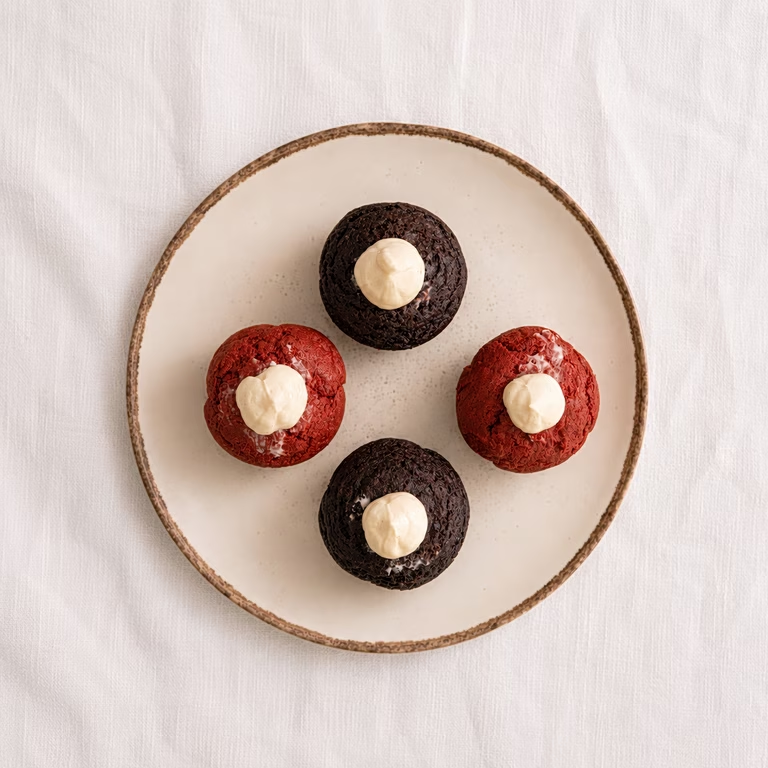
Photo: Alexandros Alexandris
Prep time: 20 minutes
Cook time: 20 minutes
Difficulty: Easy (*)
Makes: 12
Ingredients
- 300 g all-purpose flour
- 350 g eggs
- 250 g heavy cream
- 500 g sugar
- 150 g couverture chocolate
- 150 g butter, plus extra for greasing the molds
- 5 g baking powder
- 70 g cocoa powder
Directions
- Beat the eggs and sugar in the bowl of a stand mixer.
- Add the heavy cream and continue mixing.
- Add the flour, baking powder and cocoa powder and mix until the ingredients are fully incorporated.
- Melt the couverture chocolate and butter together in a double boiler, then fold the mixture into the batter.
- Butter the cupcake molds and fill them about three-quarters full with the batter.
- Bake the chocolate cupcakes in a thoroughly preheated oven at 320°F (160°C) for approximately 20 minutes.