 Μake us preferred on Google
 When British archaeologist Howard Carter uncovered the entrance to an ancient Egyptian tomb in 1922, he later wrote that he felt he was on the verge of a spectacular find and that almost anything could be waiting beyond the passage.
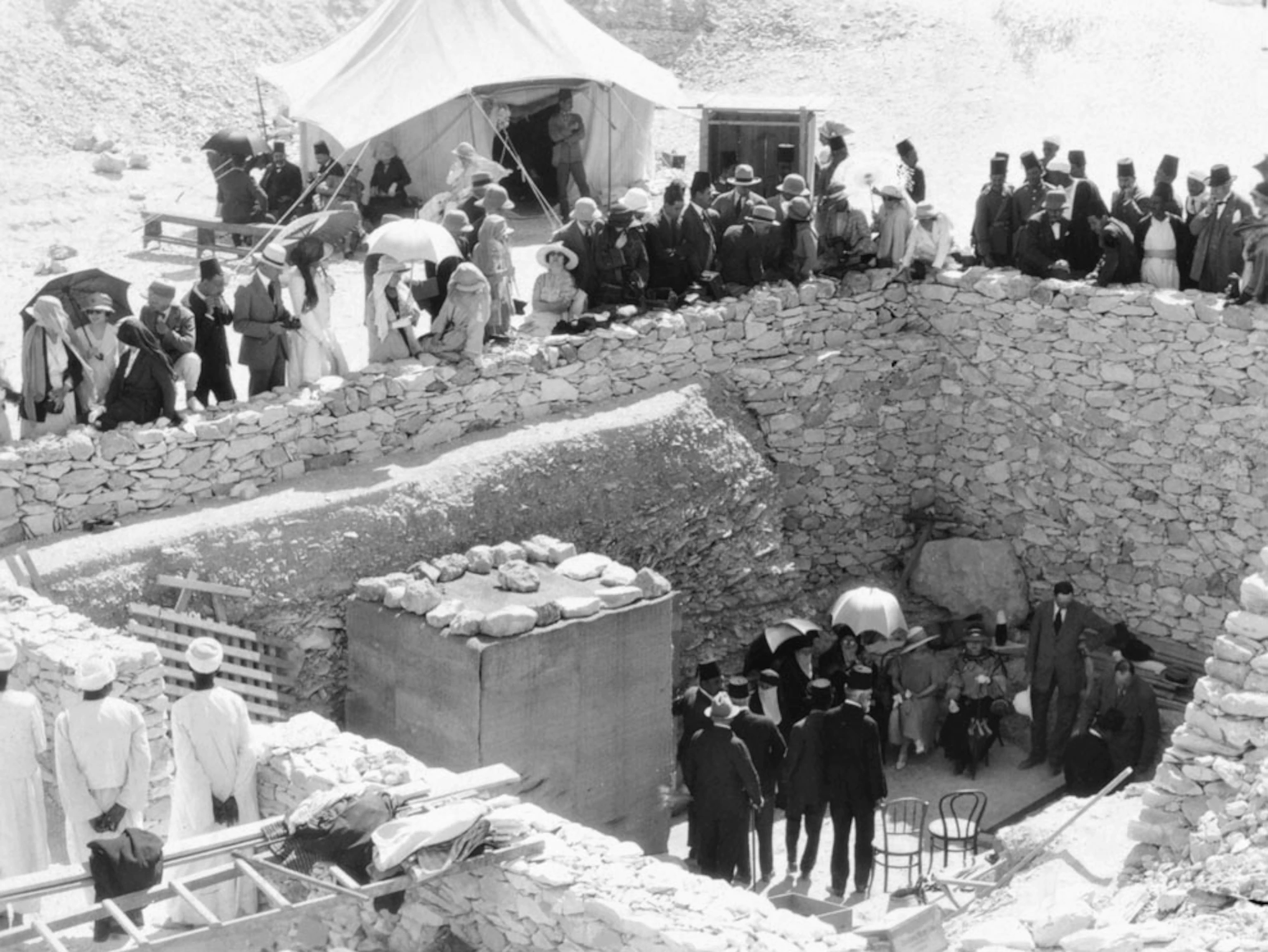
Tourists crowd around the retaining wall surrounding the pit containing the entrance to Tutankhamun’s tomb (KV62) in the Valley of the Kings, during the period in late February 1923 when the tomb was first opened for public viewing. From the magazine article “At the Tomb of Tutankhamen” by Maynard Owen Williams in the May 1923 issue of National Geographic. Source: Wikimedia Commons
That tomb, which turned out to belong to King Tutankhamun, is now regarded as one of the greatest discoveries in archaeological history.
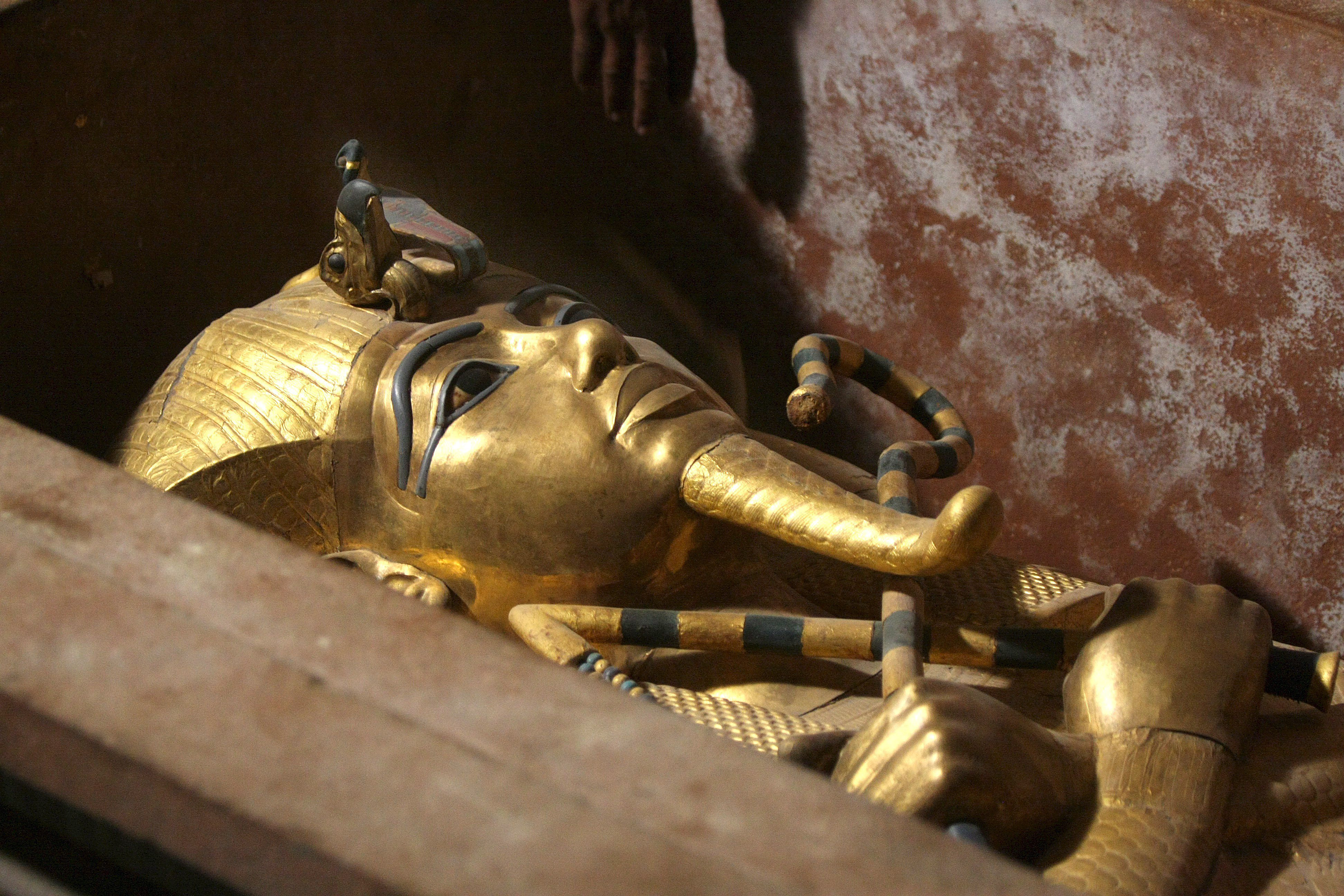
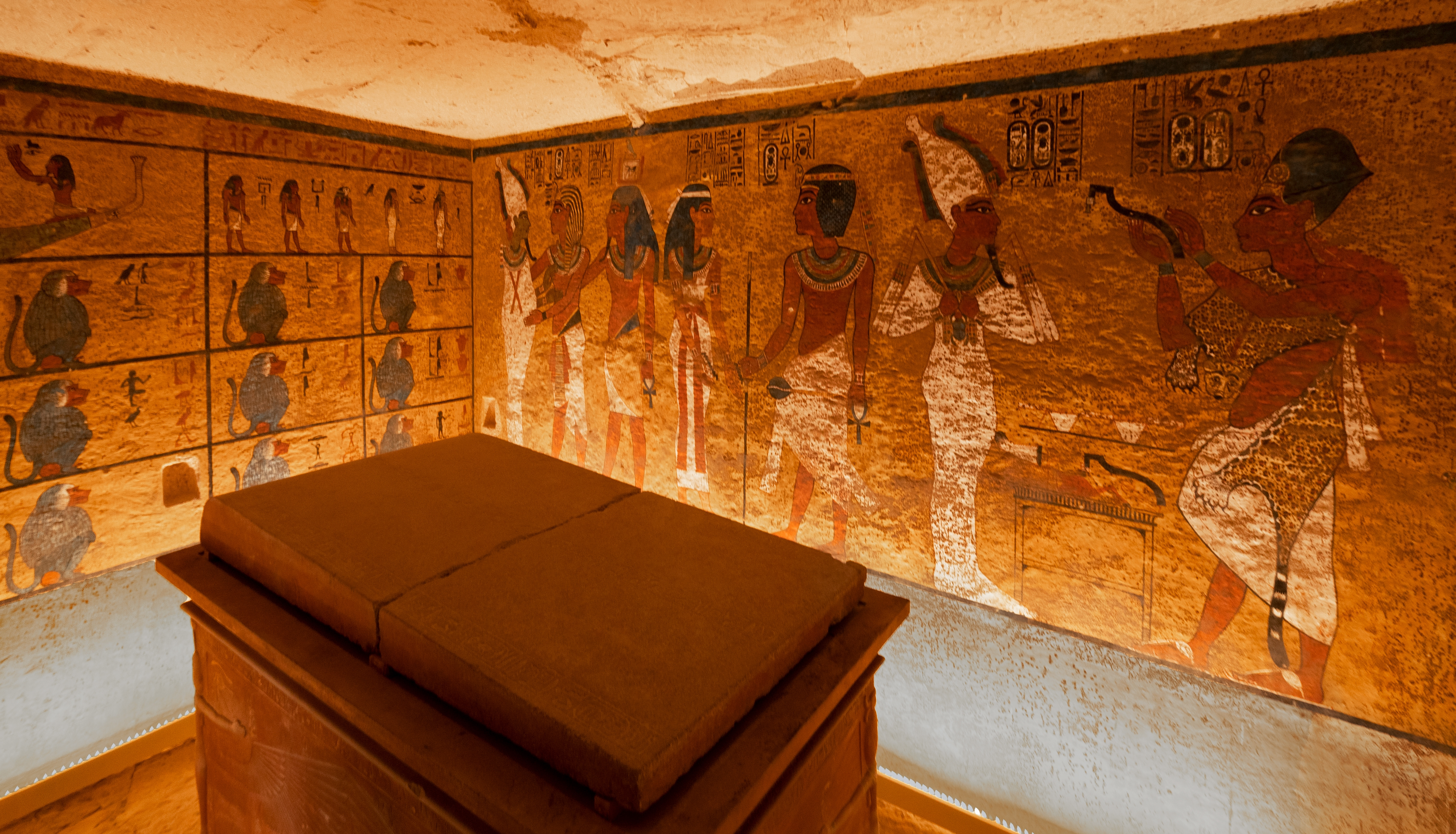
The golden sarcophagus of the Pharoah Tutankhamun is briefly exhibited without its protective cover after the 3,300 year old mummy of the boy king was taken out of its sarcophagus and displayed to the public for the first time in a special climatized glass case in the Valley of the Kings near Luxor, Egypt 04 November 2007. The famous 18th Dynasty mummy and treasures of King Tutankhamun were discovered by Egyptologist Howard Carter in 1922. EPA EPA/MIKE NELSON
Yet even in the thrill of the moment, Carter noticed something odd: the entrance was much smaller than those of other tombs in the Valley of the Kings.
Over the following years, Carter and his team worked their way into the antechamber, which was packed with hundreds of treasures, including chariots and gilded furniture, and then into the burial chamber, where the mummified young pharaoh lay inside three coffins nested one within another. But none of these finds explained why the tomb was so small.
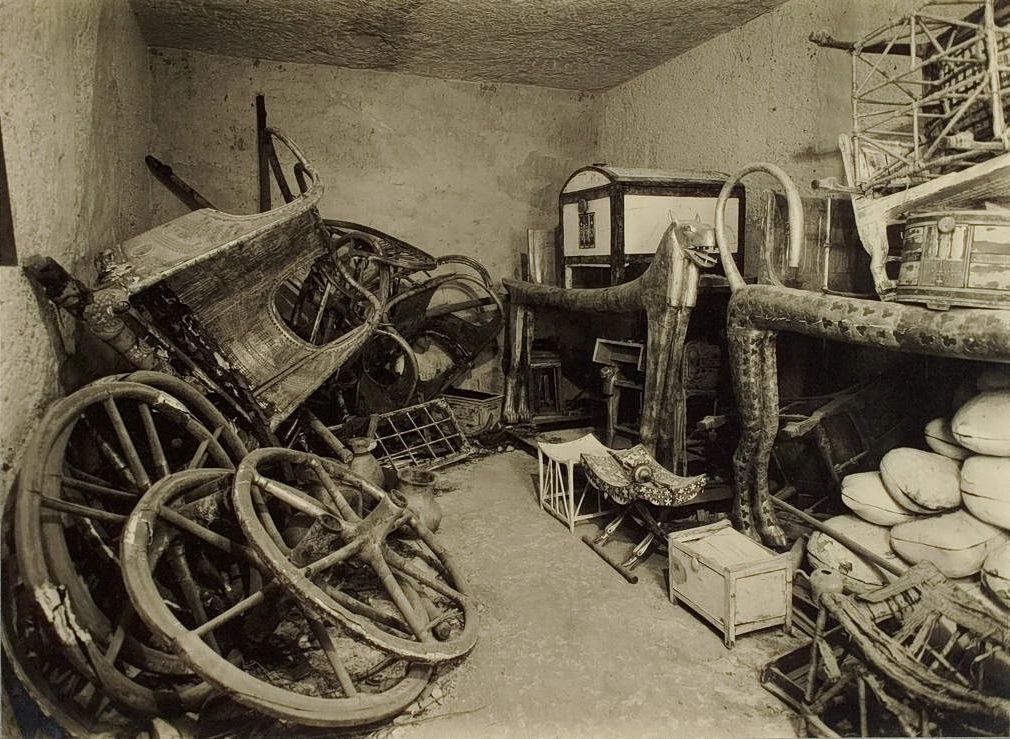
Harry Burton: Tutankhamun tomb photographs: a photographic record in 5 albums containing 490 original photographic prints ; representing the excavations of the tomb of Tutankhamun and its contents. Vol. 2, 1922. Source: Wikimedia Commons
A Tomb Built for Someone Else?
In 2015, a new idea took shape. Perhaps the ancient Egyptians had originally built the complex, known as KV62, for Queen Nefertiti, and later converted some of its outer rooms into a burial place for Tutankhamun. If that were true, her own tomb might still be sealed in an unexplored chamber beyond the rooms excavated a century ago.
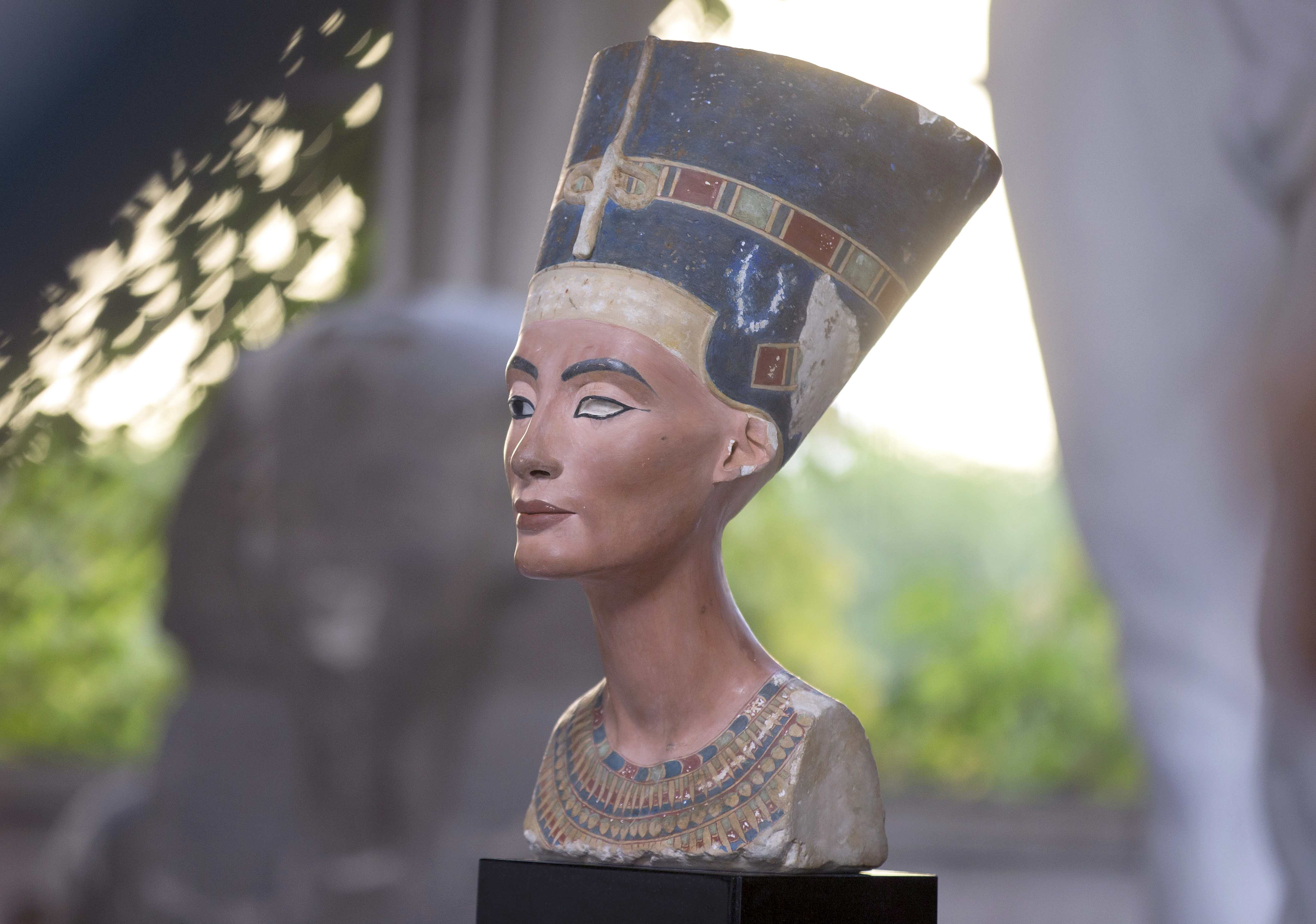
A replica of the bust of Nefertiti stands in the Replica Workshop of the National Museum of Berlin in Berlin, October 2, 2015. The workshop plans to produce 10 to 20 replicas a year, which like the original are made of a limestone core with gypsum finish. Each one will cost 8,900 euros (9,934 US Dollars). REUTERS/Axel Schmidt
Ten years later, researchers have carried out new geophysical surveys using methods such as ground-penetrating radar and microgravimetry.
Their findings, published this month in the Occasional Papers of the Amarna Royal Tombs Project, offer fresh evidence that more rooms could be hidden beyond Tutankhamun’s.
Lead researcher Mamdouh Eldamaty, Egypt’s former antiquities minister, writes in the paper that combining archaeological analysis, modern science, and years of fieldwork can reopen questions that were long considered closed. If the team is right, he adds, the result could be one of the most important archaeological discoveries of modern times.
Tutankhamun became pharaoh around 1333 B.C.E. at just 9 years old, and his reign ended with his early death roughly a decade later. Nefertiti’s life remains more uncertain. She was married to the pharaoh Akhenaten, who was probably Tutankhamun’s father, which may have made her the boy king’s stepmother. Some historians believe she briefly ruled as pharaoh herself.
Where she was buried has remained a mystery for a long time.
The Theory Behind the Search
The idea that Nefertiti’s tomb might lie beyond Tutankhamun’s came from British Egyptologist Nicholas Reeves, a co-author of the new study. In a 2015 paper, he cited scans of the tomb’s walls suggesting that two previously unknown doorways might be concealed under the paint. Reeves argued that the Egyptians had not expected Tutankhamun to die so young, so they may have buried him in the outer rooms of a complex that already belonged to Nefertiti.
Research since then has produced mixed results. However, as Jo Marchant notes in Nature, some of those studies were looking for a large empty space directly behind the wall. Based on “anomalies” found in the latest surveys, the authors now propose that several chambers could sit about 80 to 100 feet north of the burial chamber.
The researchers admit that some of these possible structures are highly speculative, but they say they have identified two with a fairly high degree of confidence. They believe these chambers may be linked to Tutankhamun’s tomb by rubble-filled passageways.
The team also points to the tomb’s layout. Leaving Tutankhamun’s tomb involves a series of left turns, while the tombs of other kings from the same period consistently turn right from the burial chamber. According to the researchers, KV62 does not match the design of either a private or a royal male tomb. Instead, its plan resembles that of an 18th Dynasty queen’s tomb.
Excitement and Caution
Ray Johnson, former director of the Epigraphic Survey at the Institute for the Study of Ancient Cultures, told Nature the new findings are very tantalizing and that it is hard not to be excited. Still, he warns that any hidden chambers, if they exist, might not contain Nefertiti. They could also be badly damaged by flooding or other natural forces. With the climate changing and the water table rising, Johnson says, documenting whatever is there may be the best way to preserve it.
The researchers now hope to examine the anomalies directly. They are seeking permission to drill a small hole from above and lower cameras into it. According to co-author George Ballard, a British structural engineer who spoke to the London Times, this is the only way to know for sure what lies beyond Tutankhamun’s rooms. Reeves told the paper that the possibilities are limitless.
Not everyone is convinced. Christopher Gaffney, an archaeologist at England’s University of Bradford, told Nature he feels ambivalent about the theory. He called the new data fascinating but said it does not provide definitive answers. Peter Styles, a geophysicist at England’s Keele University, also said he would like to see more information.
According to Nature, if Egyptian authorities give the go-ahead, drilling could begin as soon as November. In the meantime, the team is finalizing the details of the operation and waiting to see whether their cameras will reveal forgotten ancient rooms or nothing but solid rock.
Back in 2015, Reeves told the Economist that while no single piece of evidence was conclusive on its own, taken together it was hard to reach any other conclusion. If he turned out to be wrong, he said, so be it, but if he was right, it could be the biggest archaeological discovery ever made.
Source: Smithsonian Magazine