 Μake us preferred on Google
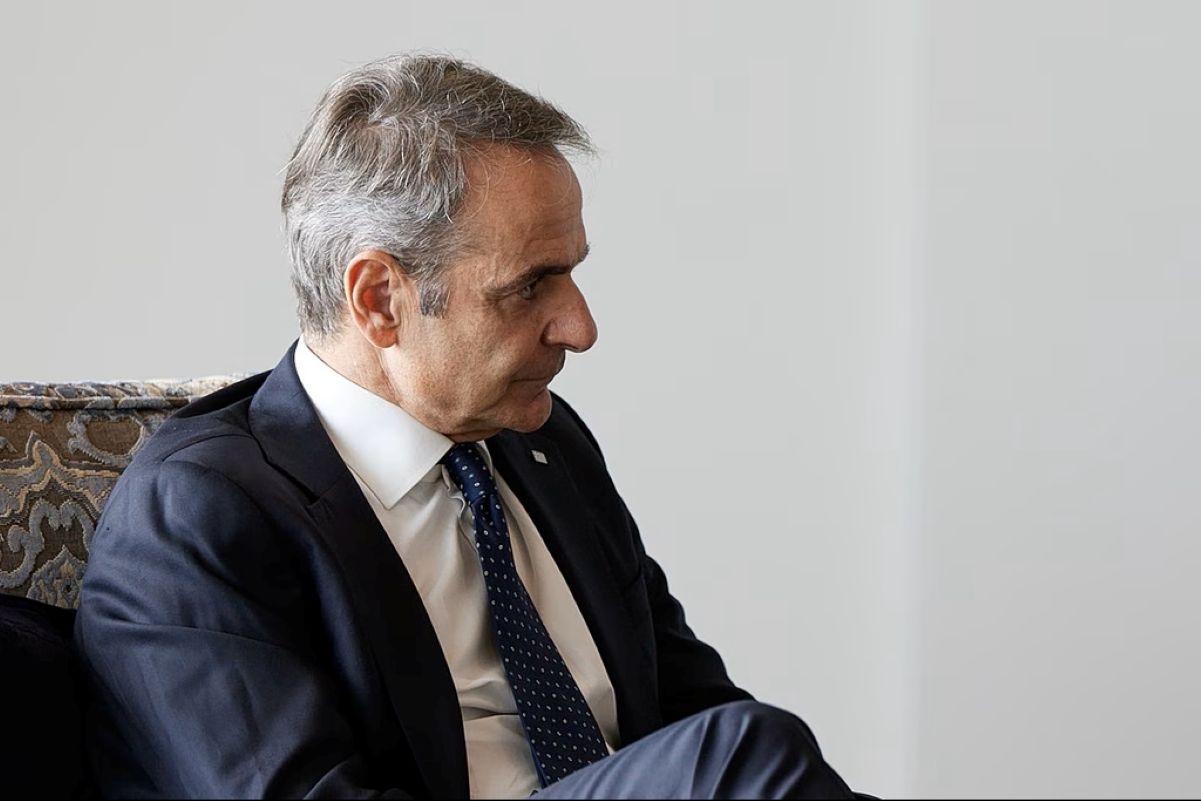
 Prime Minister Kyriakos Mitsotakis outlined a series of measures addressing energy costs, overdue debts and economic support in his weekly review, while also addressing the severe weather that has affected Crete, the use of European recovery funds, unemployment and a range of regional projects.
He said the government would increase the subsidy on diesel fuel for the next 15 days, prepare new measures for heating oil and expand the repayment period for overdue debts to the tax authorities and social security funds from 72 to 120 installments.
Mitsotakis also referred to Greece’s request for greater fiscal flexibility at the European level, the completion of procedures to absorb €36 billion from the EU Recovery Fund, the decline in unemployment to 7.4% in August and the creation of a new national model center for dementia care.
Government team to visit storm-hit Crete
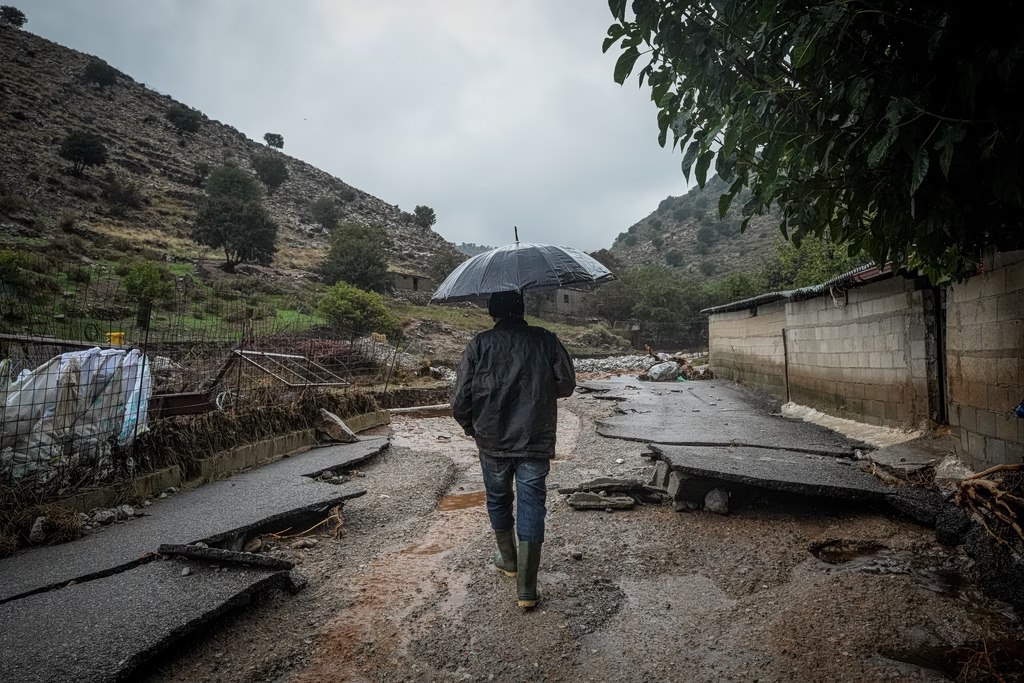
Mitsotakis opened his weekly review with the severe weather that has affected Crete, expressing his support for residents whose properties were flooded and whose daily lives were disrupted.
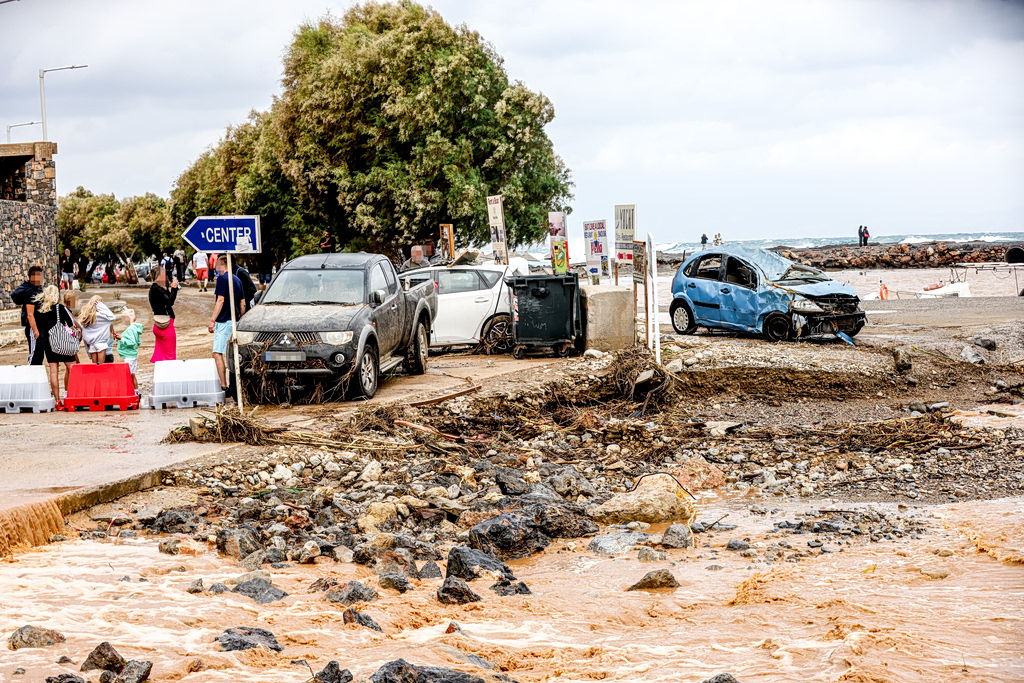
Severe weather in Crete. Gouves area, Municipality of Hersonissos. Thursday, October 1, 2026 (STEFANOS RAPANIS / EUROKINISSI)
He said the Ministry of Climate Crisis and Civil Protection had taken preventive measures, with Crete placed on heightened alert. Risk assessment committee meetings were held and authorities coordinated their response.
Warnings were issued through 112, Greece’s emergency alert system, while travel was restricted in dangerous areas. Following the heavy rainfall, emergency crews carried out rescues and other interventions, while regional and municipal authorities worked to restore access to affected areas.
A government team will travel to Crete on Monday to coordinate the assessment of damage and the recovery process, according to the prime minister.
Diesel subsidy rises for 15 days
Mitsotakis said the government was responding to new energy pressures caused by the prolonged disruption around the Strait of Hormuz, with the aim of preventing the global energy crisis from becoming a national burden for Greek households.
For the next 15 days, the subsidy at the pump for diesel fuel will increase from 10 cents to 15 cents per liter. Combined with a discount from refineries, the total reduction will reach 20 cents per liter.
Measures concerning heating oil are expected to be announced shortly before October 15, with the government aiming to keep the price below €1.75 per liter. The heating allowance will also be increased across the board.
The government will reassess the situation every two weeks and adjust the measures according to developments, Mitsotakis said.
Greece seeks greater fiscal flexibility in Europe
Mitsotakis also called for a European response to the energy crisis, arguing that recommendations to reduce consumption are not sufficient and that common European solutions are needed.
Greece is seeking greater fiscal flexibility by proposing that member states be allowed to use additional VAT revenue generated by high energy prices for targeted support measures for households and businesses.
Under the proposal, these temporary measures would not count toward strict spending ceilings.
Mitsotakis has already sent a letter on the issue to the president of the European Commission and the president of the Eurogroup.
Overdue debts extended to 120 installments
The government is also expanding the repayment period for overdue debts to the tax authorities and social security funds from 72 to 120 installments.
The minimum installment will be €30, while the interest rate will remain low, at the level applied under the 24-installment arrangement.
The rules governing debt-servicing companies, known as servicers, will also be tightened, with the aim of protecting borrowers who comply with their repayment arrangements from foreclosures and seizures.
If a company violates an agreed repayment arrangement, the action will be canceled, a fine of up to €500,000 will be imposed, and the citizen will receive credit for five installments under the original agreement.
The measures also introduce a 15% cap on advance payments, replacing the creditor’s unrestricted discretion.
If a citizen does not receive a complete picture of their debt within 45 days, interest payments will be frozen.
Mitsotakis said the aim is to create a safety net comparable to that of Greece’s out-of-court debt mechanism for primary residences, giving citizens a genuine second chance.
€36 billion Recovery Fund program nearing completion
Mitsotakis also highlighted the completion of procedures to make use of Greece’s allocation from the EU Recovery and Resilience Facility.
The government has submitted the final two requests for disbursement to the European Union after completing the required milestones.
The goal is to absorb the entire €36 billion allocation, equivalent to about 16% of Greece’s GDP. Mitsotakis described it as the largest European support package relative to the size of the Greek economy.
He said the European Commission has recognized Greece’s performance in using the fund among the EU’s 27 member states.
According to Mitsotakis, Greece absorbed almost twice as much funding in a period equivalent to half of a European structural funding period.
The Greece 2.0 program, based on proposals from the Pissarides report, contributed to restructuring the economy following the country’s decade-long crisis, he said.
Real GDP increased by 11 percentage points, more than 550,000 new jobs were created and investment increased by 60%, exceeding initial estimates.
The impact of Greece 2.0
Mitsotakis also cited figures illustrating the impact of Recovery Fund initiatives on citizens:
- 9 million citizens use gov.gr, Greece’s digital government platform.
- 7 million citizens have undergone free preventive medical examinations, with more than 300,000 referred promptly for further treatment.
- 5.2 million citizens have registered with the free personal doctor program, while 165,000 children have access to a free personal pediatrician.
- 2.5 million workers are covered by the digital employment card, with more than 7.5 million overtime hours recorded and paid.
- 1.2 million insured people use the digital health record.
- 410,000 students use the free digital tutoring program, which began operating for the 2026-27 school year.
- More than 180,000 households benefited from energy-efficiency and heating-system and solar-water-heater replacement programs.
- 25,500 residents of mountainous and island areas received examinations from mobile health units.
- More than 23,000 households acquired a first home through the “My Home 1” and “My Home 2” programs.
- 20,000 people underwent free afternoon surgeries.
- 1,812 people with disabilities received personal assistants.
- 99% of the country now has published cadastral information.
What comes after the Recovery Fund
Mitsotakis also addressed Greece’s economic strategy after the Recovery Fund is completed.
The National Development Program is expected to mobilize €23 billion in investment, €13 billion more than during the previous programming period.
There are also more than €8 billion available through the Social Climate Fund, the Modernization Fund and the Decarbonization Fund, while €19 billion remains from the 2021-27 EU funding program.
Greece is also preparing for a new major European negotiation over more than €49 billion in resources. Much of the process is expected to take place during Greece’s presidency of the Council of the European Union in the second half of 2027.
Preparing for the presidency is one of the 12 horizontal priorities in the government’s program presented at a recent Cabinet meeting.
Mitsotakis said the government’s goals through 2030 include sustainable growth and higher incomes, stronger defense and international presence, a more effective state and faster justice, better education and health services, safer transportation, affordable energy and protection of the natural environment.
Unemployment falls to 7.4%
Mitsotakis also highlighted the decline in unemployment to 7.4% in August, the second-lowest rate recorded in Greece.
August was the third month of 2026 in which unemployment remained below 8%.
Male unemployment fell to 4.9%, from 6.9% in August of the previous year, while female unemployment stood at 10.3%, down from 11.1%.
Youth unemployment also declined significantly, reaching 15.6%, compared with 21.8% a year earlier.
For women, the government plans to expand a program subsidizing businesses that hire 10,000 unemployed women, with a focus on mothers of minor children, and add another 5,000 full-time positions.
For young people, the government is promoting stronger vocational education and training linked more closely to business needs, including through Public Employment Service (DYPA) branches within businesses. Entrepreneurship programs are also targeting people ages 18 to 29.
New national dementia center
In health care, Mitsotakis referred to the creation of a National Model Center for Dementia, describing the condition as one of the world’s most significant and rapidly growing public-health challenges.
About 214,000 people in Greece live with diagnosed dementia, while their families also face significant physical and psychological burdens.
The new center will provide free comprehensive care to people with early-stage dementia through memory assessments, day care, home care and telemedicine.
It will also provide support and training for caregivers, including informal caregivers, and will have a role in prevention, education and research.
The project is being implemented through a €4.49 million donation from National Bank of Greece and the charitable foundations of the “Initiative ’21,” in cooperation with the Ministry of Health.
Regional projects move forward
Mitsotakis also highlighted projects across Greece.
The Independent Power Transmission Operator, IPTO, has placed upgraded high-voltage connections between Zakynthos and Kefalonia and between Kefalonia and Lefkada into operation, replacing lines that had been operating for decades.
The upgrades strengthen the security and resilience of electricity supply to the Ionian Islands, particularly during the summer. The next electricity interconnection will connect Corfu to the mainland grid through Igoumenitsa and is expected to be completed in 2027.
In Katerini, a new undergraduate program in “Management of Maritime and Combined Transport” is being created by the International Hellenic University.
In the Peloponnese, €3.5 million is being allocated to support the participation of people with disabilities and residents over 65 who face a risk of poverty or social exclusion in sports, cultural and recreational activities.
In Boeotia, a new emergency department at Thebes Hospital and renovated health centers in Distomo and Aliartos have been inaugurated.
On Kos and Syros, the South Aegean Regional Government is allocating €2.8 million in European funds for two new day centers providing comprehensive mental-health care. One will serve people with dementia and Alzheimer’s disease on Kos, while the other will serve people with autism and neurodevelopmental disorders on Syros.
In Megalopolis, a €3.5 million project has been included for the bioclimatic upgrade of part of the road network as part of Greece’s Just Development Transition program.
On Corfu, €21.1 million in funding has been secured to allow a contract to be signed for a water-supply project serving Corfu city from the Chrysiida water-supply facility, addressing a longstanding problem with the island’s water supply.
48 religious artifacts to return to Greece
Mitsotakis also referred to an agreement for the return to Greece of religious artifacts that were transferred to Sofia in 1917, during World War I.
At the same time, Greece will return to Bulgaria the remains of Tsar Samuel, which were discovered in 1965 at the Basilica of Saint Achillios in Florina.
The Greek artifacts consist of 48 objects from the Monasteries of Panagia Eikosifoinissa and Timios Prodromos in Serres, as well as the Holy Metropolis of Serres and Nigrita.
The artifacts will be displayed at the Museum of Byzantine Culture until Nov. 5 before returning to the monasteries and their ecclesiastical home.
Mitsotakis described the return as a first step toward the return of all Greek religious artifacts, as part of Greece’s cultural diplomacy efforts in recent years.
New Democracy marks 52nd anniversary
Mitsotakis concluded his weekly review by referring to the anniversary of the founding of New Democracy, Greece’s governing political party, which marks 52 years since it was founded by Konstantinos Karamanlis on October 4, 1974.
The anniversary will be marked Monday at 6 p.m. at the former bus depot of the Athens Urban Transport Organization.
Mitsotakis referred to New Democracy’s founding declaration, signed by Karamanlis, which called for moving beyond what it described as the “old, misleading labels of the left, the right and the center.”